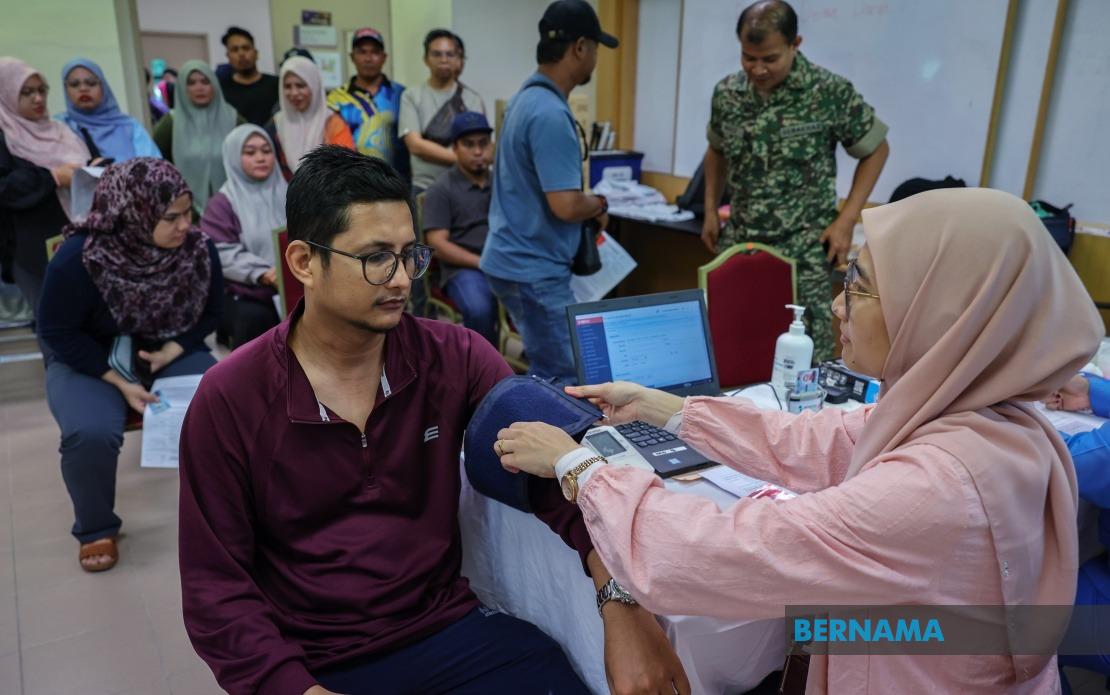
The Malaysian armed forces have extended comprehensive free healthcare services to residents of Baling through a strategic Civil-Military Cooperation (CIMIC) initiative that ran this week at Sultan Abdul Halim Mu'adzam Shah International Islamic University in nearby Kuala Ketil. Branded as the "Military with the People" programme and held in conjunction with the completion of the Basic Commando Course, the operation exemplifies how defence and medical institutions can collaborate to address gaps in healthcare accessibility across Malaysia's more rural regions.
Centre to the initiative was the deployment of two integrated medical assistance programmes. The Medical Community Assistance Programme (MEDCAP) and Dental Community Assistance Programme (DENCAP) brought military medical personnel and facilities directly into the community, eliminating the conventional barriers of distance, travel time and appointment waiting periods that often prevent Malaysians in less-developed areas from accessing timely dental and preventive health services. The participation of the Royal Medical Corps reflected institutional commitment to extending the defence establishment's medical expertise beyond military personnel to serve the civilian population.
Community response to the services proved remarkably enthusiastic, with residents from diverse socioeconomic backgrounds participating. Factory worker Siti Salmiah Said, who arrived on her day off, received dental scaling treatment alongside her husband and six-year-old child, with her son undergoing a filling procedure at no cost. She emphasised how the streamlined process eliminated the lengthy appointment scheduling typically required at civilian dental clinics, enabling same-day treatment for multiple family members. Her experience reflected a wider pattern emerging throughout the programme, where convenience and accessibility combined to attract substantial participation.
Legal professional Adam Ruzlan similarly encountered comprehensive care beyond initial expectations, receiving not merely examination but immediate treatment alongside professional guidance. The military dentists provided detailed explanations of his oral health status, identifying specific areas of decay and tartar accumulation, then recommended appropriate follow-up care intervals. This educational component proved as valuable as the treatment itself, addressing the knowledge deficit that often characterises healthcare access in underserved communities across Malaysia.
For G. Devindran, a factory worker who prioritised attending despite his work obligations, the programme represented both continuity and progress. Having experienced comparable military medical outreach nearly three decades earlier, he observed marked improvements in service speed and technological capacity. Beyond dental care, he accessed comprehensive health screenings measuring blood pressure, blood glucose levels and body mass index, demonstrating the programme's holistic approach to preventive health assessment.
The capacity for emergency response also proved essential. When a child developed acute dizziness and nausea during proceedings, military personnel from the Civil Defence Force rapidly transported the patient to the MEDCAP tent, where immediate assessment of vital signs and medication administration occurred. Parent Norhasliza Nayan noted the professional standards and equipment quality rivalled civilian facilities, underscoring that military medical infrastructure, when redirected toward public health objectives, can deliver care standards matching or exceeding what private and public healthcare sectors typically provide.
Captain Dr Muhammad Afiq Ishak, the dental officer overseeing DENCAP operations, clarified that military dental focus encompassed foundational treatments including fillings, scaling and extractions, complemented by oral health education initiatives. The programme also incorporated risk-screening for chronic conditions such as hypertension and diabetes, particularly among elderly attendees, with referrals to nearby civilian facilities for patients requiring ongoing specialised care. This integration between military and civilian healthcare networks demonstrates pragmatic coordination that optimises resource deployment across sectors.
Lieutenant Dr Atiff Abdul Aziz, the Medical Officer coordinating both programmes, positioned the initiative within broader institutional frameworks. The Baling District Health Office contributed general health screening and mental health awareness activities, illustrating meaningful partnership between the Ministry of Health and the armed forces. Beyond immediate treatment delivery, the programme addressed preventive and psychological health dimensions often marginalised in emergency-focused healthcare settings.
Complementing medical services, a concurrent blood donation drive operated throughout the event under Sultan Abdul Halim Hospital administration, targeting collection of approximately 100 blood bags daily. This integration of blood supply initiatives with broader community health outreach reflects systemic thinking about healthcare accessibility and institutional capacity-building. For Malaysian states where blood supplies frequently face seasonal constraints, military institutional participation can provide meaningful contribution to national blood security objectives.
The Baling initiative demonstrates broader strategic potential for CIMIC frameworks within Malaysia's healthcare landscape. By deploying existing military medical infrastructure and personnel toward civilian community benefit, the programme addresses accessibility challenges in regions where population density and economic capacity limit commercial healthcare facility development. This model offers particular relevance for Peninsular Malaysia's more remote rural areas and potentially extends applicability to Sabah and Sarawak, where geographic dispersion compounds healthcare accessibility challenges.
Further, the programme's emphasis on preventive screening and health education reflects contemporary public health priorities. Beyond treating acute conditions, the military teams provided counselling regarding oral hygiene, regular health monitoring and chronic disease risk factors. For populations often lacking systematic exposure to preventive health messaging, such integration within community events substantially increases information accessibility and behaviour change potential.
The overwhelming positive reception suggests substantial community appetite for such initiatives. Participants from multiple demographic categories—factory workers, legal professionals, housewives and retirees—engaged actively, suggesting that service design effectively accommodated diverse population segments. The convenience factor, often overlooked in healthcare policy discussions, proved decisive in enabling participation among working-age adults juggling employment and family obligations.
As Malaysia continues developing healthcare infrastructure and accessibility frameworks, the Baling CIMIC model warrants replication and scaling. The demonstrated capacity of military medical institutions to deliver civilian healthcare services, when properly coordinated with civilian health authorities and appropriately resourced, represents underutilised national capacity. Future policy consideration of similar programmes across Malaysia's healthcare system could substantially improve preventive health access in communities where geographic or economic constraints currently limit service availability.

