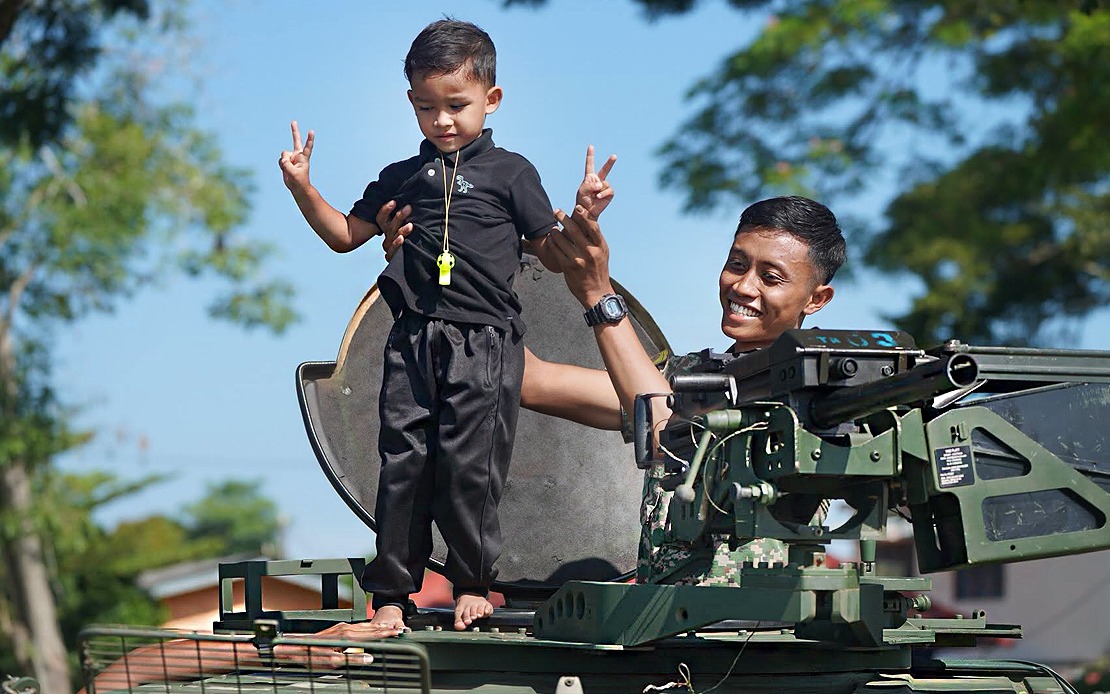
The Ministry of Defence (MINDEF) is expanding its footprint in community development across Malaysia's districts through targeted welfare initiatives and infrastructure improvements. An event held in Alor Gajah on August 15 marked the latest phase of the 'Program Jiwa Murni MADANI' (PJM), a platform designed to bridge the gap between the Malaysian Armed Forces (MAF) and the communities they serve. This strategic approach aligns with broader government objectives to ensure defence institutions remain connected to civilian populations and responsive to local needs.
The Alor Gajah gathering brought together multiple service delivery streams under one umbrella, reflecting MINDEF's shift towards holistic community engagement. Residents accessed free medical screenings, career guidance opportunities, and small business support through entrepreneurship exhibitions. The inclusion of RAHMAH Sales—a government initiative offering subsidised essential goods—alongside mobile government service counters demonstrates how defence infrastructure is being leveraged to deliver broader public services. Sports competitions and volunteer recruitment drives rounded out the day's activities, creating touchpoints for citizens of all ages and backgrounds to interact with MAF personnel in non-military contexts.
Infrastructure improvements carried out in the Alor Gajah district underscore the practical dimension of civil-military cooperation. The 9th Squadron of the Royal Engineers Regiment (9 SKN RAJD) from the Malaysian Army invested RM179,200 in five distinct community projects addressing local infrastructure deficits. These included refurbishing a recreational facility at Kampung Baru's Multi-Purpose Hall in Pondok Batang and repairing the boundary fencing at Sekolah Jenis Kebangsaan (Tamil) Durian Tunggal, addressing both safety and functionality concerns in these spaces. The renovation of the futsal court at Taman Seri Kelemak in Rembia and structural work on two religious buildings—Madrasah Seri Kemuning in Kampung Kemuning and the Surau Madrasah Khairiah in Kampung Paya Datuk Hilir—reflected MINDEF's recognition that community spaces serve multiple constituencies and require cross-sectional support.
Deputy Defence Minister Adly Zahari's presentation of RM133,000 in grants through the Service Centre Initiative marked a significant funding commitment to grassroots organisations. Eight recipients spanning religious institutions, cultural associations, and educational facilities received support for their respective development projects. The Surau Kampung Ulu Batang Melaka, Surau Al Mubarakah in Taman Dimensi, and Surau As Syakirin in Taman Sri Sutera each benefited from directed funding, as did the Chee Sen Ting Temple Association in Machap Baru and the Kuan Yen Shrine Association at Batang Pondok, reflecting MINDEF's commitment to multi-faith community development. The educational component of the initiative extended to Sekolah Jenis Kebangsaan (Tamil) Batang Melaka, which received support for developing a GreenLab facility, positioning environmental education within the broader community welfare framework.
Distribution of 500 RAHMAH baskets to MAF veterans' associations and local residents carried symbolic and practical weight. The gesture acknowledged the contributions of former military personnel while simultaneously delivering essential household supplies to vulnerable populations. This distribution method served dual purposes: sustaining the veteran community that represents institutional memory and continued connection to the armed forces, while ensuring that government subsidy programmes reached those most in need of economic relief.
Complementing the welfare-focused PJM, MINDEF's Religious Corps (KAGAT) had organised the 'Program Ilmu dan Muafakat MADANI' (PIKAT) at Masjid Kelemak the previous day. This spiritual and educational initiative combined congregational prayers with lectures and charitable contributions, creating space for meaningful dialogue between MAF personnel and mosque communities. The sequential organisation of PIKAT and PJM demonstrated MINDEF's recognition that effective community engagement requires multiple entry points—spiritual, educational, recreational, and material—to resonate across diverse demographic segments.
The articulation of these programmes with the National Defence Strategic Plan (PSPN) 2026-2030, specifically its Core 4 objectives, reveals the institutional rationale behind MINDEF's expanded community role. Rather than positioning civil-military cooperation as peripheral to defence operations, the ministry has embedded it into its highest-level strategic planning. This integration suggests that policymakers view community trust and civilian-military relations as fundamental to national security, not merely supplementary public relations activities. The MADANI framing—referencing the government's broader policy agenda centred on inclusive development—connects local initiatives to national-level governance priorities.
For Malaysian communities, particularly in smaller districts like Alor Gajah, these initiatives represent tangible government presence and resource allocation. Rural and semi-urban areas often experience service delivery gaps compared to major urban centres, making programmes that deliver healthcare screening, infrastructure repairs, and financial support directly to districts strategically significant. The repair of school facilities and community spaces addresses chronic maintenance backlogs that local governments frequently struggle to fund independently. Similarly, grants to religious and cultural organisations strengthen the associational fabric that sustains community cohesion and social stability.
The geographic and sectoral scope of MINDEF's engagement carries implications for how Malaysia approaches national security beyond traditional military operations. By positioning armed forces personnel as infrastructure workers, healthcare facilitators, and community partners, the ministry normalises defence institution presence in civilian spaces. This approach potentially builds reservoirs of civilian goodwill that could prove valuable during periods of national crisis or security challenge. Veterans' associations receiving support maintain organised networks within communities, creating informal channels through which the defence establishment can remain connected to public sentiment and grassroots needs.
For Southeast Asian observers, Malaysia's model of civil-military engagement offers insights into how countries with professional armed forces can expand institutional relevance and public legitimacy. Many regional neighbours grapple with perceptions of military remoteness from ordinary citizens or concerns about military mission creep into civilian affairs. MINDEF's careful framing of activities around welfare, spirituality, and community service—rather than security operations or political messaging—suggests strategies for managing such tensions. The emphasis on religious and educational institutions as partners indicates awareness that defence institutions must engage through trusted intermediary bodies rather than attempting direct civilian relationship-building.
The sustainability of these programmes will likely depend on dedicated funding streams and institutional commitment beyond individual ministerial initiatives. Whether the RM179,200 invested in Alor Gajah represents a model that will be systematically replicated across all Malaysian districts, or whether resource constraints limit expansion, will shape the initiative's long-term impact. Additionally, measuring outcomes beyond event participation—assessing whether infrastructure improvements persist, whether grant recipients' projects succeed, and whether participating residents develop measurably stronger views of civil-military relations—remains essential for evaluating programme effectiveness. MINDEF's comprehensive approach indicates institutional seriousness about the community engagement agenda, but translating annual events into sustained mutual benefit requires consistent resourcing and measurement frameworks that extend beyond immediate programme execution.

