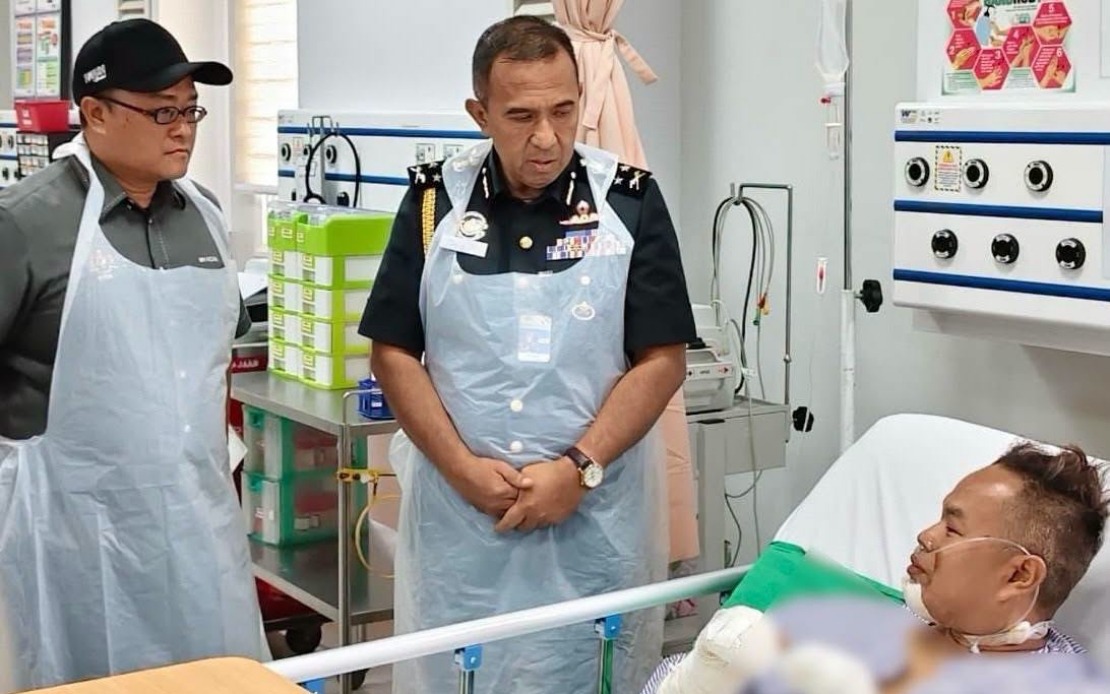
Two enforcement officers from the Ministry of Domestic Trade and Cost of Living (KPDN) were injured while conducting raids in Selangor as part of Ops Tiris 4.0, a nationwide initiative designed to eliminate the illegal diversion of subsidised liquefied petroleum gas through decanting operations. The incident underscores the inherent dangers that frontline enforcement personnel encounter while protecting consumer interests and government resources.
Assistant Enforcement Officer Mohammad Fauzi Baharuddin sustained injuries classified as fairly serious and remains under medical care, according to statements from Domestic Trade and Cost of Living Minister Datuk Armizan Mohd Ali. His colleague, Enforcement Assistant R. Yoghanath, experienced minor injuries and was discharged following initial treatment. The nature and circumstances of the incident were not immediately disclosed, though enforcement operations against LPG theft frequently involve confrontations with organised networks profiting from subsidy schemes.
Through a Facebook post, Minister Armizan expressed personal concern for Baharuddin's recovery, extending spiritual support and acknowledging the emotional toll on his family during the treatment period. He simultaneously offered well-wishes to Yoghanath for continued good health, framing the incident within a broader context of ministerial solidarity with operational staff. The public acknowledgement of injured officers represents a deliberate effort to highlight the human cost of enforcement work often conducted away from public scrutiny.
Beyond individual sympathy, Armizan used the incident to articulate a deeper recognition of the sacrifices demanded of KPDN personnel. He characterised field operations as inherently unpredictable scenarios where officers knowingly place themselves in potentially dangerous situations to safeguard public welfare and national economic interests. This framing attempts to elevate the status of enforcement work within broader government service, positioning officers as custodians of both consumer protection and fiscal integrity.
Ops Tiris 4.0 represents a sustained governmental effort to combat subsidy leakage, a persistent challenge for Malaysia's fiscal management. The LPG subsidy programme, while designed to protect household affordability, has become vulnerable to organised decanting schemes where subsidised gas is illegally transferred to industrial containers and sold at market prices. These operations generate substantial illicit profits while simultaneously draining government resources intended for genuine consumers. The enforcement response thus operates at the intersection of consumer protection, anti-corruption, and fiscal responsibility.
The dangers faced during such operations extend beyond simple administrative enforcement. Illegal decanting networks often operate with significant financial incentives and may employ protective measures to prevent disruption. Officers conducting raids encounter unpredictable environments where resistance, whether passive or active, can escalate rapidly. The incident involving Baharuddin and Yoghanath reflects this operational reality, though specific details remain limited.
For Malaysian readers, the incident resonates with broader questions about the effectiveness and sustainability of subsidy programmes. While subsidies provide immediate cost-of-living relief, the administrative burden of preventing illegal diversion consumes enforcement resources. The injury to officers represents a direct cost, while the underlying scheme loss through decanting represents an indirect cost borne ultimately by all taxpayers. Understanding these dynamics helps citizens appreciate the complexity of economic policy implementation beyond headline policy announcements.
Regionally, Malaysia's struggle with LPG subsidy fraud mirrors challenges across Southeast Asia where governments attempt to balance affordability mandates with fiscal sustainability. The enforcement approach exemplified by Ops Tiris 4.0 contrasts with alternative policy frameworks that might reduce subsidies directly or implement targeted assistance programmes. The persistence of decanting operations despite enforcement efforts suggests that market incentive gaps remain substantial enough to motivate organised criminal activity.
Minister Armizan's public acknowledgement carries significance beyond individual sympathy. It establishes clear ministerial accountability for officer safety and signals that enforcement work commands high-level attention. Such visibility can influence resource allocation decisions, operational protocols, and inter-agency coordination. When injured officers receive ministerial recognition, it potentially improves organisational morale and reinforces commitment to hazardous duty. Conversely, it may prompt broader reviews of operational procedures and risk mitigation strategies within KPDN enforcement divisions.
The incident also highlights staffing challenges within enforcement agencies. Officers accepting positions in field enforcement do so with awareness of occupational hazards, yet injuries remain occasional rather than routine. The balance between operational effectiveness and personnel safety remains a persistent management challenge. Agencies must deploy sufficient enforcement capacity to maintain credible deterrence against subsidy fraud while simultaneously protecting their workforce through adequate training, equipment, and operational support.
Looking forward, the incident may catalyse operational adjustments within Ops Tiris 4.0. Enhanced safety protocols, modified raid procedures, or expanded inter-agency coordination with police forces might be implemented to reduce personnel vulnerability. Such adjustments represent standard responses following enforcement-related injuries across government agencies worldwide. The effectiveness of any reforms will be measured through both injury reduction and sustained enforcement impact against decanting networks.
For the broader public, the episode serves as reminder that consumer protection requires sustained effort and carries genuine costs. The subsidised LPG available at pumps nationwide depends partly on successful enforcement operations preventing illegal diversion. While enforcement failures remain evident through ongoing decanting activities, the operational commitment—and the occasional injuries resulting from it—represents the practical dimension of economic policy implementation that citizens rarely witness directly.

