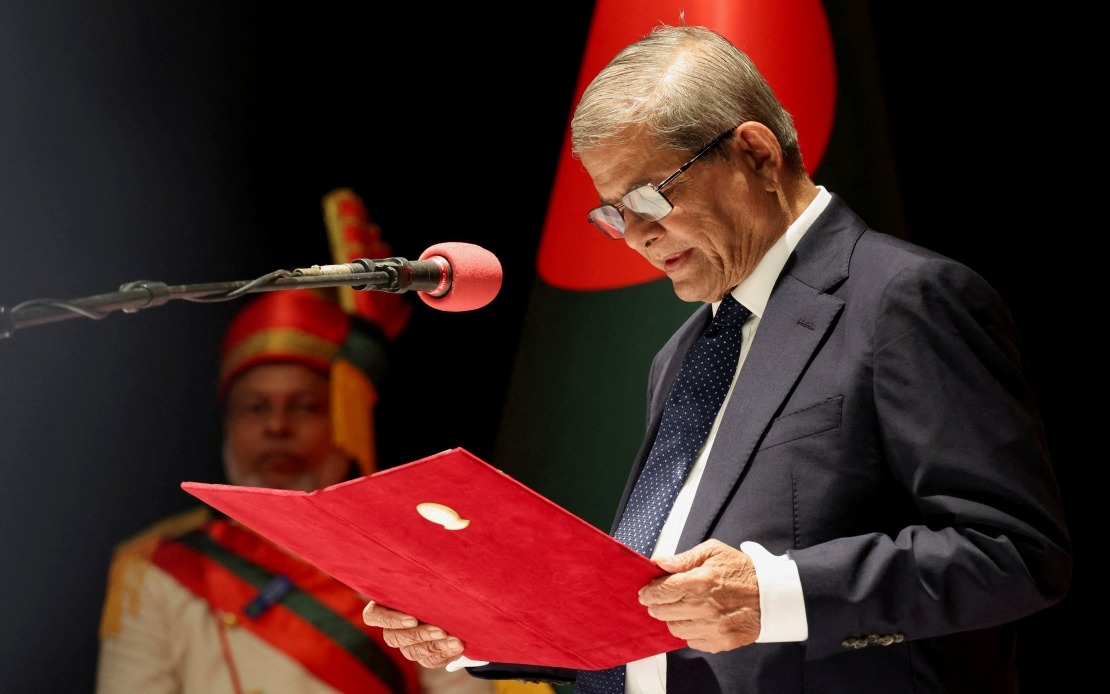
Mirza Fakhrul Islam Alamgir formally assumed office as Bangladesh's 23rd President on Friday evening, completing a ceremonial transition that marks a significant moment in the nation's political landscape. The swearing-in took place at the Darbar Hall of Bangabhaban, the official presidential residence in Dhaka, with the oath administered by Acting Speaker Barrister Kayser Kamal at 7.30 pm local time. The event drew senior figures from across Bangladesh's political and administrative establishment, underscoring the constitutional importance of the presidential transition.
The incoming president's ascent reflects his lengthy tenure within Bangladesh's political establishment, particularly his prominent role within the Bangladesh Nationalist Party (BNP). Fakhrul has long served as one of the country's most senior political figures, having previously held the position of secretary-general of the BNP, one of the nation's two dominant political parties. His election by members of parliament was conducted in accordance with Bangladesh's constitutional procedures, affirming the democratic process through which the nation's highest ceremonial office is filled.
The ceremonial proceedings followed established protocol, with Fakhrul received at Bangabhaban by Acting President Hafiz Uddin Ahmad Bir Bikram upon arrival. The welcoming formalities set the stage for the formal transfer of executive authority, a carefully choreographed process that underscores the continuity of institutional governance. The presence of Prime Minister Tarique Rahman alongside the chief justice, cabinet members, and parliamentary representatives reflected the broad political consensus surrounding the transition and the significance attached to the presidential office within Bangladesh's constitutional framework.
The oath-taking ceremony incorporated multiple ceremonial elements designed to emphasize the solemnity of the office being assumed. Following the administration of the oath by Acting Speaker Kayser Kamal, the newly sworn president and his predecessor symbolically exchanged seats, a gesture laden with constitutional meaning that formally signified the passing of presidential authority from one holder to the next. This exchange, performed in the presence of the nation's senior leadership, reinforced the institutional nature of the presidency as distinct from the individuals who occupy it, a principle central to stable democratic governance.
Fakhrul proceeded to sign both the oath of office and the oath of secrecy, formalities that bind the president to uphold constitutional duties and maintain confidentiality regarding sensitive state matters. These signatures, witnessed by the assembled dignitaries, constituted the final legal steps confirming his assumption of presidential responsibilities. The ceremony concluded with the rendition of Bangladesh's national anthem, a patriotic flourish that closed the formal proceedings and marked the official commencement of Fakhrul's term.
The attendance of foreign diplomats at the ceremony indicated international acknowledgment of the presidential transition and reflected the diplomatic protocols surrounding changes in senior leadership positions across nations. The presence of international representatives also carried symbolic weight regarding Bangladesh's place within the international community and its commitment to constitutional governance recognized by foreign powers.
For Malaysian and Southeast Asian observers, Fakhrul's presidency represents a continuation of democratic practice within one of the region's major economies. Bangladesh's commitment to constitutional transfers of power, despite the nation's complex political history involving multiple constitutional transitions, demonstrates institutional resilience within South Asian democracy. The formal procedures governing presidential selection and succession provide a framework within which political competition occurs while maintaining governmental continuity.
The appointment of a BNP-affiliated figure to the presidency at a moment when the party holds significant parliamentary representation reflects the broader political equilibrium within Bangladesh's parliament. The presidential office, while primarily ceremonial under Bangladesh's Westminster-influenced system where executive power resides with the Prime Minister, carries substantial symbolic weight as the embodiment of state authority and national unity. The presidency functions as a constitutional guardian and ceremonial representative of the nation, roles that transcend partisan political alignments.
Fakhrul's transition to the presidency concludes one chapter of his political career while initiating another characterized by different responsibilities and constraints. As president, he will operate within constitutional parameters that limit executive authority while expecting him to rise above partisan considerations to represent the entire nation. His extensive background within Bangladesh's political apparatus, including his former role leading the BNP during turbulent periods, provides experience navigating complex political landscapes, though the presidency demands a departure from partisan leadership toward national stewardship.
The successful completion of the presidential transition without reported disruptions or constitutional controversies underscores the stabilization of Bangladesh's democratic institutions following earlier periods of political turbulence. Regular constitutional transfers of power, executed according to established procedures and witnessed by multiple institutional actors, strengthen public confidence in governance mechanisms and reinforce democratic norms. For regional observers, Bangladesh's demonstration of institutional continuity, particularly during transitions involving figures from major political parties, carries implications for understanding democratic consolidation within South Asia.

