The Malaysian contingent experienced the unpredictable nature of multi-sport competition on July 25 at the 2026 Commonwealth Games in Glasgow, with athletes spread across five different disciplines producing results that ranged from encouraging to disappointing. The day illustrated both the depth of talent within the national sports ecosystem and the fierce competition that characterises the Commonwealth Games, where marginal differences in performance often determine medal outcomes across a crowded field of international competitors.
In the pool at Tollcross International Swimming Centre, results proved frustrating for most of the Malaysian swimming delegation. Para swimmer Ethan Khoo Yin Jun provided the sole bright spot in the water, securing fourth place in the men's 200 metre freestyle para event with a respectable time of 2 minutes 5.25 seconds. However, this strong showing was overshadowed by the struggles of four able-bodied swimmers who failed to progress beyond their heat rounds. Khiew Hoe Yean finished 10th overall in the men's 400 metre freestyle with a time of 3 minutes 54.23 seconds, while Tan Khai Xin placed 14th in the same event, clocking 3 minutes 57.54 seconds. Both Lim Yin Chuen and Arvin Shaun Singh Chahal finished jointly 28th out of 68 competitors in the men's 50 metre freestyle, highlighting the challenge Malaysia's swimmers face against stronger traditional swimming nations.
The setbacks in the aquatic arena continued when the men's 3x3 wheelchair basketball team suffered a heartbreaking opening match defeat. Competing in Group B at the Scottish Event Campus, the Malaysian squad fell narrowly to Wales in a tightly contested encounter that saw them trail 14-13 as the final moments ticked away. Such closely fought contests exemplify the competitive standard at the Commonwealth Games, where the difference between medal contention and early elimination can be a single basket. The team's performance raised questions about their preparedness and the depth of preparation invested ahead of the games.
Conversely, Malaysia's lawn bowling competitors demonstrated sustained excellence through group-stage competition. Izzat Shameer Dzulkeple secured his third consecutive victory in the men's singles category, while the women's pairing of Aleena Ahmad Nawawi and Syafiqa Haidar Afif Abdul Rahman added another win to their impressive tally. These consistent results in lawn bowling, a discipline where Malaysia has historically performed well, suggested that the squad was on track for medal considerations as the tournament progressed.
Artistic gymnastics provided another source of optimism for the Malaysian delegation. Rachel Yeoh qualified for the uneven bars final following a strong qualifying performance at Glasgow International Arena, where she placed third among 49 gymnasts competing in that discipline. Her advancement to a final event demonstrated both technical proficiency and the capacity of Malaysian gymnasts to compete at the higher echelons of Commonwealth competition, areas where the sport has sought to develop greater consistency.
Looking ahead to July 26, Malaysia's weightlifting programme was positioned to generate significant medal opportunities. Mohamad Aniq Kasdan and Muhamad Aznil Bidin, both returning as defending Commonwealth Games champions, were scheduled to begin their gold medal defence at SEC Armadilo. Mohamad Aniq would contest the men's 60 kilogramme category, while Mohamad Aznil aimed to secure his third consecutive Commonwealth Games gold medal in the men's 65 kilogramme division. Such repeat champions typically carry considerable pressure alongside elevated expectations, yet their previous successes suggested familiarity with the demands of performing under championship conditions.
The swimming team, despite their early heat-round eliminations, would receive another opportunity to contribute to Malaysia's medal haul through the men's 4x200 metre freestyle relay event. Relay competitions often produce different dynamics than individual events, and the combined efforts of Khiew Hoe Yean, Arvin Shaun Singh Chahal, Lim Yin Chuen and Tan Khai Xin might yet yield a respectable performance if team cohesion and pacing strategy aligned effectively.
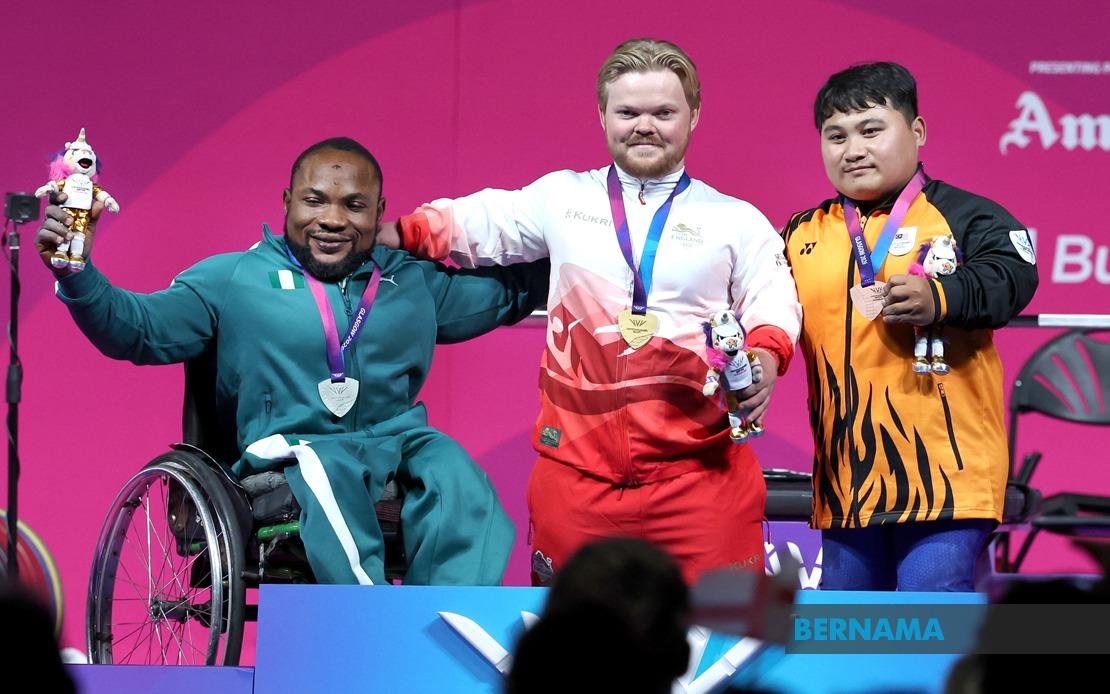
At the midpoint of the games, Malaysia had secured one bronze medal courtesy of powerlifter Bonnie Bunyau Gustin in the men's lightweight category. This single medal, while providing a foundation, underscored the challenge facing the Malaysian delegation in a competition featuring well-resourced sporting nations. The medal tally would likely expand significantly through weightlifting medals and potential outcomes in lawn bowling and gymnastics, yet substantial growth would depend on improved performances in swimming and other sports throughout the coming days. The second day encapsulated the reality of multi-sport games: simultaneous opportunities and setbacks, with the true measure of success often emerging only when final competition concludes.

