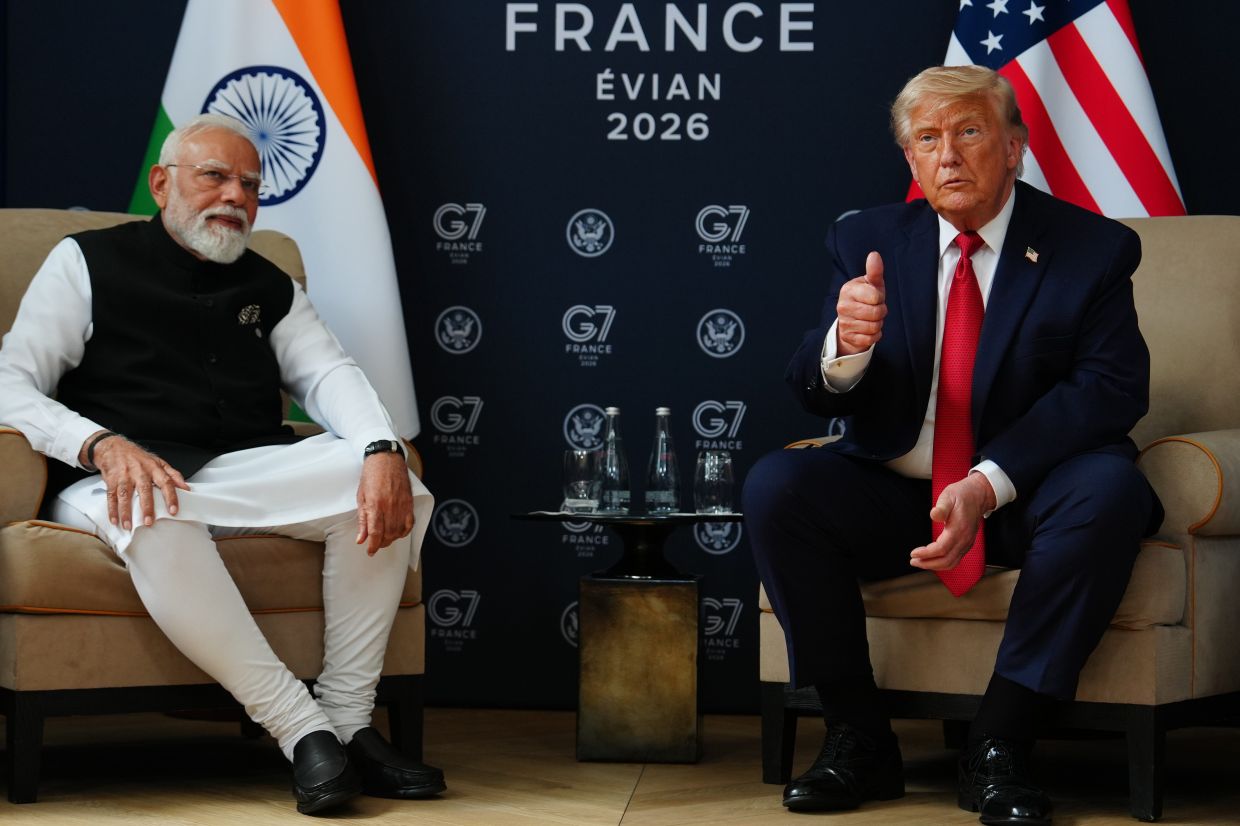
Indian Prime Minister Narendra Modi announced Thursday that negotiations towards a comprehensive trade agreement with the United States have achieved "significant progress", following a face-to-face meeting with President Donald Trump at the G7 summit in the French resort town of Evian. The encounter marked the two leaders' first in-person discussions since their February 2025 meeting in Washington, and comes at a critical juncture in efforts to reshape economic ties between two of Asia's largest economies. According to India's foreign ministry, both sides expressed particular satisfaction with the trajectory of the bilateral trade negotiations, suggesting momentum has built despite previous delays and complications.
Trump characterised the state of negotiations as remarkably advanced, telling journalists in Evian that the two countries were "very close" to reaching an agreement. The US president's assessment carried weight given his direct involvement in shaping American trade policy, which has become increasingly protectionist under his administration. His comments reflected optimism that the intricate tariff and market-access disputes separating Washington and New Delhi could be resolved within a reasonable timeframe. The informal language Trump employed—praising Modi as both a "tough negotiator" and "beautiful looking man"—underscored the personal rapport between the two leaders, a factor that often accelerates diplomatic progress on economically complex matters.
The two governments have established an ambitious target of doubling bilateral trade to US$500 billion by 2030, a sevenfold increase from current levels that would represent one of the world's most significant trade expansions. Reaching this goal requires dismantling long-standing barriers that have protected domestic industries in both nations, particularly in agriculture, manufacturing, and services. India's Commerce Minister Piyush Goyal had stated in early June that negotiations were "about 99 per cent" complete on the first phase of the agreement, suggesting that only technical details and final political approvals remained outstanding. This assessment, if accurate, indicates that substantive agreement on major contentious issues such as tariff reductions and intellectual property protection has largely been achieved.
The timing of the Evian meeting proves significant given the turbulent backdrop of recent US trade policy. Trump's sweeping tariff initiatives were struck down by the US Supreme Court, forcing his administration to pivot toward targeted investigations into what it characterises as unfair trade practices by various nations, including India. Simultaneously, Washington imposed a blanket 10 percent tariff across multiple trading partners as leverage in negotiations. Rather than derailing talks, this pressure appears to have concentrated both delegations' minds on reaching a mutually acceptable settlement. The presence of US Trade Representative Jamieson Greer's scheduled visit to India the following week signals that momentum will be maintained through sustained official engagement.
The historical context of US-India trade relations adds complexity to these current negotiations. The two countries have pursued agreements since the Obama administration, with previous attempts stalling over agricultural subsidies, intellectual property rules, and market access for textiles and manufactured goods. India's protective stance towards its domestic industries, particularly in agriculture where farmers represent a significant political constituency, has frequently clashed with American demands for greater market opening. Conversely, India has sought better access to American technology and services markets while resisting what it views as excessive intellectual property enforcement that could raise drug prices domestically. The fact that both sides have moved substantively close to agreement suggests creative compromises have been found on these historically intractable issues.
Beyond trade mechanics, Modi raised a matter of immediate humanitarian concern during the Evian meeting: the safety of Indian seafarers amid escalating Middle East tensions. Three Indian sailors were killed on June 10 when a US strike targeted a commercial vessel off Oman, an incident that highlighted the dangers facing maritime workers from nations dependent on Gulf oil supplies. Modi requested that Trump ensure adequate protections for Indian sailors as part of implementing the broader Iran-US agreement intended to stabilise Middle East conflict. This request reflects India's vulnerable position as a major consumer of energy and foodstuffs sourced from a region experiencing dangerous geopolitical instability.
India's exposure to Middle Eastern disruption has intensified considerably due to the ongoing conflict's impact on critical supply chains. Iran's closure of the Strait of Hormuz, a waterway through which roughly one-third of global seaborne oil passes, has directly throttled India's energy procurement options and driven up costs for fuel imports. The cascading effects extend beyond petroleum to fertiliser and food commodities, whose prices have surged due to transportation route complications and reduced production in conflict-affected regions. For India's economy and its large population dependent on affordable energy and food, these supply-chain shocks pose serious risks to inflation control and growth prospects.
Modi's broader warning that Middle East disruptions would impose extended costs on developing nations reflected India's frustration with the concentration of geopolitical risk in the region. Unlike wealthier economies capable of absorbing commodity price spikes, countries across South Asia, Africa, and Southeast Asia face acute vulnerability to energy and food inflation that can trigger social instability. Modi's public assertion that "disruptions in fuel, fertiliser and food supply chains caused by the crisis... will continue to impact the Global South for a considerable period" positioned India as an advocate for developing-economy interests within the G7 context. This advocacy reflects India's growing diplomatic assertiveness and its leadership ambitions within the Non-Aligned Movement and broader South Asian sphere.
For Malaysian readers and regional observers, the Modi-Trump trade agreement carries significant implications. Southeast Asian economies, including Malaysia, face potential trade diversion effects if India and the United States establish a comprehensive bilateral arrangement that privileges their mutual access at the expense of competitors. Indian manufacturing, particularly in pharmaceuticals, textiles, and information technology services, competes directly with Malaysian and other ASEAN producers. Simultaneously, a stronger US-India economic relationship could reshape regional geopolitical alignments, particularly given India's expanding strategic partnership with the United States within the Quad framework. The trade deal thus represents not merely a bilateral arrangement but a signal of deepening US commitment to Asian economic engagement outside of China.
The directives both leaders issued to their respective negotiating teams to work toward "a commercially meaningful agreement at the earliest" suggests that final ratification could occur within months rather than years. Such acceleration would require political will on both sides to override remaining protectionist constituencies and domestic industry objections. India's government, which faces elections and must maintain support among rural and agricultural voters wary of market opening, would need to frame concessions as necessary investments in long-term growth. The Trump administration, conversely, must present the agreement as a victory that serves American workers and manufacturers rather than merely enriching multinational corporations. Successfully threading these domestic political constraints while maintaining substantive commercial progress will test both leaders' negotiating skills.
The broader significance of potential US-India trade normalisation extends to the architecture of global commerce itself. A major bilateral agreement between these two nations would signal that despite protectionist pressures and geopolitical tensions, major economies retain capacity to negotiate mutually beneficial arrangements. It would also strengthen India's position as an alternative to China within global supply chains—a prospect that appeals to US policymakers seeking to reduce dependence on Chinese manufacturing. For India, the deal represents validation of its economic weight and growing importance to American strategic calculations. As negotiations enter their final phase with US Trade Representative Greer's visit, observers across Asia will watch carefully to assess whether substantive progress translates into a signed agreement that reshapes bilateral relations and regional economic competition.