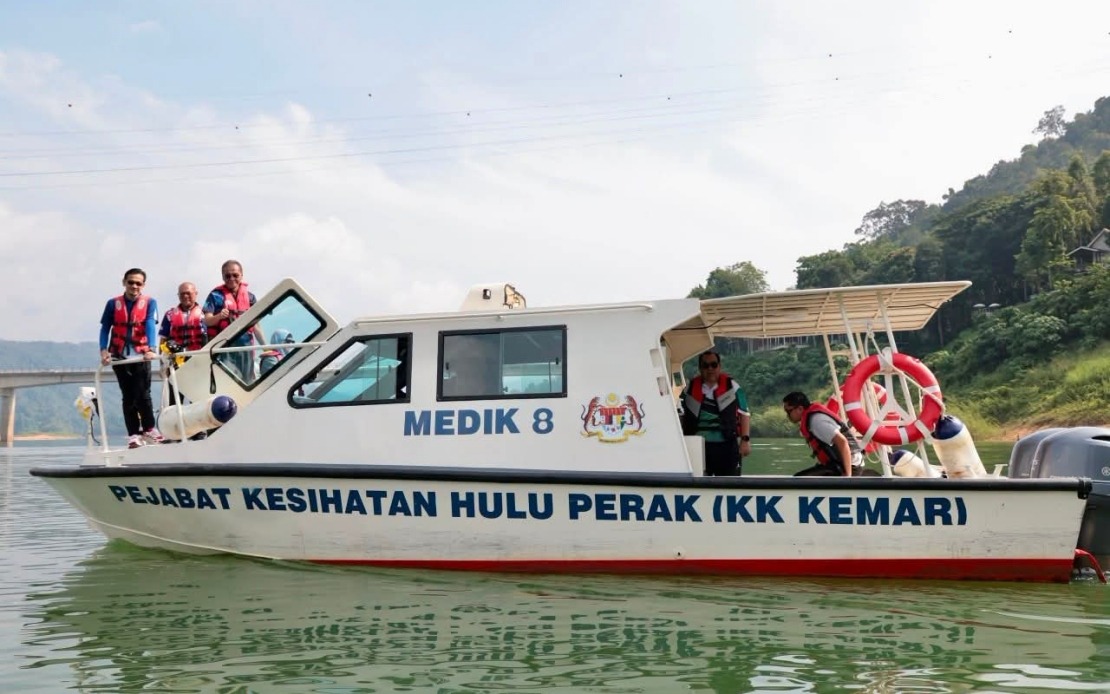
The Ministry of Health has expanded its mobile medical infrastructure in Hulu Perak by introducing Medic Boat 8, a purpose-built vessel designed to navigate the river systems that form the lifeline of remote indigenous communities in the region. Launched at the Belum Rainforest Resort jetty during a ministerial visit, the new vessel addresses critical gaps in healthcare accessibility for Orang Asli populations whose geographical isolation has historically limited their ability to access timely medical intervention.
Health Minister Datuk Seri Dr Dzulkefly Ahmad emphasised that the RM350,000 investment represents a tangible commitment to the Malaysia MADANI development framework, which prioritises equitable healthcare delivery across all communities regardless of terrain or infrastructure challenges. The Kemar Resettlement Scheme in Gerik is home to more than 4,500 Orang Asli residents whose dependence on waterways for movement creates unique logistical obstacles for emergency medical response. By deploying a dedicated 12-passenger multipurpose boat, the ministry aims to substantially reduce the time elapsed between when patients require urgent care and when they receive professional medical attention.
The addition of Medic Boat 8 brings the Health Ministry's operational marine fleet to seven vessels, each playing a critical role in sustaining healthcare connections with communities that lack conventional road access. The strategic positioning of these boats acknowledges a fundamental reality facing Malaysia's interior indigenous populations: waterborne transport remains the most practical and sometimes only viable mechanism for reaching medical facilities. The challenge has intensified during monsoon seasons when river conditions become treacherous, necessitating skilled operators familiar with local water hazards and seasonal variations.
Dr Dzulkefly highlighted that infrastructure investment alone cannot guarantee healthcare equity without matching commitment from frontline personnel. The doctors, nurses, and boat operators who staff these mobile services accept significant personal risks, regularly navigating dangerous currents and unpredictable weather to fulfil their professional obligations. This human dimension underscores why modern equipment requires equally dedicated personnel capable of working under demanding field conditions. The minister's acknowledgment of these workers reflects broader recognition that healthcare provision in remote regions demands unusual levels of professional sacrifice and adaptability.
The Hulu Perak deployment gains additional significance within Malaysia's broader context of indigenous healthcare disparity. The Orang Asli populations have historically experienced higher mortality rates, lower immunisation coverage, and reduced access to preventive care compared to urban populations. Geographic isolation compounds these challenges by limiting specialist referrals, emergency surgical interventions, and chronic disease management programmes. By improving transport connectivity, the boat service creates pathways toward closing healthcare equity gaps that have persisted despite decades of development initiatives.
For Southeast Asian observers, the Malaysian approach offers instructive lessons about serving geographically isolated communities. Multiple countries across the region—Indonesia, Thailand, Cambodia, and Laos—similarly struggle with healthcare delivery to river-dependent populations in rainforest regions. Malaysia's investment in purpose-built river vessels and trained aquatic operators demonstrates how tailored infrastructure can address topographical constraints that conventional ambulance services cannot overcome. The model proves especially relevant for Southeast Asia's shared geography of tropical waterways and indigenous populations with limited road connectivity.
The operational sustainability of such services requires sustained budget commitment beyond initial deployment. Boat maintenance, fuel costs, personnel training, and equipment replacement represent ongoing expenses that extend well beyond the initial capital investment. The Health Ministry's decision to expand its fleet, rather than consolidate existing resources, signals confidence in the long-term viability of water-based healthcare delivery and suggests internal assessment that demand will continue justifying operational expenditure. This contrasts with historically intermittent healthcare initiatives in remote areas that suffered from inconsistent funding or political deprioritisation.
The Kemar Resettlement Scheme itself represents a complex policy outcome, as resettlement initiatives often involve complicated relationships between indigenous populations and state authorities. Healthcare provision becomes a crucial indicator of whether resettlement policies genuinely improve living standards or simply relocate populations while maintaining infrastructure disparities. Medic Boat 8's deployment suggests the state is attempting to address infrastructure deficits created by the resettlement process, though the adequacy of such measures remains subject to ongoing assessment by community health advocates and indigenous rights organisations.
Looking forward, the effectiveness of expanded boat services will depend on metrics such as emergency response time reduction, patient survival rates during acute incidents, and community utilisation rates. The Health Ministry will likely face expectations to document whether increased marine capacity translates into measurable health outcome improvements for Orang Asli populations. Establishing baseline data on current emergency response capabilities will help future evaluations determine whether Medic Boat 8 and complementary services meaningfully alter health trajectories or simply provide cosmetic policy gestures. Southeast Asian governments attempting similar programmes should anticipate these accountability requirements from civil society organisations and donor institutions increasingly focused on health equity metrics.
The broader policy implication extends beyond Hulu Perak, as Malaysia's peninsular interior contains multiple Orang Asli settlement areas with comparable isolation challenges. If the Medic Boat 8 deployment succeeds operationally and generates documented health improvements, pressure will mount for similar investments across other river-dependent communities. The political economy of such expansion raises questions about resource allocation priorities and whether national healthcare budgets can sustain multiple marine healthcare fleets across different regions. The Malaysia MADANI framework's stated commitment to inclusive development will face practical testing through decisions about whether boat-based healthcare represents a scalable model for national implementation.

