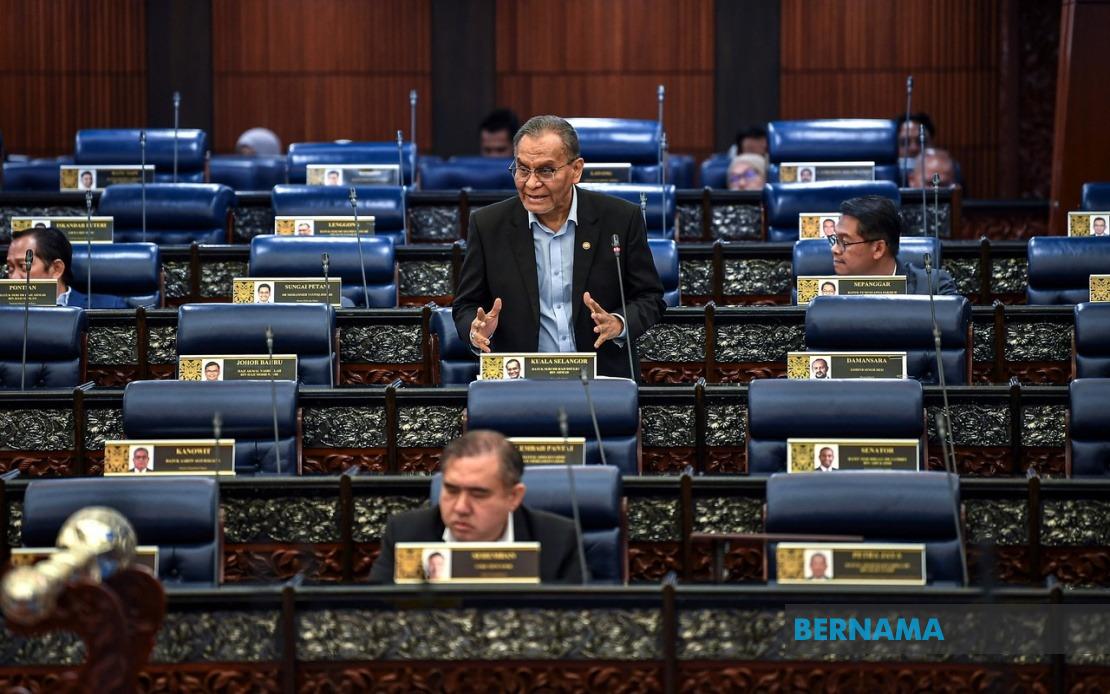
Health Minister Datuk Seri Dr Dzulkefly Ahmad has reaffirmed the government's determination to keep Malaysia's private primary healthcare sector viable through targeted intervention, acknowledging that the closure of privately-run general practitioner clinics represents a genuine structural challenge to the nation's layered healthcare architecture. Speaking in Parliament on June 23, the minister outlined a strategy centred on outsourcing partnerships designed to bolster the financial resilience of private medical practitioners, recognising that their survival is essential to maintaining a functioning first line of defence against disease and injury.
The scale of the problem is significant. Since 2013, a total of 2,034 private medical clinics have shuttered their doors, a figure that underscores the severity of financial and operational pressures bearing down on independent practitioners across the country. This attrition rate—averaging roughly 250 closures annually over the past decade—reflects deeper structural vulnerabilities within the private primary care sector that cannot be dismissed as temporary market fluctuation. Dr Halimah Ali, the Kapar parliamentarian who raised the issue, specifically attributed the crisis to declining recruitment of house officers into private practice, a worrying trend that suggests younger doctors are increasingly opting for employment in public institutions rather than establishing independent practices.
Dzulkefly's acknowledgement of direct personal experience with clinic closures during the COVID-19 pandemic lends credibility to his commitment to reversing the trend. The pandemic exposed the fragility of private primary care operations, many of which faced dramatic revenue drops during lockdowns while maintaining fixed overhead costs. Rather than viewing this crisis as an opportunity to consolidate public sector dominance, the ministry is positioning private practitioners as essential partners whose continued operation serves the broader public interest. The government's perspective reflects growing international recognition that robust primary healthcare systems require a healthy mix of public and private provision.
A cornerstone of the ministry's response involves raising the minimum consultation fee for private medical practitioners from RM10 to RM80 under existing regulatory frameworks. This adjustment, while modest by international standards, represents a significant boost to clinic revenue streams and addresses one of the most pressing constraints on sustainability: insufficient income to cover operational costs including staff salaries, rental, utilities, and medical supplies. The previous RM10 ceiling, set decades ago, had become economically nonsensical given inflation and rising business costs, effectively forcing practitioners to absorb losses or abandon private practice altogether. The new RM80 floor reflects current market realities and provides breathing room for clinics to reinvest in service quality and staff retention.
Beyond fee adjustments, the proposed outsourcing arrangements represent a more innovative approach to sustaining private sector viability. These partnerships would allow private clinics to access government contracts and collaborative arrangements that generate additional revenue streams while expanding service capacity. Such models exist globally—private practitioners in Singapore, Thailand, and the Philippines operate partially through public-private partnerships that stabilise their patient flows and income. By formalising similar arrangements in Malaysia, the ministry can help clinics compete more effectively while simultaneously improving geographic access to primary care in areas where private practices might otherwise be economically unviable.
The statistical foundation for the minister's approach is the recognition that private general practice clinics collectively constitute a vast healthcare infrastructure: 10,208 facilities operating nationwide, dwarfing the 2,916 MOH-operated health clinics. This means that private practitioners currently serve as the primary point of contact for roughly 78 percent of Malaysia's outpatient primary care interactions. Allowing this network to deteriorate would impose intolerable strain on the public system, which already faces severe congestion in hospital emergency departments and outpatient services. From a systems perspective, private clinic survival is not a niche market concern but a matter of fundamental public health infrastructure resilience.
The collaborative framework outlined in Malaysia's 13th Development Plan specifically targets non-communicable disease management through integrated public-private coordination. Conditions such as hypertension, diabetes, chronic respiratory disease, and heart disease increasingly dominate healthcare demand across Southeast Asia, and their effective management depends critically on consistent primary care contact and medication adherence. Private clinics, often more accessible and responsive than overburdened public facilities, excel at providing the longitudinal continuity of care that NCDs require. By formally embedding private practitioners into disease management protocols alongside MOH health clinics, the system can distribute patient load more equitably while improving clinical outcomes through specialised expertise and individualised attention.
The international comparisons cited—specifically the United Kingdom's general practitioner commissioning model and Taiwan's integrated primary care system—are instructive benchmarks. Both countries demonstrate that strong primary healthcare systems depend fundamentally on vibrant private sectors operating within regulatory frameworks that ensure quality and equity. Taiwan's system, in particular, manages non-communicable disease burden through coordinated networks of private clinics and public hospitals, achieving superior outcomes in diabetes control and hypertension management compared to systems with weaker primary care integration. Malaysia's adoption of similar principles acknowledges that market mechanisms and professional autonomy, when properly calibrated, enhance rather than undermine public health objectives.
For Malaysian readers and policymakers, the implications are substantial. A functioning private primary care sector reduces pressure on hospitals, improves geographic access to healthcare, and creates employment for medical graduates. Conversely, continued clinic closures risk creating primary care deserts in suburban and rural areas, pushing non-emergency cases into hospital emergency departments where they compete for resources with genuine emergencies. The compounding effect of 2,034 closures over a decade suggests that without intervention, the erosion will accelerate, particularly if fee ceilings remain unrealistic and younger practitioners continue choosing salaried employment.
The ministry's approach also reflects pragmatic acceptance of market realities: private practitioners are businesses whose operators require reasonable income to sustain their livelihoods. The RM80 consultation fee, while substantially higher than the previous RM10, remains competitive with private practices throughout Southeast Asia and is affordable for middle-income Malaysians seeking timely care. This price point balances equity concerns with sustainability, ensuring that primary care remains accessible to broad population segments while allowing practitioners to operate viably.
Implementation challenges remain significant. Outsourcing arrangements require clear contractual frameworks defining service standards, payment mechanisms, and accountability relationships. Private practitioners will need assurance that government partnerships provide reliable revenue rather than bureaucratic complications. The MOH must also manage expectations within the public sector workforce, ensuring that collaborative models do not create tension with government doctors or undermine public sector morale. Successful execution demands sustained political commitment beyond parliamentary statements, including dedicated funding for partnership coordination and dispute resolution mechanisms.
The 13th Malaysia Plan's inclusion of NCD disease management through public-private collaboration signals that this commitment extends beyond rhetorical support. If implemented with adequate resourcing and clear performance metrics, such integration could transform Malaysia's approach to chronic disease management while simultaneously stabilising the private primary care sector. Success would require training programmes to align private practitioners with MOH protocols, data sharing systems to enable coordinated care, and payment mechanisms that reward quality rather than simply transaction volume.
Ultimately, Dzulkefly's public commitment to private clinic sustainability reflects recognition that Malaysia's healthcare system cannot function optimally if nearly 80 percent of primary care infrastructure collapses. The combination of fee adjustments, outsourcing partnerships, and formal integration into national disease management strategies represents a coherent policy response to a legitimate crisis. Whether these measures prove sufficient depends on subsequent implementation and the government's willingness to move beyond announcements toward institutionalising the structural changes necessary for sector revival.