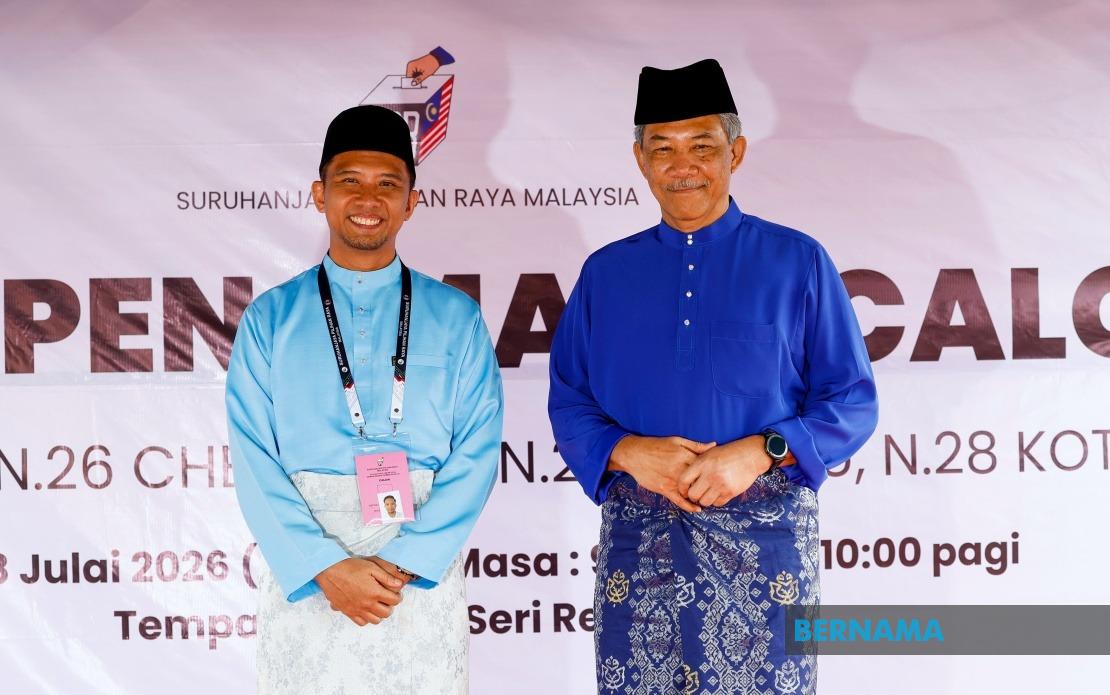
The Rantau state seat in Negeri Sembilan is shaping up as a direct contest between two sharply contrasting candidates, with Barisan Nasional chairman and Foreign Minister Datuk Seri Mohamad Hasan defending his long-held position against Pakatan Harapan's newcomer Dr Azizul Hakim Mahdi. Returning officer Mohd Zamri Mohd Esa confirmed the two-candidate race following the completion of nomination proceedings at Dewan Sri Rembau, setting the stage for what promises to be a closely watched battle in the 16th Negeri Sembilan state election scheduled for August 1.
Mohamad, who simultaneously holds the post of UMNO deputy president, has maintained an iron grip on the Rantau seat for two decades, having first claimed it in 2004. His dominance in the constituency became even more apparent in the previous state election held in 2023, when he secured a commanding 10,280-vote majority over his PH challenger, amassing 16,957 votes compared to Rozmal Malakan's 6,677. This impressive track record positions him as a formidable incumbent in the upcoming contest, though the emergence of a younger, professionally-established opponent suggests the election narrative may differ from previous contests in the constituency.
Following the nomination process, Mohamad outlined his campaign strategy, emphasizing the need for systematic and disciplined grassroots mobilization across Barisan Nasional machinery. He stressed that the coalition's messaging during the campaign period would centre on explaining its electoral manifesto and persuading voters to extend their mandate to BN on polling day. The Foreign Minister's approach reflects a confidence built on his previous electoral success, though it also suggests BN is preparing for a more competitive environment than the 2023 election presented in Rantau.
Dr Azizul Hakim, at 35 years old, represents a generational shift and professional alternative to the long-serving incumbent. The medical practitioner brings a decade of healthcare experience and operates three private clinics across Senawang, Puncak Alam, and Melaka, positioning himself as someone intimately familiar with community healthcare challenges. His campaign platform distinctly emphasizes healthcare accessibility and services improvement, areas where his professional credentials provide a concrete foundation for policy discussion. By framing himself as a young professional capable of addressing grassroots concerns, Dr Azizul Hakim is attempting to appeal to voters potentially fatigued by long-serving representatives or seeking fresh perspectives on constituent service.
The Rantau contest occurs within a broader competitive landscape across Negeri Sembilan's 36 state seats. The Paroi constituency features a three-way competition between PH's Ahmad Shahir Mohd Shah, who serves as press secretary to the state Menteri Besar, PN candidate Kamarol Ridzuan Mohd Zin, and Bersatu's Mohd Nazree Mohd Yunus. Similarly, the Kota seat has evolved into a three-cornered affair, with incumbent Suhaimi Aini from BN challenged by PH's Muhammad Allif Ibrahim and Bersatu candidate Akmal Noradzmi Abdul Rahim. Meanwhile, the Chembong state seat remains a straight fight between incumbent BN candidate Datuk Zaifulbahri Idris and PH's Danish Nazran Murad.
The fractured opposition landscape across multiple constituencies potentially benefits BN, as vote splitting among competing non-BN coalitions could diminish the consolidated challenge against the ruling coalition. However, the Rantau contest specifically avoids this complication, presenting a genuine two-candidate race that may produce clearer insights into voter sentiment regarding the incumbent's performance and the opposition's ability to mount credible challenges in established BN strongholds. The straight fight format allows voters to make a direct choice between continuity under Mohamad and change represented by Dr Azizul Hakim.
Negeri Sembilan's 16th state election will involve 889,490 registered voters across the state, comprising 867,151 ordinary voters, 16,884 military personnel and spouses eligible for early voting, and 5,455 police personnel with early voting status. The Election Commission has scheduled July 28 for early voting and August 1 as the main polling day, following the legislative assembly's dissolution on June 5. This electoral framework ensures diverse voter participation while providing ample campaign time for candidates to articulate their positions and appeal to their respective constituencies.
For the Rantau electorate specifically, the contest between Mohamad's experience and established administrative network against Dr Azizul Hakim's professional credentials and fresh perspective represents a microcosm of broader Malaysian electoral dynamics. Incumbent advantage typically provides substantial structural benefits, including name recognition, administrative resources, and established grassroots networks. Yet demographic shifts and voter expectations regarding healthcare, service delivery, and responsive governance may create openings for challengers offering specialized expertise and untested approaches to long-standing problems. Dr Azizul Hakim's healthcare focus directly addresses issues affecting quality of life, potentially resonating with constituents if BN's campaign fails to convincingly address such concerns.
Mohamad's position as Foreign Minister adds a national dimension to what might otherwise remain a parochial state-level contest. His elevated profile could attract resources and support from higher BN echelons, yet might also distance him from attending to granular local concerns. Conversely, Dr Azizul Hakim's non-political background and private sector experience position him as an outsider to the political establishment, a characteristic that could appeal to voters skeptical of traditional politicians while simultaneously disadvantaging him in terms of mobilization capacity and institutional support.
The Rantau election unfolds against Malaysia's broader political backdrop, where coalition dynamics continue evolving and voter preferences demonstrate increasing sophistication regarding candidate quality and issue-specific competence. Negeri Sembilan's status as a swing state in previous elections underscores the unpredictability of the electorate, suggesting that even established incumbents cannot assume automatic victory. Whether Mohamad's two-decade tenure and recent electoral mandate prove insurmountable or whether Dr Azizul Hakim's professional credentials and emphasis on healthcare resonate sufficiently with voters will provide valuable indicators for understanding constituent priorities and the sustainability of BN's electoral dominance in the state.

