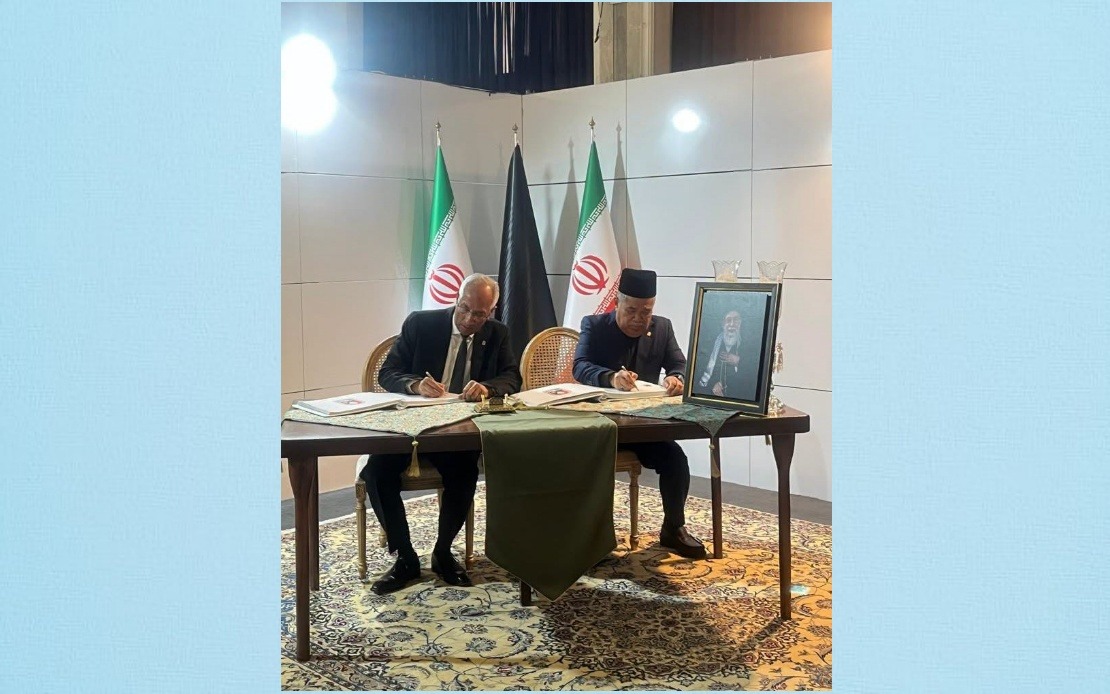
Malaysia sent a high-level government delegation to Iran this week to pay final respects to Ali Khamenei, the country's former Supreme Leader who died in an attack in February. Leading the contingent was Datuk Seri Mohamad Sabu, the Minister of Agriculture and Food Security, who attended the concluding ceremonies at the Grand Mosalla in Tehran. His presence underscores the diplomatic significance Malaysia places on its relationship with Iran, a fellow Muslim-majority nation with which it maintains multifaceted political and economic ties.
Khamenei's death, which occurred more than four months before this delegation visit, stemmed from an attack involving military coordination between the United States and Israel. The incident marked a dramatic escalation in Middle Eastern tensions and triggered an extended period of mourning across Iran. Malaysian officials' decision to participate in the final ceremonial rites reflects both the significance of Khamenei's position within the Islamic world and Malaysia's broader engagement with regional powers in Asia's western periphery.
The mourning ceremonies extended over several days, with proceedings commencing in Tehran before shifting to Qom and then to the holy Shia sites of Najaf and Karbala. The final resting place was scheduled to be the Imam Reza Shrine in Mashhad, one of the most sacred locations in Shia Islam, where Khamenei's remains were to be interred on July 9. This multi-city journey across Iran's religious heartland reflected Khamenei's towering status within Iran's political structure and his significance as a theological authority in Shia communities worldwide.
Upon his arrival in Tehran, Mohamad Sabu was received by Mohammad Bagher Ghalibaf, who holds the position of Speaker of the Iranian Parliament, and Abbas Araghchi, Iran's Foreign Minister. This level of official reception demonstrates the respect Iran accorded to Malaysia's representation at the ceremonies. The engagement of senior Iranian legislative and diplomatic officials indicates that Tehran valued the Malaysian delegation's presence and sought to acknowledge Malaysia's standing within regional diplomatic circles.
In remarks shared on social media following the ceremony, Mohamad Sabu expressed condolences on behalf of Malaysia. He offered prayers invoking divine mercy upon Khamenei, requesting forgiveness for his transgressions and supplicating for him to be granted a place among the righteous in the afterlife. These statements reflected traditional Islamic expressions of respect for the deceased and conveyed Malaysia's recognition of Khamenei's role as a prominent Islamic figure whose passing held significance for Muslim communities across the globe.
The timing of the delegation's visit carried particular weight given the intensity of geopolitical dynamics in the Middle East during this period. Malaysia, as a nation balancing relationships with multiple regional and global powers, demonstrated its commitment to maintaining cordial ties with Iran despite the complex international environment. The ministry-level representation signalled that Malaysian leadership viewed engagement with Iran as sufficiently important to warrant direct participation in solemn state occasions.
Khamenei's death represented a watershed moment in Iranian politics and regional affairs. As Supreme Leader since 1989, he had shaped Iran's domestic policy and foreign strategy for more than three decades. His passing created uncertainties regarding Iran's political trajectory and raised questions about continuity in Tehran's approach to regional conflicts, nuclear negotiations, and relations with neighbouring states. Malaysia's diplomatic presence at the funeral rites reflected a desire to maintain constructive connections with Iran as the country navigated this transitional period.
The Malaysian delegation's participation also carried implications for Southeast Asian diplomacy more broadly. Regional nations have increasingly sought to develop independent foreign policy stances rather than simply aligning with Western positions on Middle Eastern affairs. Malaysia's attendance at Khamenei's funeral ceremonies, despite American and Israeli involvement in his death, exemplified this tendency to pursue pragmatic bilateral relationships across geopolitical divides.
For Malaysian policymakers and observers, the episode reinforced the importance of cultivating ties with significant Islamic nations. Iran's role as a major Shia Islamic centre and its influence across the Middle East, Central Asia, and parts of South Asia make it a strategic partner for Malaysia's diplomatic and cultural objectives. Engagement at major state occasions like state funerals provides valuable opportunities for informal dialogue and relationship-building among officials.
The journey of Khamenei's remains to multiple religious centres before final burial reflected the extraordinary reverence held for him within Iran and among Shia populations internationally. Each stop represented a chance for mourners to pay respects at locations of profound spiritual significance. Malaysia's participation in these ceremonies, coordinated at the ministerial level, demonstrated the country's desire to maintain respectful and substantive relations with Iran in ways that acknowledge shared Islamic heritage and mutual regional interests.

