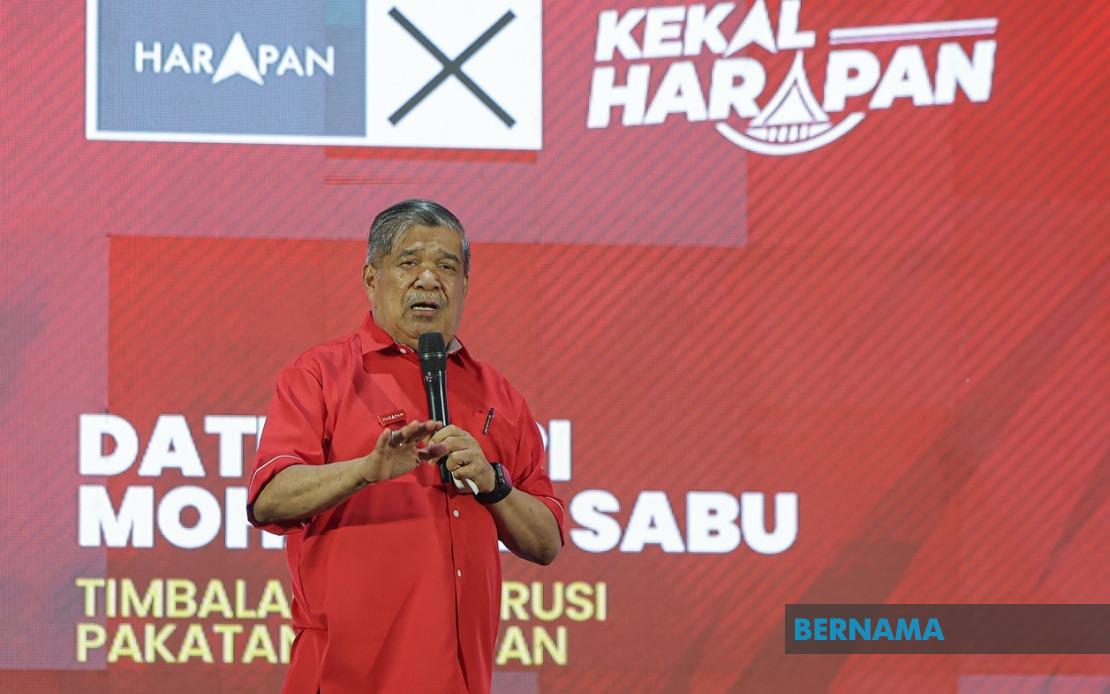
Amanah president Datuk Seri Mohamad Sabu has sounded an alarm about what he terms 'marriage-divorce' politics, urging the electorate in Negeri Sembilan to recognise and reject the pattern of opportunistic party-hopping that has become increasingly common in Malaysian politics. Speaking in Seremban on July 22, Mohamad Sabu framed the issue not merely as a matter of political gossip but as a fundamental threat to the institutional stability that any functioning democracy requires.
The Amanah leader's critique targets a specific political phenomenon: the practice of parties and politicians shifting their primary allegiances whenever doing so offers a tactical advantage in pursuit of power. Mohamad Sabu argues this behaviour represents a calculated abandonment of consistent principles in favour of short-term electoral positioning. Rather than viewing such manoeuvres as inevitable features of coalition politics, he characterised them as corrosive to public trust and the coherence of the political system itself.
Central to Mohamad Sabu's warning is the contention that repeated alliance-switching should never become normalised within Malaysian political culture. The concern extends beyond individual politicians to encompass entire parties that demonstrate a willingness to enter and exit coalitions based primarily on calculations of immediate benefit. When voters observe this pattern, Mohamad Sabu suggests they should interpret it as evidence of fundamental untrustworthiness rather than pragmatic flexibility.
To illustrate his point, Mohamad Sabu cited a concrete example of a party that has undergone multiple alignment changes in recent years. He described a trajectory beginning with affiliation to Barisan Nasional, followed by a departure to join Pakatan Rakyat, then a return to the UMNO-led BN coalition after 2015, a split from that arrangement within roughly a year, a subsequent embrace of Bersatu, and then another rupture. The accumulation of these reversals, Mohamad Sabu suggested, reveals a pattern of political behaviour driven entirely by opportunism rather than ideological commitment or policy consistency.
Mohamad Sabu's metaphor of marriage and divorce is deliberately provocative, carrying implications about commitment, loyalty, and the breach of fundamental agreements. The imagery suggests that political parties entering coalitions should be treated analogously to spouses entering matrimonial bonds—with gravity and an expectation of durability. When parties exit and re-enter alliances as casually as some enter and exit marriages, the comparison implies, they demonstrate contempt for the very concept of reliable partnership.
The timing of Mohamad Sabu's intervention carries significance within Malaysia's contemporary political context. Coalition governments have become the norm since the 2018 general election fundamentally disrupted the Barisan Nasional's half-century dominance. In this fragmented landscape, the ability to assemble and maintain majority coalitions has become precarious, creating incentives for precisely the kind of strategic party-switching that Mohamad Sabu condemns. His warning addresses a situation where instability at the coalition level directly threatens governmental continuity.
For Malaysian voters, particularly those in Negeri Sembilan who would have been Mohamad Sabu's immediate audience, the challenge lies in distinguishing between legitimate political realignment and cynical opportunism. Voters must develop mechanisms for evaluating whether a party's shifting allegiances reflect genuine evolution of political thought or constitute merely the pursuit of ministerial positions and state resources. Mohamad Sabu's intervention attempts to provide a framework for making this distinction by labelling repeated switches as inherently suspicious.
The broader implications extend to Malaysia's institutional health. Political systems depend on a baseline of predictability and reliability within their competitive arena. When major players abandon alliances with such frequency that observers cannot reasonably anticipate which parties will cooperate after the next electoral cycle, the system itself becomes difficult to navigate for ordinary citizens and investors alike. Mohamad Sabu's concern, therefore, encompasses not only ethical judgments about political behaviour but practical worries about governmental effectiveness.
From the perspective of Amanah specifically, Mohamad Sabu's statement also positions the party as a voice of principled consistency in contrast to those willing to shift positions opportunistically. By making this case to Negeri Sembilan voters, Amanah implicitly invites them to regard the party as a reliable alternative to political operators whose track records suggest they will abandon their current positions whenever doing so promises advantage.
The challenge facing Malaysian democracy going forward involves developing sustainable coalition arrangements that can survive electoral cycles without fragmenting into repeated marriage-and-divorce scenarios. Mohamad Sabu's plea to voters reflects recognition that such stability cannot be imposed from above but must emerge from electoral choices by citizens who understand the costs of serial political unreliability and choose accordingly.

