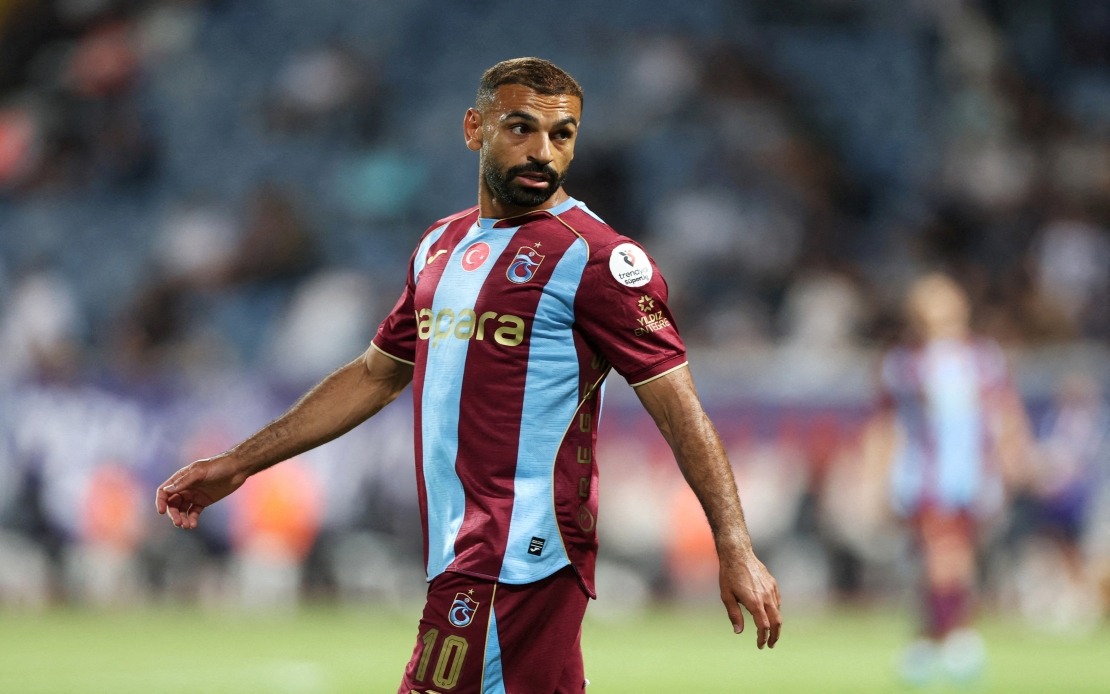
Mohamed Salah's recent move to Turkish football club Trabzonspor has quickly translated into a visible retail phenomenon across Cairo's iconic Khan el-Khalili bazaar, with sports merchants prominently stocking his No. 10 jersey barely two weeks after the Egyptian superstar's transfer was completed. The appearance of Salah merchandise in one of the Middle East's most historically significant and commercially active market districts underscores the magnetic appeal the Liverpool-departing footballer continues to exert across his home nation and beyond.
Across the sprawling Khan el-Khalili marketplace, which has served as a nexus of trade and commerce for centuries and recently hosted visits from Egyptian President Abdel Fattah el-Sisi and French President Emmanuel Macron, multiple sports retailers have begun prominently displaying Salah's new Trabzonspor shirt. The claret-and-blue jerseys sit alongside his iconic Egypt national team kit, catering to devotees who wish to celebrate his latest career chapter. Early indications suggest robust consumer appetite, with vendors pricing the Trabzonspor shirt between 400 and 500 Egyptian pounds—approximately US$8 to US$10—a price point evidently acceptable to enthusiastic customers flowing through the historic market.
The swift merchandise adoption reflects something deeper than mere commercial opportunism. Across social media and among Egyptian football enthusiasts, Salah's transfer has sparked genuine celebration, with supporters circulating footage of the footballer's welcoming reception in Türkiye. This shared excitement demonstrates how Salah transcends conventional sport fandom in the Arab world, functioning as a unifying cultural figure capable of generating collective pride and engagement spanning demographics and geographic boundaries. Even individuals with limited regular football engagement find themselves following developments in Salah's career, testament to his status as Egypt's most internationally recognisable contemporary sporting figure.
Local merchants working within Khan el-Khalili have articulated their own enthusiasm for Salah's Turkish destination, viewing it through a lens of cross-cultural affinity. Shopkeeper Salah Abdulmecid expressed satisfaction at the footballer's move, noting that Turkish and Egyptian societies share foundational cultural and religious values that foster mutual respect and understanding. For retailers in one of Cairo's principal tourism and commerce hubs, Salah's migration to Trabzonspor represents both immediate commercial opportunity and a deeper validation of bilateral ties between two significant Middle Eastern and Mediterranean nations.
The phenomenon has attracted the analytical attention of Egyptian academic observers. Sociologist Said Sadik has characterised Salah as functioning in a contemporary "soft power" capacity, facilitating people-to-people connection between Egypt and Türkiye at a moment when governmental relationships between the two nations are reportedly strengthening. Sadik recalled that Salah's name surfaced during high-level diplomatic discussions when Turkish Foreign Minister Hakan Fidan visited Egypt in mid-August, indicating that the footballer's prominence extends into formal diplomatic discourse. This elevation of a sports figure into strategic bilateral conversations reveals how individual athletes can operate as bridges facilitating broader national interest and cultural understanding.
Sadik further observed that the warm reception Salah received upon arriving in Türkiye carries significance beyond football enthusiasm, functioning as a barometer of growing warmth between Turkish and Egyptian populations. When a foreign nation embraces an Egyptian athlete with genuine enthusiasm, it sends powerful signals about receptiveness and shared values that transcend official statements and institutional protocols. The Turkish football community's embrace of Salah appears to constitute an affirmation of Egypt-Türkiye relations at the grassroots level, creating momentum that complements and reinforces governmental diplomatic initiatives.
For Malaysian and Southeast Asian observers, Salah's situation illuminates broader patterns of how elite athletes from non-Western nations navigate global sporting commerce while simultaneously functioning as cultural ambassadors. The Trabzonspor transfer demonstrates that top-tier footballers increasingly leverage their platforms to strengthen bilateral relations and commercial ties between nations. Salah's move to Turkey, a country with which Egypt shares substantial historical and cultural connections, represents a deliberate choice to maintain prominence while deepening cross-regional networks—a strategy increasingly adopted by ambitious athletes from developing and middle-income economies.
The immediate retail response within Khan el-Khalili also demonstrates how sports merchandise serves as tangible expression of national pride and soft cultural influence. When Egyptian consumers purchasing Salah's Trabzonspor jersey simultaneously reinforce Egypt-Türkiye bilateral ties, they are engaging in a form of grassroots cultural diplomacy. This phenomenon becomes particularly relevant for Southeast Asian nations like Malaysia, where significant diaspora communities and shared religious affiliations create potential for similar athlete-driven cultural bridges and commercial opportunities.
Looking forward, merchants within Khan el-Khalili anticipate sustained demand for Salah merchandise as he establishes himself within Turkish Super Lig competition. The footballer's adaptation period and performance levels will likely determine whether his initial retail appeal sustains or moderates. However, the rapidity with which his Trabzonspor kit appeared within Cairo's most prominent marketplace suggests that commercial enthusiasm extends well beyond casual observation, indicating confident predictions of the footballer's continued relevance and success.

