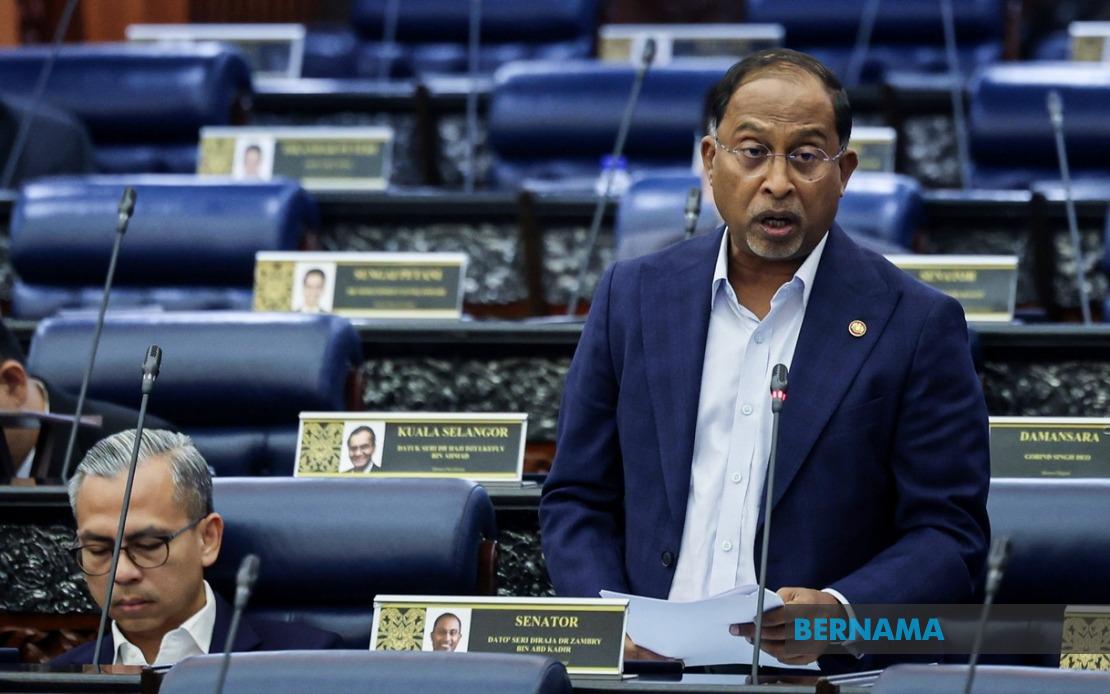
The Ministry of Higher Education has signalled its willingness to consider fresh academic offerings at Universiti Malaysia Sabah, polytechnics and community colleges throughout Sabah, aiming to diversify the educational landscape in the state's higher learning sector. During parliamentary proceedings, Minister Datuk Seri Dr Zambry Abdul Kadir outlined the framework that would guide such proposals, emphasising that approval would hinge upon demonstrated institutional capability, genuine market demand from employers, and evidence that graduates would find meaningful employment upon completion of their studies. The ministry's approach deliberately seeks to prevent unnecessary programme overlap between the state's various public institutions, ensuring efficient use of limited resources and expert personnel.
The initiative directly addresses long-standing concerns among Sabah's families and policymakers about the necessity for local students to relocate to Peninsular Malaysia to pursue certain degrees. By expanding educational choices closer to home, the policy aims to make quality tertiary education more accessible and affordable for residents of Malaysia's largest state by area. The screening criteria employed by MOHE reflects a considered approach that balances institutional strengths with actual economic needs, preventing investment in programmes that neither employers nor students genuinely require while fostering those aligned with Sabah's development trajectory.
Universiti Malaysia Sabah has begun positioning itself as a regional leader in specialised fields that leverage the state's geographic and biological advantages. The institution is developing scholarly and research capabilities centred on marine science, aquaculture, tropical biotechnology, medical sciences, heritage studies and social sciences, alongside specialist programmes in ecotourism and business disciplines. This strategic focus on programmes grounded in Borneo's distinctive environmental characteristics and natural resources represents a deliberate differentiation from competitors in other regions, allowing UMS to build genuine competitive advantage while serving local labour market needs.
Meanwhile, Universiti Teknologi MARA's campus in Sabah has carved out its own niche, concentrating on tourism and hospitality management, business studies, administrative sciences, and science and technology programmes. This distribution of specialisations across institutions helps create a coherent ecosystem where each provider contributes particular strengths rather than duplicating offerings. The diversity of institutional missions and capabilities currently represented across Sabah's 16 public higher education campuses and branch operations—comprising four universities, three polytechnics and nine community colleges—provides a foundation upon which more targeted expansion can be built.
The financial commitment underscoring this expansion strategy is substantial. MOHE is executing 21 development projects throughout Sabah with a combined value of RM1.05 billion, demonstrating genuine governmental investment in the state's educational infrastructure. Within the 13th Malaysia Plan framework, the ministry has allocated RM160.6 million specifically for the first rolling plan period through 2026, resources that will support construction, equipment acquisition and programme establishment. This financial backing suggests the higher education agenda for Sabah reflects serious, long-term planning rather than rhetorical flourishes.
Dr Zambry clarified that MOHE does not operate on rigid enrolment quotas dictating the proportion of students who must study within Sabah versus other regions. Such an approach would be administratively impractical given that student admission mechanisms depend fundamentally on the specific programmes universities choose to offer and fluctuating demand patterns. Nevertheless, the ministry remains committed to expanding local alternatives through a strategically targeted approach, identifying areas where particular regional or state-level demand exists.
One priority area receiving explicit attention concerns legal education. Both Sabah and Sarawak have demonstrated substantial need for law professionals, yet these programmes remain concentrated in Peninsular institutions, requiring aspirants to leave the state. Expanding law education offerings represents a practical entry point for the niche-based expansion strategy, addressing a clear market signal while building disciplinary depth that could attract strong students and faculty to Sabah's universities. Similar analyses could identify other fields where geographic or demographic factors create distinctive local demand not adequately served by current provision.
The ministry's openness to programme applications must be understood within the broader context of Malaysia's long-standing educational geography, where Peninsular Malaysia, particularly the Klang Valley region, has historically concentrated higher learning infrastructure and prestigious institutions. Sabah and Sarawak, despite their size and population, have historically been underserved by this system, forcing families to bear significant financial and social costs associated with interstate relocation. The current initiative represents an effort to correct this imbalance, though success ultimately depends upon sustained political will and adequate resource allocation across multiple funding cycles.
Governmental support for university research activities, administered through both MOHE and the Ministry of Science, Technology and Innovation, provides another dimension to capacity building in Sabah's higher education sector. Research excellence programmes, particularly initiatives like the Research, Development, Innovation, Commercialisation and Economy Programme, direct funding toward investigations with potential commercial applications. These efforts help attract research-active faculty and position Sabah institutions as genuine knowledge producers rather than merely teaching-focused operations, enhancing their capacity to offer advanced programmes and conduct meaningful scholarship.
The implementation of this expanded framework for academic programme development carries implications extending beyond Sabah's borders. As Malaysia's federal system increasingly devolves responsibility for economic development to state governments, higher education becomes a critical tool for regional competitiveness and talent retention. Sabah's success in building distinctive, quality-driven educational capacity could influence approaches across Sarawak and other regions seeking to balance national standards with locally responsive provision. Conversely, barriers to programme approval or sustained resource constraints could undermine policy intentions, leaving Sabah's young people with limited local alternatives despite ministerial openness to new applications.
For Malaysian policymakers and regional observers, this expansion framework warrants close monitoring as an experiment in addressing persistent geographic disparities in educational provision. The outcomes will illuminate whether deliberate institutional differentiation and targeted investment can genuinely reshape higher education distribution across a geographically vast federation, or whether structural forces continue concentrating advanced education in the peninsula. The success or failure of this initiative will significantly influence not only Sabah's educational landscape but also broader thinking about equitable development and resource distribution within Malaysia's federal structure.

