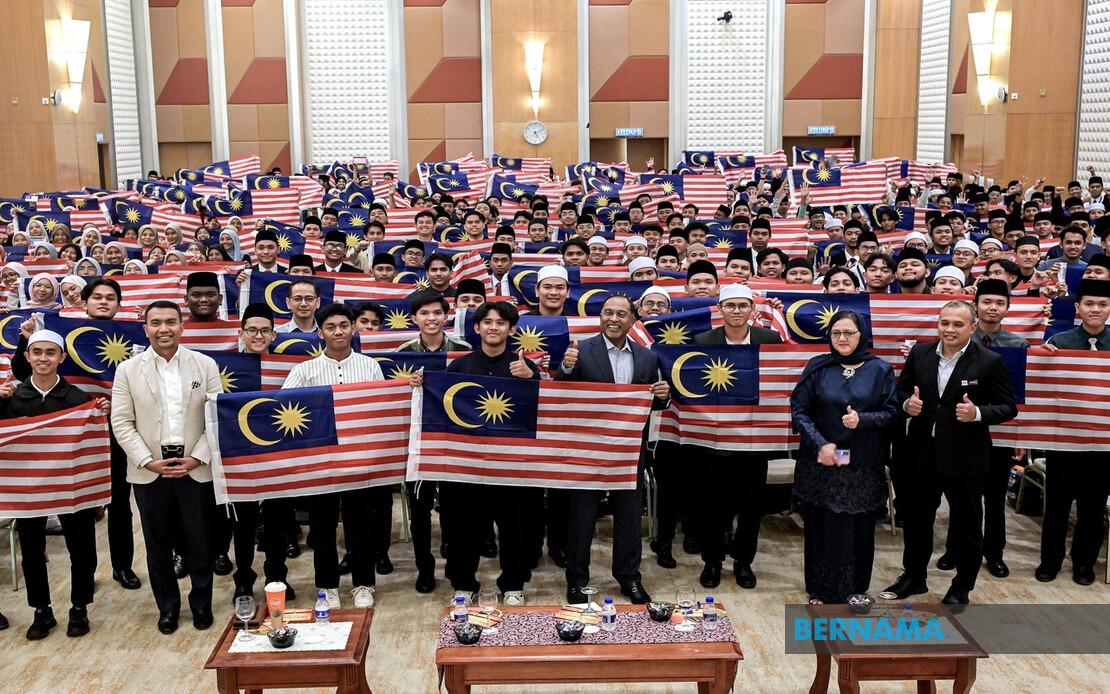
The Ministry of Higher Education is intensifying its vigilance over the welfare and security of Malaysian students scattered across West Asian nations, responding to mounting instability in the region and international travel advisories. Higher Education Minister Datuk Seri Dr Zambry Abd Kadir announced on August 3 that MOHE will maintain close coordination with Wisma Putra to track the movements and safety of all Malaysian nationals engaged in tertiary studies throughout the region, particularly amid the evolving crisis involving Iran and shifting United States diplomatic positions.
The announcement reflects growing concern about the unpredictability of geopolitical developments in West Asia, where sudden policy changes can reshape the security landscape within hours. Dr Zambry acknowledged the volatile nature of the situation, noting that American foreign policy decisions announced today could differ markedly by tomorrow, underscoring the need for continuous, adaptive monitoring protocols. This acknowledgment reveals the Malaysian government's understanding that static safety measures prove insufficient when dealing with such fluid regional dynamics, requiring instead a responsive framework capable of adjusting to real-time developments.
MOHE's primary strategy centres on maintaining close collaboration with the Foreign Ministry, designating Wisma Putra as the authoritative reference point for security intelligence and operational guidance. This institutional arrangement places Malaysia's diplomatic apparatus at the centre of student safety decisions, leveraging the Foreign Ministry's established networks, intelligence sources, and direct communications with Malaysian embassies and consulates throughout the region. The ministry has confirmed that all Education Malaysia offices, particularly those in Egypt and Jordan, maintain heightened preparedness to respond immediately should circumstances deteriorate or require emergency interventions.
Among the immediate concerns is a cohort of 456 Malaysian students preparing to commence studies in Egypt, Jordan, and Morocco beginning September 1. These prospective students recently participated in the International Charisma Programme, an initiative developed jointly by MOHE and the Malaysia Nationhood Academy, which provided comprehensive briefings on their destination countries, direct engagement with ministry officials, and welfare safeguarding mechanisms. The timing of this programme proves particularly significant, offering departing students essential contextual knowledge about their host nations while establishing direct communication channels with Malaysian authorities who will oversee their wellbeing abroad.
The geographic distribution of Malaysian scholars across West Asia reveals a substantial educational investment, though concentrated in specific locations. Egypt hosts thousands of Malaysian students pursuing diverse academic disciplines ranging from Islamic studies to professional fields including medicine, dentistry, and pharmacy, reflecting Malaysia's strategic interest in developing professionals equipped with both technical expertise and international experience. Jordan accommodates between 1,000 and 2,000 Malaysian students, while Morocco maintains a smaller but expanding contingent, with coordination of Moroccan-based student matters managed through Egypt's Education Malaysia office due to the absence of a dedicated presence in that country.
Dr Zambry's emphasis on the multifaceted nature of overseas education reveals government thinking that transcends purely academic achievement. The minister articulated a comprehensive educational philosophy encompassing ta'lim (knowledge transmission), tarbiah (character development), and ta'dib (ethical and moral grounding), positioning Malaysian students as ambassadors carrying not merely technical qualifications but also embodied values representing their nation abroad. This holistic approach acknowledges that international students constitute strategic national assets whose eventual return to Malaysia will contribute significantly to the country's development, justifying the government's proactive interest in their security and wellbeing.
MALAYSIA's own emergence as an international higher education hub underscores the interconnected nature of global academic mobility. The country currently attracts tertiary students from approximately 180 nations, a development that demonstrates the international recognition accorded Malaysian universities and reflects the competitive positioning of the nation's higher education sector. This global standing creates mutual obligations: just as Malaysia welcomes foreign students and seeks to protect them, Malaysian authorities must reciprocate by ensuring their own citizens studying abroad receive equivalent care and protection, particularly in regions experiencing elevated security challenges.
MOHE's current posture represents a delicate balance between maintaining academic pathways essential to Malaysia's human capital development and responding responsibly to legitimate safety concerns. The ministry has confirmed it has received no reports indicating that current developments in Egypt, Jordan, or Morocco have negatively impacted Malaysian students, yet simultaneously has positioned itself to implement immediate protective measures should circumstances change. This proactive rather than reactive stance demonstrates institutional preparedness, though it also raises questions about contingency protocols should evacuation or emergency repatriation become necessary.
The coordination architecture established through the International Charisma Programme provides practical benefits extending beyond orientation. By bringing students into direct contact with MOHE officials before departure, the ministry establishes familiarity and trust that facilitates future communication channels should challenges arise. Students departing with explicit knowledge of support mechanisms and ministry commitment to their welfare are more likely to maintain contact with authorities and report concerning developments, creating a distributed intelligence network that complements formal diplomatic channels. This approach recognises that students themselves represent crucial early-warning sensors for deteriorating security conditions.
Regional context adds particular significance to Malaysia's heightened monitoring. West Asia encompasses multiple overlapping conflict zones, proxy warfare dynamics, and fragmented governance structures that complicate security assessments even for well-resourced diplomatic missions. Egypt faces persistent challenges from extremist organisations despite improving security trends, Jordan hosts refugee populations and borders multiple conflict zones, while Morocco, though relatively stable, remains geographically proximate to regions experiencing volatility. Malaysian authorities must maintain differentiated threat assessments for each location while ensuring uniform standards of student protection across all destinations.
Looking forward, Malaysia's experience managing student safety in West Asia may establish precedents for other Southeast Asian nations confronting comparable challenges. As regional tensions persist and student mobility continues expanding, the institutional mechanisms MOHE is developing—particularly the integration of diplomatic resources, educational networks, and community coordination—could offer valuable models for regional cooperation on student welfare. The emerging framework also highlights the growing necessity for educational institutions and governments to develop resilience strategies that maintain international academic engagement while implementing pragmatic security safeguards.

