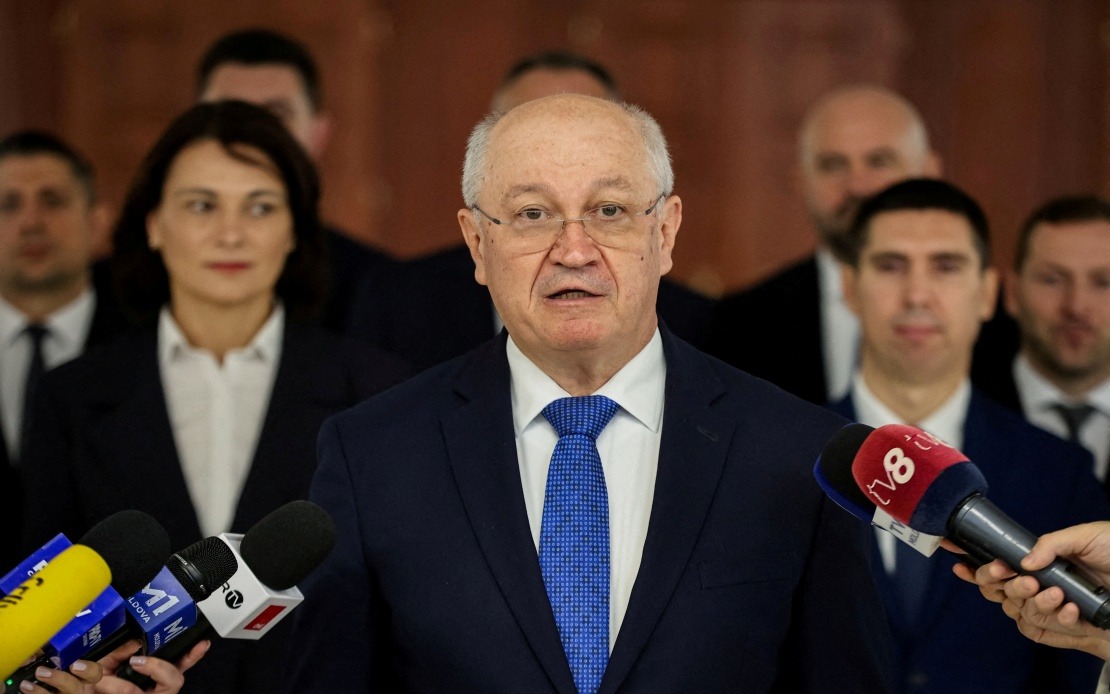
Alexandru Munteanu, who assumed the role of Moldova's Prime Minister in November 2025, announced his resignation on Friday through a post on the social media platform X, marking a significant political transition in the Eastern European nation during a period of substantial regional uncertainty.
The announcement came without extensive elaboration on the underlying causes, with Munteanu simply stating that continuing in the position had become incompatible with his personal principles and convictions. His terse departure statement—"Today, my term as Prime Minister comes to an end. The moment I realised that I could no longer carry out my mandate in accordance with my principles and convictions, I chose to step down"—left observers and political analysts searching for clarity on what prompted the sudden exit after less than a year in office.
Munteanu's relatively brief tenure reflects the volatility that has characterized Moldova's political landscape in recent years. The country has grappled with internal divisions over its geopolitical orientation, competing pressures from neighbouring Russia and the European Union, and ongoing disputes regarding governance standards and anti-corruption measures. His decision to resign on grounds of principle suggests potential disagreements over policy direction or implementation, though the specifics remain unclear.
The timing of his resignation carries implications for Moldova's institutional stability and its ability to maintain continuity in pursuing European integration goals. Moldova has signalled its desire to strengthen ties with the EU, a direction that may have created friction with domestic constituencies or within the government coalition that brought Munteanu to power. Prime ministerial departures during critical junctures can delay crucial legislative initiatives and distract from economic priorities.
For Southeast Asian observers monitoring global governance trends, Munteanu's exit illustrates a broader pattern of political leaders in fragile democracies stepping down over conflicts between their operational mandates and their ethical or ideological positions. This phenomenon reflects the tension between partisan political demands and personal integrity that can render high office untenable for principled officials.
Moldova's constitutional framework requires a succession process that will likely involve consultations between the president and parliamentary factions to identify a replacement. The stability of any incoming administration will depend on whether the underlying disputes that prompted Munteanu's resignation can be resolved, or whether they represent deeper structural problems within the government coalition.
The region's geopolitical sensitivities add another layer to this transition. Moldova occupies a strategically delicate position in Eastern Europe, with Russian forces present in the breakaway region of Transnistria and pro-Russian political forces remaining influential domestically. Any government change risks becoming a focal point for competing external interests seeking to shape Moldova's trajectory, whether toward closer European alignment or maintenance of status quo arrangements with Moscow.
Munteanu's invocation of principles as the reason for departure stands in contrast to resignations motivated by scandal, health concerns, or electoral defeat. His framing suggests a governance dispute rather than personal misconduct, which may allow for a smoother institutional transition, though the lack of transparency about the specific issues could fuel speculation and undermine public confidence in the stability of the administration that follows.
The resignation also raises questions about whether other government officials share similar concerns about the direction of policy. If Munteanu's departure signals broader dissatisfaction within Moldova's leadership circles, additional resignations or coalition fractures could follow, potentially destabilizing the government during a period when Moldova requires strong, unified leadership to navigate complex EU accession negotiations and manage domestic economic challenges.
For the European Union, which has invested considerable diplomatic effort in supporting Moldova's institutional development and Euro-Atlantic orientation, this transition presents both risks and opportunities. The departure of a prime minister who felt constrained by the compromises of office could be replaced by someone more aligned with EU preferences, or conversely, by a figure with different priorities. The coming weeks will clarify Moldova's political trajectory and the depth of commitment among its leadership to the reform agenda.

