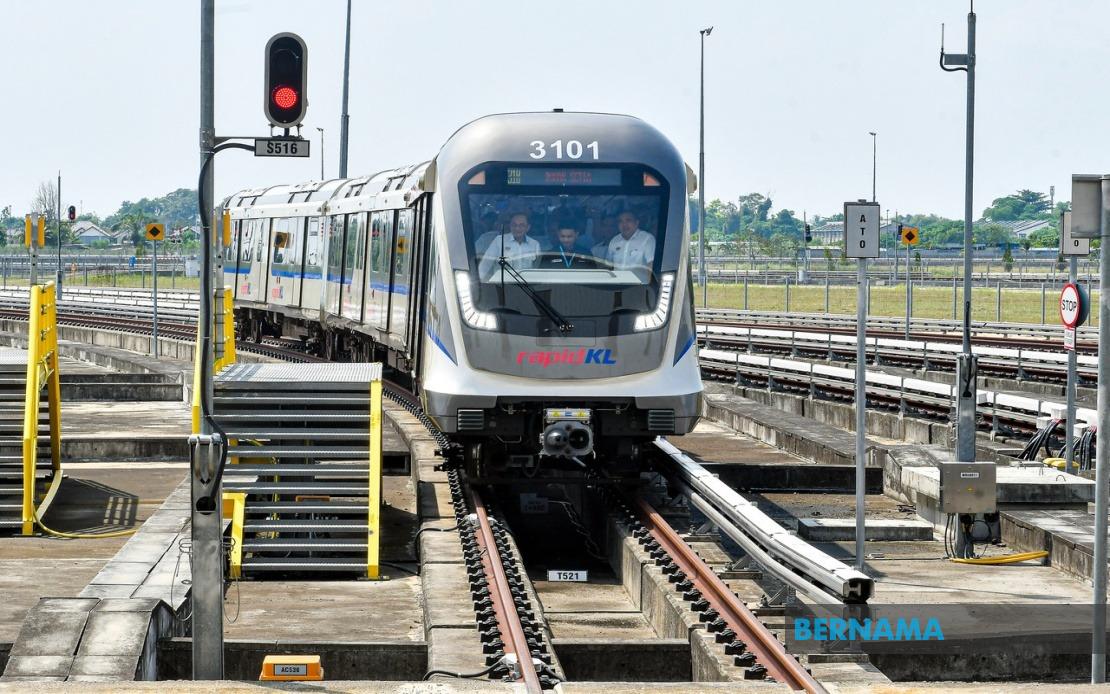
Prime Minister Datuk Seri Anwar Ibrahim has unveiled a significant incentive to accelerate adoption of the newly operational LRT3 Shah Alam Line, announcing that all passengers will travel free of charge from June 29 through July 31. The complementary fares will extend to feeder bus services managed by Prasarana Malaysia Berhad that connect with the rail network, creating an integrated free public transport corridor throughout the corridor for the full month.
The initiative has resonated strongly among stakeholders in Klang and the broader Klang Valley region, particularly among student communities who have historically shouldered substantial daily commuting expenses. For a significant portion of tertiary students, the free-fare period represents a tangible opportunity to evaluate whether shifting from private vehicles or ride-hailing services to rail transit makes practical sense for their routines. This demographic shift is crucial as student adoption patterns often establish long-term commuting habits that can persist into their professional careers.
Arissa Ahmad Khairul, a 22-year-old Bachelor of Journalism student at Universiti Teknologi MARA, articulated how the announcement addresses genuine financial pressures facing campus-bound students. Previously, students without on-campus accommodation have relied either on parental financial support or expensive e-hailing platforms to reach their institutions. The combination of free fares and improved passenger amenities on the Shah Alam Line offers a meaningful reduction in daily transport burdens. For Arissa specifically, the new route via Bandar Utama dramatically shortens her journey from Kepong to the UiTM Shah Alam campus, translating into both financial savings and reclaimed time previously consumed by longer commutes.
Media professional Yamin Ahmad, aged 25, framed the promotional period as a strategically calculated intervention designed to overcome psychological barriers that often prevent potential commuters from experimenting with unfamiliar transit routes. When passengers face the prospect of paying standard fares to test new services, cost-consciousness may deter them from making the behavioural shift. The month-long grace period removes this friction, allowing commuters to experience firsthand the advantages of rail transit—including predictability of journey times, freedom from traffic congestion, and potential cost advantages relative to private vehicle operation or ride-hailing subscriptions. This experiential learning often proves more persuasive than promotional messaging alone.
The institutional dimension gained additional clarity through commentary from Mohamad Adib Hazim Mohamad Razali, president of the UiTM Students' Representative Council. Among UiTM's approximately 42,000 enrolled students, merely 13,500 reside in university residential colleges, leaving roughly 28,500 scattered across the Klang Valley seeking efficient commuting solutions. The establishment of a dedicated UiTM station on the Shah Alam Line specifically addresses this off-campus population, particularly benefiting students based in Kuala Lumpur and Subang Jaya who previously struggled with expensive daily transportation. The new connectivity directly competes with the cost structures of ride-hailing and personal vehicle ownership while eliminating the stress and time costs associated with traffic congestion.
The Shah Alam Line represents a significant expansion of Klang Valley's rail infrastructure, complementing existing networks and addressing geographic gaps in public transit coverage. Students and commuters living in previously underserved areas now possess a viable alternative to automobile dependence. For a region grappling with persistent traffic congestion and air quality challenges, this transition holds broader environmental and urban sustainability implications. Increased rail ridership reduces vehicular emissions and alleviates pressure on increasingly saturated highway systems, benefits that accumulate across the entire metropolitan region.
The promotional period also serves as a natural experiment in transit behavioural change. Prasarana and transport planners will gain valuable data regarding actual demand patterns, peak usage periods, and passenger demographics, information that will inform fare structures, service frequency decisions, and future infrastructure investments. If the trial successfully converts commuters into regular riders, the investment yields economic returns through sustained fare revenue and system-wide efficiency improvements.
Beyond immediate cost savings, the free-fare initiative addresses a recurring challenge in public transit adoption: the psychological inertia surrounding mode switching. Many potential commuters harbour unvoiced concerns about journey reliability, station accessibility, or personal safety on rail systems. Direct exposure through the trial month permits commuters to validate or dismiss these apprehensions based on personal experience rather than assumption. Should passengers discover that rail transit integrates seamlessly into their schedules and routines, post-trial adoption rates will likely remain elevated even as standard fares return.
The timing of this announcement, occurring during Malaysia's post-pandemic economic recovery phase, reflects deliberate policy emphasis on accessibility and affordability in public services. Student populations and young professionals represent constituencies particularly sensitive to discretionary spending pressures, and transport costs consume significant proportions of household budgets across income levels. By temporarily removing this expense barrier, the government simultaneously demonstrates responsiveness to commuter concerns while building patronage momentum for a newly commissioned infrastructure asset.
Looking forward, the success of this one-month programme will likely influence discussions regarding integrated fare structures across Klang Valley's multiple transit operators and networks. Should the Shah Alam Line achieve projected ridership targets during the promotional period, stakeholders may advocate for subsidised fares targeting specific populations—students, senior citizens, or low-income workers—as permanent policy. The free-fare initiative therefore functions simultaneously as promotional tool, behavioural intervention, and policy laboratory generating evidence for future transport governance decisions.

