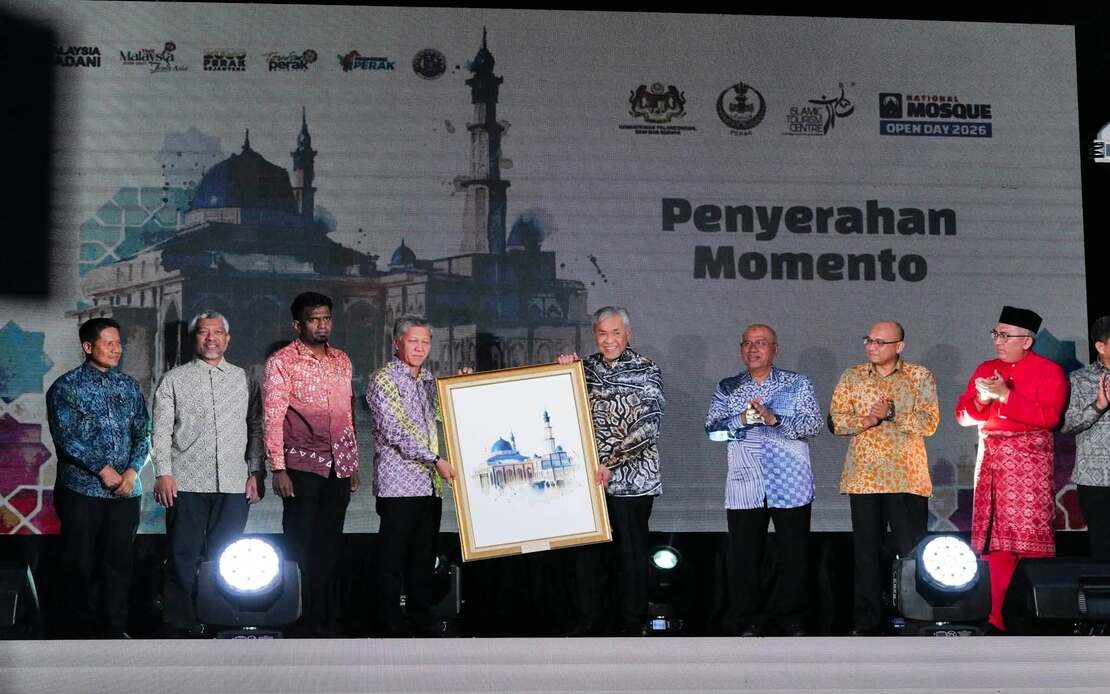
Deputy Prime Minister Datuk Seri Dr Ahmad Zahid Hamidi has made a strategic case for integrating mosques into Malaysia's broader tourism ecosystem, positioning these sacred spaces as gateways for international visitors to understand the country's Islamic heritage and cultural values. Speaking at the National Mosque Open Day (NMOD) 2026 in Bagan Datuk on August 15, Zahid argued that mosques could serve dual purposes without compromising their fundamental role as centres of worship and spiritual development.
The Deputy Prime Minister's vision extends beyond simply opening mosque doors to tourists. He emphasises that visitors should leave Malaysia not merely with photographs of architectural splendour, but with tangible memories of the warmth, generosity and Islamic principles they encounter during their stay. This approach transforms tourism from a transactional exchange into a cultural and spiritual dialogue, allowing international guests to witness firsthand how Islam shapes Malaysian society and interpersonal relationships. The National Mosque Open Day initiative, in Zahid's assessment, exemplifies how structured programmes can facilitate these meaningful interactions within appropriate religious boundaries.
Zahid, who also represents Bagan Datuk as Member of Parliament, stressed that the time has arrived for broader mosque participation in such tourism-oriented activities. By expanding NMOD and similar programmes nationwide, mosques would create platforms where people of diverse backgrounds, age groups and faith traditions can engage respectfully with Islamic institutions. This democratisation of access to mosque spaces addresses a critical gap in Malaysia's tourism offering, particularly as the nation seeks to differentiate itself in the competitive Southeast Asian tourism market through authentic cultural experiences rather than standard attractions.
The Deputy Prime Minister underscored that welcoming non-Muslim visitors to mosques serves a crucial diplomatic function in contemporary Malaysia. When outsiders experience Islamic spaces firsthand, misconceptions and stereotypes can be challenged through direct observation and genuine interaction. The hospitality extended to guests within mosque precincts becomes a living demonstration of Islam's actual character—rooted in compassion, wisdom and benevolence—rather than relying on abstract descriptions or second-hand accounts. This grassroots cultural diplomacy proves particularly valuable in an era when religious misunderstandings can rapidly escalate through social media and global information networks.
The recognition of Masjid Tuminah Hamidi in Bagan Datuk as Malaysia's 98th Tourism Mosque marks a significant milestone in this broader initiative. Completed in 2023 as a waqf (religious endowment) dedicated to Zahid's parents, the mosque exemplifies how contemporary religious architecture can blend aesthetic innovation with functional community spaces. The facility's distinctive design and integrated Islamic knowledge gallery distinguish it from conventional mosque structures, making it an appealing destination for tourists seeking educational depth alongside spiritual experience. This certification demonstrates the Islamic Tourism Centre's commitment to identifying and promoting mosques that possess both architectural significance and substantive cultural value.
Mohammad Faisal Abu Suaib Khan, Director-General of the Islamic Tourism Centre, revealed that Malaysia's 6,851 mosques represent an largely untapped tourism resource. Currently, fewer than 100 have received official Tourism Mosque designation, suggesting enormous growth potential. The ITC's strategy involves working collaboratively with the Department of Islamic Development Malaysia (JAKIM) and state-level Islamic religious authorities to establish standardised guidelines and coordinate mosque participation in tourism frameworks. This institutional scaffolding ensures that mosque tourism develops in ways consistent with Islamic principles and local religious governance structures, preventing ad-hoc or commercialised approaches that might compromise the sanctity of these spaces.
The ITC's complementary initiatives—the Muslim-Friendly Tourism and Hospitality Assurance and Recognition (MFAR) programme and the Muslim-Friendly Tourist Guides (MFTG) training scheme—represent a holistic strategy to embed Islamic values throughout Malaysia's entire tourism ecosystem. By certifying hospitality providers and training guides specifically in Muslim-friendly practices, the ITC ensures that mosque visits operate within a broader context of religious sensitivity and cultural understanding. This integrated approach reflects recognition that tourist experiences extend far beyond individual attractions; they encompass accommodation, dining, transportation and general interactions with local populations.
The concept of "Muslim-Friendly, not Muslim-Only" articulated by ITC officials signals Malaysia's inclusive positioning within global Muslim tourism markets. Rather than creating segregated or exclusively Islamic tourism experiences, Malaysia presents itself as a destination where religious and cultural diversity coexist comfortably. This messaging appeals to Muslim-majority tourists seeking halal-certified and religiously respectful services, while simultaneously reassuring international visitors of all faiths that they will find welcoming, accessible experiences. For Malaysia, this positioning addresses the substantial and growing market of Muslim travellers—projected to exceed 150 million annual trips by 2026 globally—while maintaining the country's reputation for multireligious harmony.
The three-day NMOD 2026 programme at Bagan Datuk demonstrates the practical implementation of this strategy, blending spiritual activities with community engagement, cultural performances, recreational facilities and family-oriented events. This programming diversity ensures that mosque visits appeal across demographic segments, from devout religious tourists to secular cultural enthusiasts and families seeking educational experiences for children. The event's location at both Masjid Tuminah Hamidi and the broader Dataran Bagan Datuk illustrates how mosques can function as anchors for wider tourism precincts, generating economic activity while maintaining their primary religious function.
For Malaysia's tourism sector, which faced substantial disruption during the pandemic and continues recovering market share against regional competitors, mosque-based tourism offers distinctive competitive advantages. Unlike mass-market beach resorts or shopping centres that face intense competition across Southeast Asia, Malaysia's network of unique mosques with distinctive architectural styles and regional histories provides authentic, differentiable attractions. Each mosque carries specific historical narratives, embodying regional Islamic traditions, local craftsmanship and community heritage that resist standardisation. This authenticity increasingly appeals to sophisticated contemporary travellers who seek meaningful cultural engagement rather than generic hospitality products.
The initiative also carries implications for Malaysia's positioning within the broader Islamic world and Organisation of Islamic Conference frameworks. By thoughtfully integrating mosques into tourism infrastructure, Malaysia demonstrates how Muslim-majority nations can balance religious authenticity with modern economic imperatives. This model potentially influences other Muslim-majority countries grappling with similar tensions between preserving sacred spaces and capturing tourism revenue. Malaysia's approach—emphasising mutual respect, structured access, and spiritual authenticity—offers a replicable template that other nations might adapt to their own religious and cultural contexts.
Looking forward, the expansion of Tourism Mosque designation and related ITC initiatives will likely accelerate demand for mosque infrastructure improvements and staff training programmes. Communities hosting tourism mosques must develop capacity to manage visitor flows respectfully, maintain facilities suitable for diverse audiences, and ensure that commercial pressures do not compromise prayer schedules or worship experiences. This tension between accessibility and sanctity will require ongoing dialogue between tourism operators, religious authorities and local mosque communities. Successfully navigating these dynamics could establish Malaysia as a global exemplar of how religious institutions can engage tourism beneficially, while lesser success could generate backlash and conflict. The coming years will reveal whether this vision achieves realisation across Malaysia's diverse mosque landscape.

