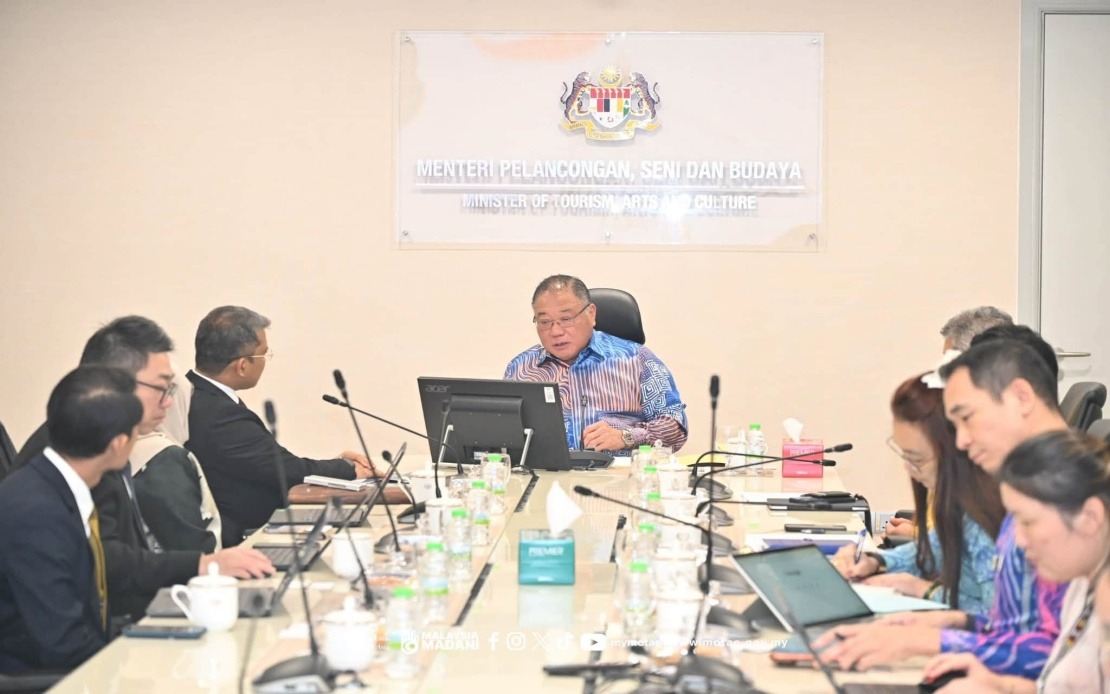
The Ministry of Tourism, Arts and Culture (MOTAC) and Malaysia Aviation Group (MAG) have announced a deepened strategic partnership aimed at capitalising on the extended Visit Malaysia Year 2026 (VM2026) campaign. The initiative emerged from discussions between Tourism, Arts and Culture Minister Datuk Seri Tiong King Sing and MAG Group president and chief executive officer Captain Nasaruddin A Bakar at meetings held in Putrajaya, signalling renewed commitment to positioning Malaysia as a premier global tourism destination as the campaign extends into 2026.
The collaboration reflects growing recognition within Malaysia's tourism and aviation sectors that coordinated effort between government agencies and private carriers is essential for sustaining visitor growth. By leveraging MAG's operational capabilities and MOTAC's policy frameworks, both organisations aim to create synergies that extend beyond traditional tourism marketing into the operational and service dimensions of the traveller experience. This integrated approach acknowledges that attracting tourists requires not only promotional campaigns but also the practical infrastructure and airline capacity to deliver seamless journeys.
Network expansion forms a cornerstone of the partnership strategy. MAG plans to extend its international reach into three strategically significant markets: India, where rising middle-class travel demand presents substantial opportunity; China, Malaysia's historically largest source of tourists; and Europe, where affluent leisure travellers represent high-value demographic segments. Simultaneously, the airline is exploring new regional connections including Fukuoka, which serves as a gateway to Japan's Kyushu region and could unlock secondary market opportunities beyond traditional destinations like Tokyo and Osaka. These route additions directly support VM2026 objectives by improving accessibility for source markets that have demonstrated strong interest in Malaysian experiences.
Demand management during seasonal fluctuations represents another critical focus area. The tourism industry faces well-documented challenges during low-season periods when passenger loads decline and airline economics become constrained. Through coordinated joint marketing initiatives and promotional flight strategies, MOTAC and MAG aim to smooth demand oscillations by encouraging travel during traditionally slower months. This approach benefits both parties: airlines achieve better load factors and operational efficiency, while tourism businesses gain steadier revenue streams rather than concentrated peaks followed by sharp troughs. For Malaysian hospitality providers and attraction operators, more consistent visitor flows enable better staffing planning and capital utilisation.
The partnership also emphasises enhancement of the passenger experience as a competitive differentiator. Improvements to cabin facilities, in-flight catering quality, and cabin crew training programmes directly influence how international visitors perceive Malaysia even before arrival. First impressions formed during flights shape traveller satisfaction and generate word-of-mouth recommendations that influence future tourism decisions. By investing in these service elements, MAG transforms its aircraft into mobile ambassadors for Malaysian tourism, allowing the airline to contribute substantively to destination branding rather than functioning purely as a transport conduit.
Beyond passenger-facing improvements, the partnership demonstrates commitment to strengthening Malaysia's broader tourism ecosystem. By actively seeking to increase benefits for local industry players, MOTAC and MAG acknowledge that sustainable tourism growth requires prosperity distribution across accommodation providers, attraction operators, food and beverage businesses, and ground transportation services. When international arrivals increase without corresponding benefits reaching local enterprises, tourism expansion becomes economically hollow and politically unsustainable. This inclusive approach helps ensure that VM2026 generates tangible economic benefits throughout Malaysia's regions and communities.
The strategic timing of this partnership announcement carries significance for Malaysia's regional competitiveness. Southeast Asian neighbours including Thailand, Indonesia, and Vietnam have invested substantially in aviation capacity and tourism infrastructure. Thailand's multiple international hubs and aggressive airline partnerships have historically captured significant visitor traffic. By strengthening coordination between MOTAC and MAG, Malaysia signals determination to compete more effectively in the regional tourism marketplace. The partnership implicitly acknowledges that Malaysia's natural attractions and cultural diversity require backing from world-class connectivity and service standards to fully realise their commercial potential.
Government-private sector collaboration of this nature reflects broader trends in Malaysian economic policy toward leveraging state-owned enterprises as instruments for achieving policy objectives. MAG, as a government-linked company, possesses both commercial imperatives and alignment with national development goals, making it a natural partner for tourism ministry initiatives. This alignment reduces misalignment between profit-seeking and policy objectives that might otherwise constrain smaller private carriers. It also enables MOTAC to influence aviation capacity expansion toward destinations and markets that align with national tourism strategy rather than purely commercial considerations.
The extended VM2026 timeline extending into 2026 provides a multi-year runway for these initiatives to mature and generate measurable results. Unlike single-year tourism campaigns that create artificial urgency, the extended timeline permits more sustainable marketing approaches and allows newly opened routes to build steady demand rather than depending on concentrated promotional pushes. MAG can integrate new routes into operational schedules with proper planning, and MOTAC can develop complementary marketing campaigns that build visitor awareness progressively throughout the extended campaign period.
Looking forward, the success of this partnership will be measurable through several metrics: growth in international visitor arrivals, particularly from targeted markets; improvement in airline load factors and seat capacity deployed to Malaysia; expansion in the geographic distribution of tourism spending beyond traditional urban centres; and enhancement in visitor satisfaction scores. These outcomes matter not merely for MOTAC and MAG but for Malaysia's broader economic objectives, as tourism represents a significant foreign exchange earner and employment generator, particularly in secondary cities and rural regions where alternative economic opportunities remain limited.
The partnership also positions Malaysia advantageously for adapting to post-pandemic travel patterns. As international mobility continues recovering, carriers and destinations that have invested in enhanced service standards and expanded connectivity are capturing disproportionate market share. By acting now to strengthen both connectivity and passenger experience, MOTAC and MAG are positioning Malaysia to capture sustained visitor growth rather than experiencing boom-and-bust cycles dependent on external market conditions.

