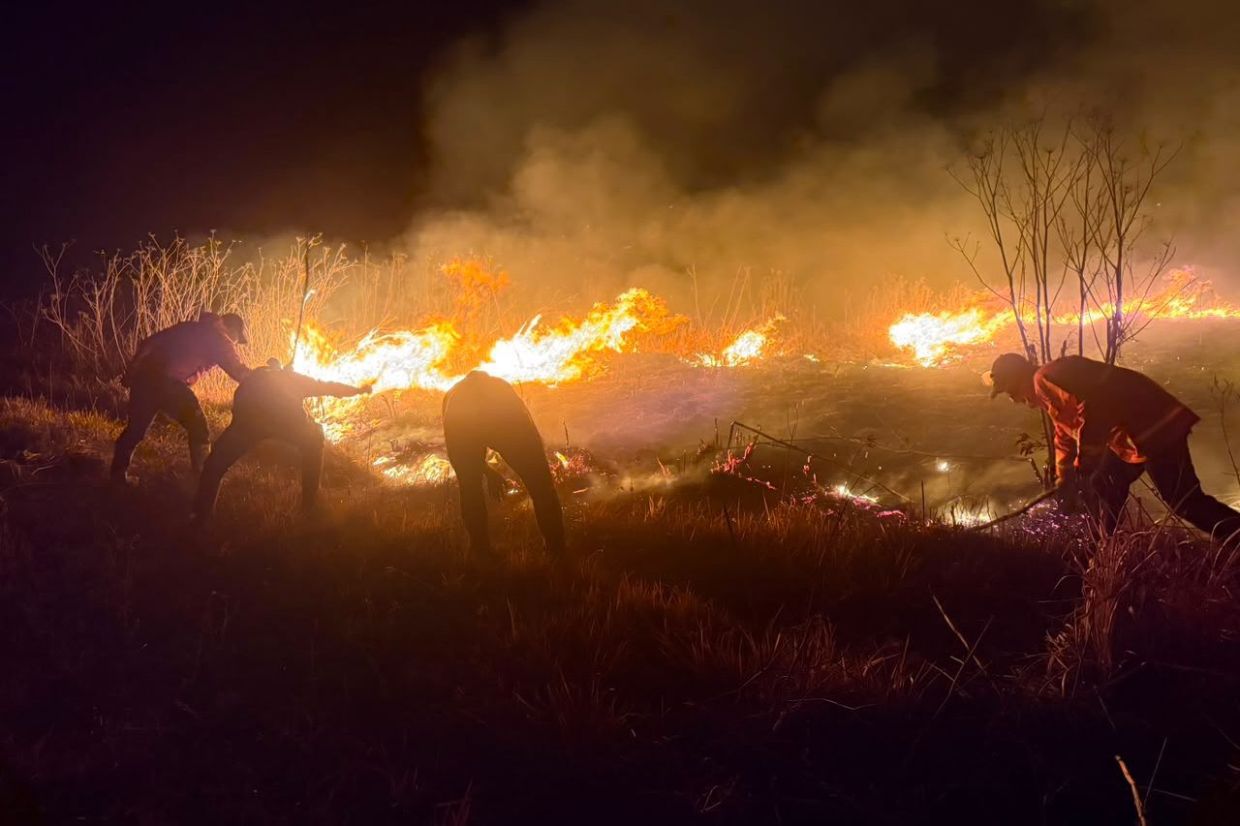
Mount Bromo, one of Indonesia's most iconic volcanic landscapes, is battling a rapidly expanding wildfire that has consumed roughly 520 hectares of parkland in East Java. The blaze, which intensified dramatically on Saturday night, demonstrates the vulnerability of the nation's natural reserves during the dry season when weather conditions become increasingly hazardous. Bromo Tengger Semeru National Park (TNBTS) Authority head Rudijanta Tjahja Nugraha revealed on Sunday that the fire's progression has been significantly accelerated by unusually strong wind conditions that have fanned embers across both the mountain's steep slopes and its expansive savanna grassland areas.
The deteriorating situation represents a mounting environmental crisis for the region. What began as a manageable fire situation escalated substantially when winds picked up during Saturday afternoon, creating ideal conditions for rapid lateral spread. The combination of parched vegetation and powerful gusts transformed the blaze into a sprawling conflagration that has proven difficult for firefighting crews to contain. Rudijanta attributed the fire's aggressive expansion to the already-desiccated state of the surrounding flora, noting that grass and other natural vegetation had dried to dangerous levels, rendering the entire landscape extraordinarily susceptible to burning and rapid flame propagation.
The immediate response from park management has prioritized public safety above all other considerations. Authorities implemented a comprehensive closure of Mount Bromo to all visitors, effective from Saturday evening at 10pm, extending across all designated entry points to the national park. This precautionary measure serves a dual purpose: preventing tourists from entering an active danger zone while simultaneously freeing up resources and clearing the area for emergency personnel conducting firefighting operations. The decision, while economically painful for local tourism operators and disappointing for thousands of advance-booked visitors, represents a necessary prioritization of human welfare. Affected tourists have been offered pragmatic alternatives, including the opportunity to reschedule their visits for later dates or to receive full financial refunds, mitigating at least some of the economic damage from the unexpected closure.
The investigation into the wildfire's origins points toward human causation as a significant factor. Park authorities concluded on Friday that human activity, rather than natural phenomena such as lightning strikes, most likely triggered the initial ignition. This assessment carries important implications for how Indonesian policymakers and park management approach fire prevention and regulation across sensitive ecological zones. Forestry Minister Raja Juli Antoni has emphasized that individuals found responsible for deliberately or negligently burning forest and land areas will face serious legal consequences, signaling a firm governmental stance on protecting remaining natural reserves from preventable human-caused disasters.
Indonesia's susceptibility to devastating wildfires remains a persistent challenge for environmental management and regional stability. The Mount Bromo situation reflects broader patterns affecting Southeast Asia during dry season months, when weather patterns create tinderbox conditions across multiple countries simultaneously. The national park system, which preserves critical ecosystems and biodiversity hotspots, faces recurring threats from both accidental fire spread and intentional land clearing activities. The economic dimension of this crisis extends beyond immediate tourist revenue losses to encompass potential damage to the park's delicate ecological balance, where fire can disrupt endemic wildlife populations and destroy habitat that has developed over decades.
For Malaysian observers, the Mount Bromo situation carries particular relevance given Southeast Asia's interconnected environmental challenges and shared vulnerability to transboundary atmospheric impacts. During previous regional fire crises, particularly the catastrophic 2015 Indonesian peatland fires, smoke traveled across maritime borders and degraded air quality throughout the region. While the current Mount Bromo wildfire remains geographically focused on East Java, its existence underscores the importance of regional cooperation on fire prevention, early warning systems, and coordinated emergency response mechanisms. Malaysia's own experience managing forest fires and protecting national parks offers potential lessons for Indonesian authorities wrestling with resource constraints and prevention strategies.
The broader context of climate change and shifting weather patterns adds urgency to this situation. Increasingly erratic dry seasons, punctuated by stronger wind events, appear to be altering the frequency and intensity of Indonesian wildfires. Scientific research increasingly demonstrates that global warming is extending dry periods and intensifying weather extremes, creating compounding risks for fire management across tropical regions. National park authorities must adapt their operational strategies and resource allocation to account for these emerging environmental realities, potentially requiring additional personnel, equipment, and funding commitments that many developing-world agencies struggle to provide.
Mount Bromo's cultural and economic significance to East Java communities and the broader Indonesian tourism industry makes this wildfire particularly consequential. The volcano attracts hundreds of thousands of international and domestic visitors annually, generating substantial revenue for local businesses, guides, and hospitality enterprises. Each day of closure represents lost income for communities dependent on tourism for survival. Beyond economic considerations, the mountain holds deep spiritual and cultural significance for the Tengger people and other indigenous communities in the region, adding another dimension of loss when environmental damage affects these sacred landscapes.
The firefighting response has mobilized considerable resources from local and provincial authorities, though details regarding personnel deployment, equipment availability, and specific tactical approaches remain limited. The effectiveness of these efforts will largely depend on whether wind conditions moderate in coming days and whether firefighting teams can establish firebreaks ahead of the advancing flames. The coming 48 hours are likely to be critical in determining whether the fire stabilizes or continues its catastrophic expansion across the national park's remaining vulnerable areas.

