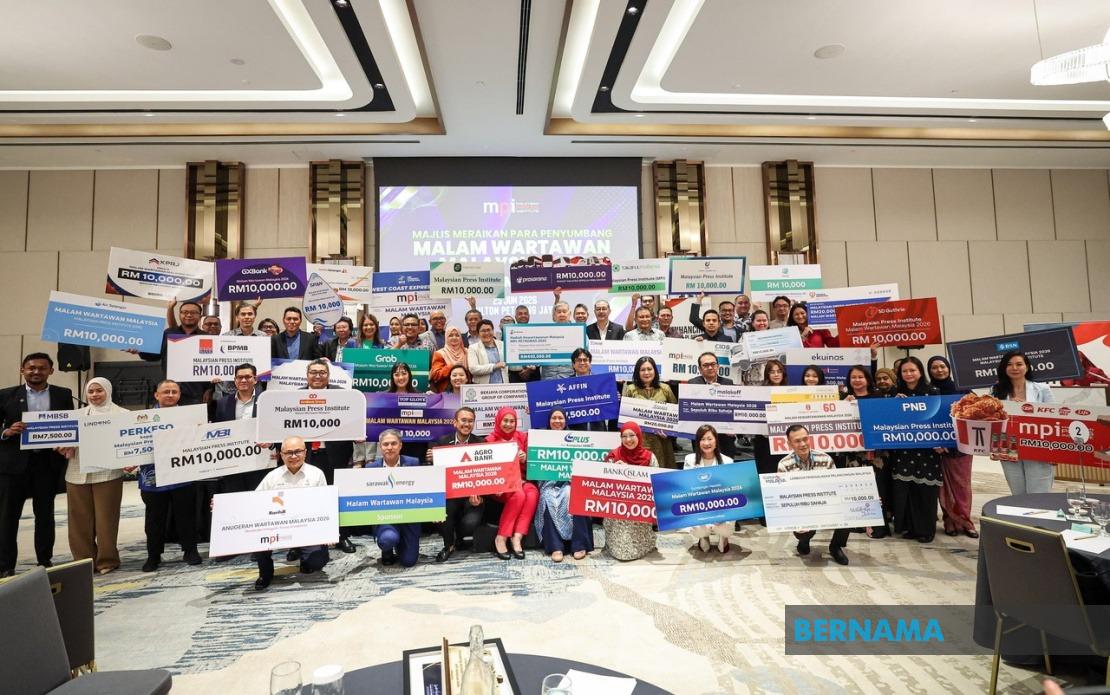
The Malaysian Press Institute has successfully mobilised RM1.037 million in financial support for its flagship Malaysia Press Night event in 2026, underscoring sustained industry backing for the annual celebration of journalism excellence in Malaysia. The funding milestone, announced at a Contributors' Appreciation Ceremony in Kuala Lumpur, comprises RM587,000 from 60 contributing organisations alongside RM450,000 in sponsorship from PETRONAS, the national oil and gas company that has remained a cornerstone supporter of the institute's journalism awards programme since 1994.
MPI chief executive officer Dr Ainol Amriz Ismail framed the fundraising success not merely as logistical achievement but as testament to deeper institutional commitment to the health of Malaysia's media ecosystem. Speaking at the ceremony, he emphasised that the contributions reflect a collective determination to sustain professional standards, ethical practices and trustworthy journalism at a time when media credibility faces challenges globally. The statement carries particular resonance given ongoing debates within Malaysia about media ownership structures, editorial independence and the role of state-linked entities in shaping news narratives.
The July 17 event has acquired heightened significance with confirmation that Prime Minister Datuk Seri Anwar Ibrahim will grace the occasion. The prime ministerial presence signals tacit governmental endorsement of the institute's mission and provides platform for high-level engagement with media leadership on matters concerning press freedom, professional standards and the evolving relationship between government and fourth estate. For an administration that has sought to project an image of openness and press accessibility, the attendance underscores efforts to rebuild institutional credibility following earlier tensions with media outlets.
PETRONAS's unwavering commitment as headline sponsor merits particular attention given the company's dual role as commercial enterprise and state-linked entity. The three-decade partnership with MPI, particularly through the MPI-PETRONAS Malaysian Journalism Awards, reflects how corporate Malaysia views support for journalism as strategic investment in institutional stability rather than mere corporate social responsibility. The awards themselves have become reference points within Southeast Asian media circles, elevating Malaysian journalism standards and providing career pathways for talented practitioners.
The breadth of organisational participation, with 60 entities contributing funds, suggests growing recognition within business and institutional sectors that media health constitutes essential infrastructure for market function and democratic discourse. This coalition of supporters spans diverse industries and sectors, indicating consensus that independent, competent journalism serves interests beyond ideological considerations. For Malaysian businesses operating in regional and global contexts, credible domestic media remains important for maintaining investor confidence and operational transparency.
Dr Ainol Amriz's framing of Malaysia Press Night as recognition ceremony for practitioners carries implicit message about journalism's professional dimensions. By emphasising the meticulous work of fact-gathering, information verification and accurate reporting, the institute positions journalism as technical discipline rather than opinion platform. This distinction matters within Malaysian context where media ownership consolidation and partisan concerns have sometimes blurred boundaries between news reportage and commentary. The annual recognition serves reminder function about professional standards to which practitioners should aspire.
The institute's broader mission beyond the night itself encompasses professional development programmes, industry training initiatives and capacity-building that benefit Malaysia's media community. These endeavours address real skills gaps within newsrooms, from digital reporting techniques to data journalism competencies, helping practitioners adapt to technological disruption. For regional observers, Malaysia's institutional investment in journalism training contrasts with decline of similar infrastructure elsewhere in Southeast Asia, positioning the country as potential centre for media excellence development.
The event programme's inclusion of a forum featuring prominent figures from Malaysian journalism reflects deliberate effort to foster industry dialogue. The presence of figures like Datuk A. Kadir Jasin, a respected journalist and former media executive with deep institutional knowledge, alongside executives from major media groups like Karangkraf and commercial broadcasters, enables substantive conversation about industry challenges and trajectories. Such forums provide space for navigating complex issues including digital disruption, advertising market pressures and evolving reader expectations without requiring immediate policy responses.
For Malaysian businesses and international firms operating regionally, the strength of institutional journalism infrastructure influences broader calculus about market stability and operational environment. Media capable of rigorous investigation, balanced reporting and independent editorial judgment creates transparency that benefits responsible companies whilst constraining malfeasance. The MPI's fundraising success suggests business stakeholders recognise these dynamics and view investment in journalism sustainability as enlightened self-interest.
The sustained support for Malaysia Press Night reflects understanding that journalism's challenges require collective response rather than individual enterprise solutions. No single news organisation possesses sufficient resources to maintain comprehensive coverage across all beats and regions. Through institutional mechanisms like awards, professional development and public recognition, the MPI channels diverse resources toward shared objectives of maintaining professional standards and attracting new talent to demanding profession.
Looking ahead, the success in securing sponsorship for 2026 provides foundation for considering how the institute might expand its mission. Challenges including the economic pressure on regional newsrooms, the rise of misinformation and the generational shift in news consumption patterns require sustained institutional investment. Malaysia's relative success in maintaining functioning journalism infrastructure compared to neighbours positions the country well, though complacency would be misplaced given structural headwinds affecting global media business models.

