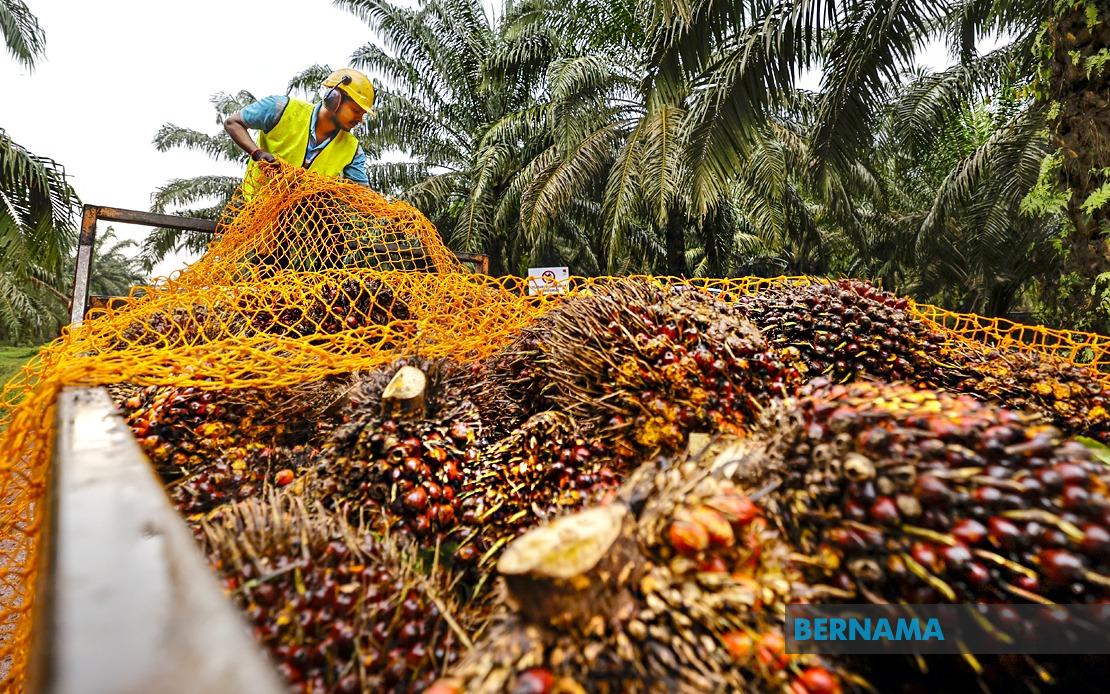
The Malaysian Palm Oil Board will establish a substantial research and development facility in Sungai Rambai, Melaka, marking a significant investment in the state's efforts to revitalize its commodity-dependent economy. Chief Minister Datuk Seri Ab Rauf Yusoh announced the project on Friday, revealing that the 40.47-hectare site will accommodate a comprehensive agricultural innovation hub designed to serve both industrial producers and smallholder farmers across the region. The development, budgeted between RM20 million and RM25 million, represents one of three major commodity-sector initiatives aimed at transforming Melaka's economic landscape, with funding allocated through the 13th Malaysia Plan framework.
The facility will comprise multiple integrated components reflecting a holistic approach to industry modernization. A demonstration plantation will serve as a working model for sustainable production techniques, while a dedicated research and development centre will focus on crop improvement and operational efficiency. The site will house modern laboratory facilities for soil analysis, pest management research, and product quality assurance. Additionally, a formal training centre will provide skills development for both industry professionals and farming communities, addressing the persistent skills gap in agricultural sectors across Malaysia. Headquarters for TUNAS advisory officers and enforcement teams will be based at the station, facilitating regular engagement with farming communities and ensuring compliance with best practices.
Ab Rauf emphasized that the research station will position Sungai Rambai as a regional knowledge hub, fundamentally reshaping how the local palm oil sector operates and develops. The facility aims to attract investment in high-value production chains and advanced techniques, moving beyond traditional commodity trading toward sophisticated agricultural innovation. By concentrating technical expertise and training infrastructure in a single location, the station will reduce information asymmetries that often disadvantage smallholder farmers in remote areas. The initiative directly addresses a critical development challenge in rural Melaka, where nearly 45 percent of the Sungai Rambai population depends on farming and smallholding as primary income sources.
Job creation and economic spillover effects constitute central justifications for the investment. The research station itself will employ scientists, technicians, trainers, and administrative staff, generating direct employment in specialized fields. However, the broader economic impact extends through indirect channels. Training programmes will develop local human capital, enabling farmers to adopt higher-yielding techniques and command premium prices in markets rewarding sustainability certification and quality standards. Knowledge transfer from the research centre to surrounding farms creates multiplicative productivity gains. Infrastructure development—laboratory services, equipment rental, processing facilities—generates secondary employment and business opportunities for local entrepreneurs supporting the agricultural sector.
Critically, the MPOB research station arrives alongside complementary support mechanisms designed to ease the transition toward more productive farming systems. The Smallholder Oil Palm Replanting Financing Incentive Scheme 2.0 offers qualifying smallholders financial assistance reaching RM14,000 per hectare for replacing aged, underperforming trees with superior cultivars. By deferring repayment obligations until year five, the scheme acknowledges the multi-year income gap farmers face during establishment periods for new plantations. This financing approach addresses a persistent market failure where smallholders lack collateral to access conventional agricultural credit. The combination of research infrastructure and accessible financing creates a supportive ecosystem encouraging productivity improvements without imposing immediate financial burdens.
The state government simultaneously addresses critical infrastructure constraints limiting smallholder competitiveness. A five-kilometre private farm road in Ladang Lembah Kesang, funded through a RM400,000 allocation, exemplifies how basic connectivity improvements generate disproportionate economic benefits in agricultural regions. Improved road access accelerates product delivery to markets, reducing spoilage and post-harvest losses that plague perishable commodities. Lower transportation costs directly enhance farmer profitability, particularly for producers operating at thin margins. The road project will benefit over 200 smallholders, demonstrating how targeted infrastructure investments serve broader poverty-alleviation objectives in rural Melaka.
Ab Rauf's announcement reflects state-level recognition that agricultural modernization requires integrated policy frameworks combining research investment, farmer financing, and connectivity infrastructure. This multi-layered approach distinguishes contemporary development strategies from earlier commodity-dependent models that treated agriculture as static revenue sources. Instead, the Melaka initiative positions palm oil production as a dynamic sector capable of supporting high-skilled employment and attracting capital investment in processing and value-addition activities. For Malaysian policymakers observing federal-state coordination mechanisms, Melaka's approach demonstrates how states can leverage targeted investments to maximize returns on limited budgets.
Flood management and water security initiatives complement agricultural development priorities, addressing environmental challenges that threaten production stability and rural livelihoods. The state has applied for RM200,000 federal funding to rehabilitate an aging watergate at Jeti Sebatu, critical infrastructure supporting both agricultural operations and fishing community resilience. Concurrently, drainage improvements along a 300-metre Sungai Sebatu outlet section, already underway at RM350,000 cost, aims to mitigate recurrent flooding that disrupts farming schedules and damages crops. These water management projects respond directly to complaints from local fishing communities, indicating responsive governance attuned to constituent needs. In Southeast Asia's context of increasing climate variability, such preventative infrastructure investments protect agricultural livelihoods from environmental shocks.
The broader policy context suggests that commodity-producing regions across Malaysia and Southeast Asia increasingly recognize the necessity for strategic investments in agricultural modernization and infrastructure. Regions reliant on palm oil, rubber, cocoa, or other primary products face pressure to enhance competitiveness amid global market consolidation and rising input costs. Research-led productivity improvements, farmer education, and modern production systems enable smaller operators to remain viable competitors in commodity markets. For regional observers, Melaka's initiative illustrates how state governments can deploy limited resources strategically to support livelihood transitions and economic diversification. The model may inform policymaking in similarly situated regions throughout Malaysia and the broader ASEAN community grappling with agricultural modernization imperatives.
Looking forward, the success of the MPOB research station depends on effective knowledge dissemination mechanisms and genuine smallholder adoption of recommended practices. Creating research infrastructure remains necessary but insufficient; the facility must establish robust engagement channels ensuring farming communities access findings and receive practical training in implementation. Competition from imported palm products and alternative crops requiring lower input costs means the modernization pathway must demonstrably improve farmer incomes relative to current production systems. Melaka's integrated approach—combining research, financing, and infrastructure—suggests recognition of these implementation challenges. If executed effectively, the Sungai Rambai station could serve as a replicable model for agricultural development in other Malaysian states and regional economies pursuing commodity sector modernization within sustainable production frameworks.

