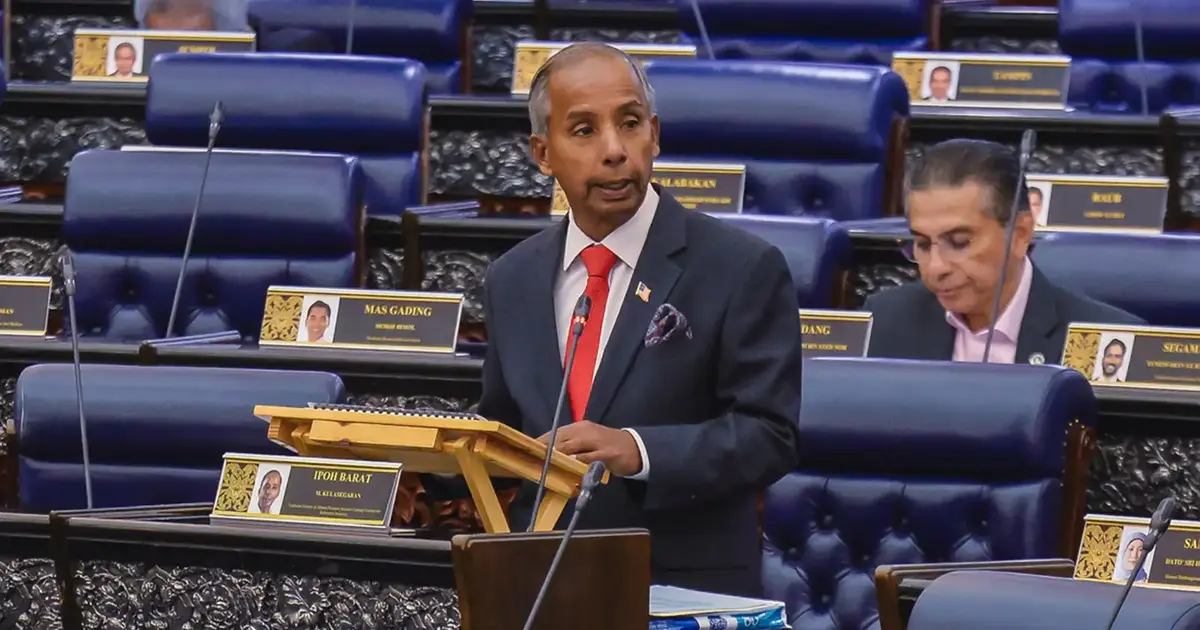
A proposal to permit Malaysian parliamentarians to review security camera footage documenting the Taiping prison riot has moved a step closer to realisation, contingent upon Cabinet clearance, according to Deputy Minister of Law and Institutional Reform Kula Segaran. The senior government official flagged that while there is scope for legislative scrutiny of the incident, procedural hurdles exist that must first be navigated, particularly given the complex legal landscape surrounding the disturbance.
Kula's position reflects a balancing act between parliamentary transparency and judicial sensitivity. The suggestion that lawmakers might gain access to visual evidence from the incident addresses broader parliamentary concerns about accountability and oversight within the corrections system. However, the minister's emphasis on Cabinet approval signals that the government views this matter as sufficiently significant to warrant high-level political consideration before any records are made available to MPs.
The Taiping prison incident, which attracted substantial public and media attention, sparked questions about security protocols, inmate management, and the broader operational adequacy of Malaysia's penal system. Parliamentarians from various political backgrounds have sought greater visibility into what transpired during the disturbance, viewing such access as essential to their legislative and representational responsibilities. This momentum for greater disclosure demonstrates Parliament's determination to exercise oversight authority in matters affecting custodial institutions.
The legal complications flagged by Kula centre on the ongoing court proceedings linked to the riot. These cases remain active and unresolved, meaning that disclosure of evidence—even to parliamentary bodies—could potentially intersect with judicial processes in ways that might compromise legal outcomes or breach procedural safeguards. This reality explains the government's cautious approach and the requirement for Cabinet-level sign-off rather than simple ministerial authorisation.
For Malaysian governance architecture, this situation exemplifies the recurring tension between institutional transparency and legal propriety. Parliament serves as the primary venue for public accountability, yet courts occupy a separate sphere where the law's application must proceed free from political interference or premature public exposure of evidence. Finding equilibrium between these two imperatives remains an ongoing challenge within Malaysia's constitutional framework.
The Cabinet's role in this decision-making process underscores how significant such matters become when institutional interests intersect. Ministers must weigh multiple considerations: the public's interest in understanding state actions, the needs of the legislative branch in exercising proper oversight, the integrity of the judicial process, and administrative security protocols governing sensitive governmental facilities. Kula's comments suggest that all these dimensions are under active deliberation.
For custodial institutions across Southeast Asia, and Malaysia specifically, incidents such as the Taiping disturbance often serve as catalysts for systemic review. Whether arising from overcrowding, inadequate staffing, security vulnerabilities, or conflict management failures, prison riots expose underlying operational difficulties. Parliamentary access to documentary evidence can support more informed legislative responses, potentially driving improvements in facility management, staff training, and inmate welfare standards.
The timing of this issue assumes additional relevance given Malaysia's broader institutional reform agenda. The government has signalled commitment to strengthening democratic institutions and enhancing checks and balances. Permitting Parliament substantive access to evidence concerning major incidents within state-controlled facilities aligns with this broader trajectory, provided that legal safeguards remain intact.
What complicates matters further is the potential precedential dimension. Should the Cabinet approve parliamentary access to this footage, it may establish expectations for similar transparency in future custodial incidents or other state security matters. This consideration likely factors into Cabinet deliberations, as ministers must anticipate how approving this request might reshape conventions governing the disclosure of sensitive facility security information.
The distinction between broad legislative authority and specific evidentiary access deserves emphasis. Parliament inherently possesses the power to investigate government actions and demand explanations from ministers. What remains more operationally contested is whether this general authority extends to unmediated access to raw security footage and related documentary materials, particularly when active litigation hangs in the balance.
Malaysian civil society organisations and legal scholars have long advocated for heightened parliamentary scrutiny of custodial systems. This episode offers a concrete opportunity to clarify where boundaries should lie between transparency and judicial integrity. The conversation Kula's comments have initiated may ultimately prove as valuable as the decision itself, since it forces explicit consideration of how democratic accountability and legal process can coexist.
The Cabinet's forthcoming decision will likely establish important precedent regarding the degree to which Parliament can access sensitive security materials from state institutions. Whether approval is granted or withheld, the government would be well-served by articulating clear reasoning and establishing transparent criteria that might guide future similar requests. Such clarity would strengthen institutional relationships and public confidence in how Malaysia manages the complex intersection between democratic oversight and judicial propriety.

