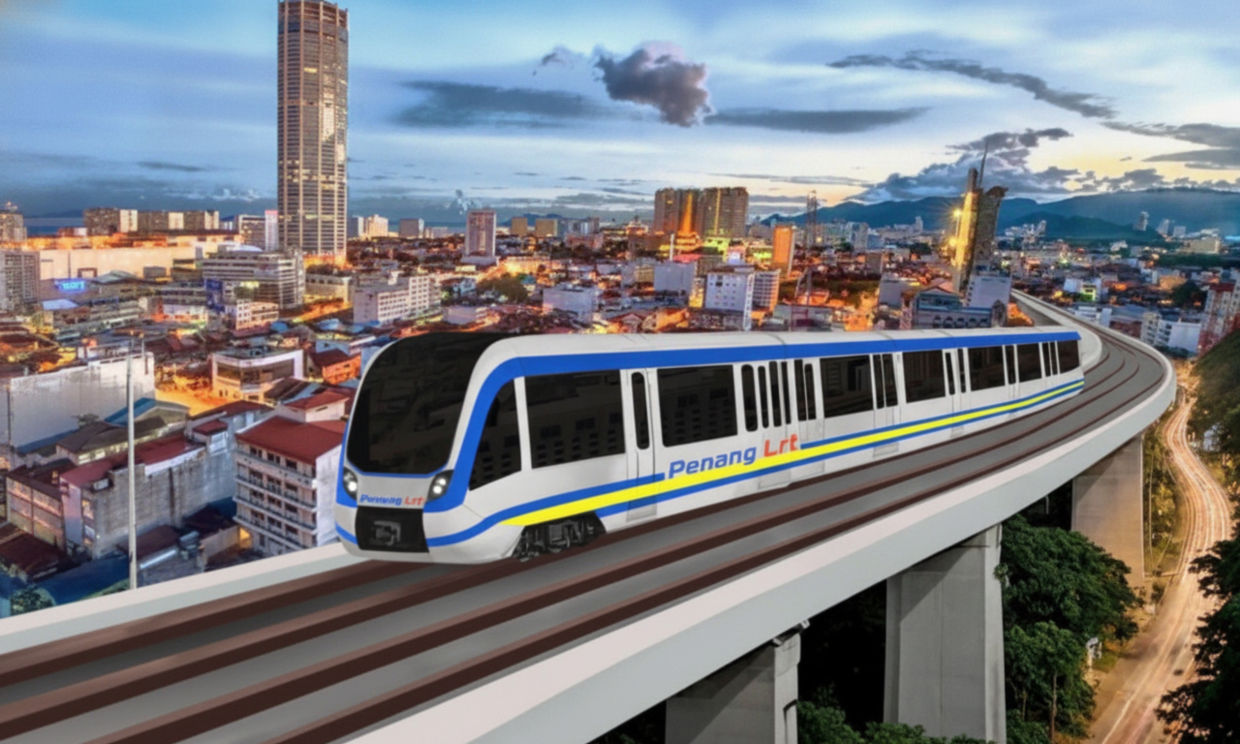
Malaysian Resources Corp Bhd (MRCB) has clinched a substantial RM3.028 billion contract to deliver the complete railway systems package for Penang's Light Rail Transit Mutiara Line, a landmark infrastructure development that underscores the construction firm's expanding footprint in major transportation projects across Malaysia. The award, which MRCB announced through a Bursa Malaysia filing, represents one of the largest contracts awarded for the anticipated rail network and signals continued investment in Penang's urban mobility infrastructure.
The contract has been structured as a 90:10 unincorporated joint venture, with MRCB holding the majority stake. This arrangement allows the company to leverage its core competencies while distributing certain financial and operational risks across both parties. The joint venture model has become increasingly common in Malaysian infrastructure procurement, particularly for projects of this magnitude, as it enables contractors to pool technical expertise and financial resources while maintaining clear accountability.
The scope of work spans an extensive 68.8-month implementation period, during which MRCB will assume responsibility for designing, sourcing, installing, testing, commissioning, and subsequently maintaining all critical railway systems integral to the Penang LRT's operation. This encompasses a comprehensive range of components including the rolling stock (trains themselves), signalling infrastructure, electrical power distribution networks, telecommunications systems, and the integrated ticketing platform that passengers will interact with daily. Each element requires meticulous coordination and adherence to international standards, reflecting the technical complexity involved in modern urban rail systems.
The Penang LRT Mutiara Line project represents a transformative investment for the state, addressing long-standing congestion challenges in George Town and surrounding areas. The line's development reflects broader regional recognition that light rail infrastructure is essential for sustainable urban growth and reducing vehicular traffic in densely populated zones. For Malaysia's northern corridor, the project complements existing and planned transportation networks, positioning Penang as a leader in integrated public transport solutions within Southeast Asia.
MRCB has positioned itself as the suitable entity for this undertaking by emphasizing its proven track record in delivering large-scale infrastructure initiatives across Malaysia. The company points to its historical experience managing complex construction and engineering projects, coupled with its established operational protocols for quality assurance and risk mitigation. This background is particularly relevant given the technical demands of railway systems integration, where any deficiency in design or installation can have cascading operational consequences for the transit authority and commuters.
The contract does carry exposure to conventional construction and operational risks that typically affect projects of this type. Material and equipment price volatility represents a genuine concern, particularly given the global supply chain disruptions that have characterized recent years and the specialized nature of rail system components, many of which are sourced internationally. However, MRCB has indicated confidence in its ability to navigate these challenges through its existing governance frameworks, established vendor relationships, and proven procedures for cost and schedule management. The company's approach suggests a pragmatic acknowledgment of risks combined with structured mitigation strategies.
Financially, MRCB expects the Penang LRT contract will generate material revenue streams and contribute meaningfully to the group's earnings throughout the execution period and beyond. The 68.8-month duration creates a stable, multi-year revenue base that provides predictability for shareholders and enables the company to allocate resources efficiently across its portfolio. For investors, such long-duration infrastructure contracts offer visibility into future cash flows, which typically appeals to market participants seeking steady returns from established construction firms.
Market reaction to the announcement was notably positive, with MRCB's share price advancing one sen to close at 32 sen, representing a 3.23% gain during the midday trading session. More significantly, Theta Edge, the joint venture partner, experienced a substantial surge of 14 sen or 25.45% to reach 69 sen, demonstrating investor enthusiasm for the partnership opportunity. The magnitude of Theta Edge's price movement suggests market participants view the joint venture as particularly beneficial for that entity, potentially reflecting the value of gaining association with MRCB's execution capabilities and the stable revenue stream the contract provides.
The contract award carries implications extending beyond MRCB's immediate financial performance. It validates Penang's commitment to modernizing its transport infrastructure and attracts further attention to the state as a viable destination for major capital investment projects. Regional observers see such infrastructure initiatives as foundational to Penang's long-term competitiveness as a regional economic hub, particularly as traffic congestion continues rising across Southeast Asia's urban centers. The Mutiara Line, once operational, is expected to facilitate economic activity, reduce transportation costs for workers and businesses, and improve quality of life for residents.
The award also reflects confidence from transport authorities that MRCB possesses the requisite technical capability and financial stability to shepherd a project of this complexity from conception through commissioning and into sustained operations. In Malaysia's infrastructure sector, such confidence from public agencies is not automatically granted but must be earned through demonstrated competence on previous assignments. MRCB's selection suggests the company has successfully built that reputation, positioning it advantageously for future major rail and transit projects potentially emerging across the region.

