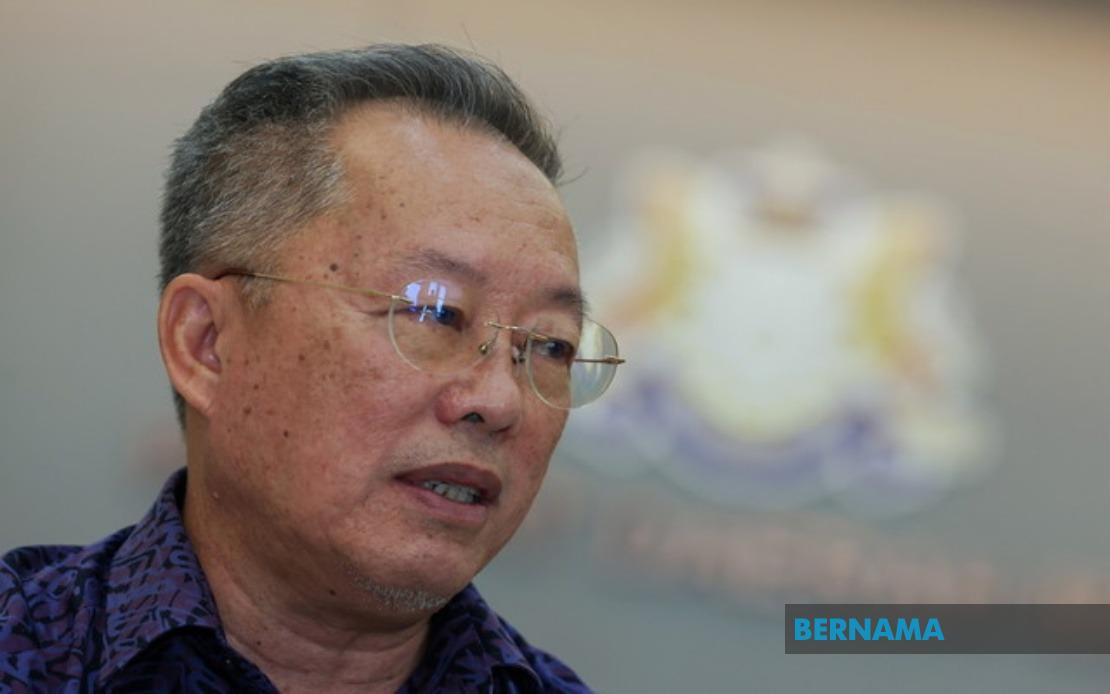
The Muar District Office has moved to clear the air regarding accusations that it prevented a government engagement event, instead asserting that the gathering was purposefully transferred to an alternative location based on administrative considerations. Speaking at the district office, Muar District Officer Zainal Eran explained that the administration had sought to relocate the programme in order to preserve the principle of institutional impartiality when it comes to the deployment of public facilities and venues. His comments specifically addressed Prime Minister Datuk Seri Anwar Ibrahim's community engagement initiative originally scheduled for June 15, which had been slated for the Sungai Balang Mukim Penghulu Complex before ultimately taking place at Pantai Leka Food Court Square following consultations between the Muar District Administration and the Johor State Development Office.
Zainal emphasised that the relocated event proceeded successfully, attracting substantial participation from federal government leadership, state agency representatives, and residents from surrounding villages. The relocation, he stressed, did not constitute an impediment to the Prime Minister's outreach efforts. Instead, the district administration took this action to ensure that state infrastructure would not serve as venues for partisan political campaigns or partisan activities. This distinction between blocking an event and moving it to a more appropriate venue proved significant in the district officer's defence against the allegations that had emerged.
The decision to seek a change of location also stemmed from administrative challenges that the district administration encountered in its preparations. Zainal outlined that the lack of a formal application submitted well in advance, coupled with scanty programme particulars and notification arriving less than a full day before the scheduled date, had created genuine complications in coordinating the necessary logistical support. These timing and procedural shortcomings made it difficult for the district to arrange appropriate security, crowd management, and other essential services at the originally designated venue.
A further justification for the relocation surfaced when district officials conducted an inspection the morning the event was to occur. The vicinity surrounding the newly proposed venue had already been decorated with banners and flags representing various political parties, even though the formal campaign period for the upcoming Johor state election had not officially commenced. This development gave the district administration additional grounds to believe that the event risked becoming a platform for electioneering activities rather than remaining apolitical community engagement, particularly given the sensitive timing with elections imminent.
Zainal's remarks underscored the state's commitment to upholding governmental neutrality during election periods. Malaysian electoral law and administrative practice typically require that government buildings and resources not be deployed in ways that might confer advantage on any particular political party or faction. The district officer's insistence that public facilities should remain distinct from partisan activity reflects a broader principle embedded in Malaysian governance frameworks, where the machinery of state must maintain an appearance and reality of impartiality, particularly when the nation or state is approaching a ballot.
The district officer appealed to all stakeholders to act with responsibility and refrain from weaponising the venue change as a political issue. He asserted that the programme had achieved its genuine objective of enabling the Prime Minister to interact directly with rural and community populations in a manner that remained peaceable and properly ordered. In this sense, Zainal's contention was that the relocation actually facilitated rather than hindered the underlying purpose of the gathering—fostering dialogue between government and constituents.
The clarification comes amid the heightened political atmosphere surrounding the Johor state election, scheduled for July 11, with early voting set for July 7. State elections in Malaysia, particularly in economically significant states like Johor, often draw national media scrutiny and heightened political sensitivity. The circumstances surrounding the Prime Minister's community event thus occurred within a context where all administrative actions by government agencies face potential interpretation through a partisan lens.
For Malaysian voters and observers, this incident illustrates the complex balance that government administrators must strike during election periods. The tension between enabling government officials to perform their normal duties of public engagement and ensuring that such activities do not inadvertently become campaign platforms represents an ongoing challenge in Malaysian electoral administration. The Muar District Office's approach—permitting the event to proceed while insisting on a change of venue—represents an attempt to navigate this middle ground, though it has evidently attracted criticism from those who view the relocation as an impediment.
Zainal's explicit denial that the programme was obstructed attempts to reframe the narrative around administrative procedure rather than political interference. However, the incident touches on broader questions about how government agencies should manage official events during election periods, and at what point administrative requirements risk being perceived as partisan decisions. The fact that political party symbols were already present at the original venue location, even before the official campaign period, suggests that ground-level political mobilisation was already underway in Muar, potentially influencing the district administration's caution.
The relocation of the Prime Minister's event ultimately proceeded, and according to the district officer's account, achieved successful outcomes in terms of public participation and community engagement. This practical outcome supports Zainal's assertion that the administrative intervention, rather than blocking or preventing government-public interaction, simply ensured it took place in a venue less likely to be perceived as hosting partisan political activity. For observers in other Malaysian states and at the federal level, the Muar incident offers a case study in how election-period administrative decisions are scrutinised and contested.

