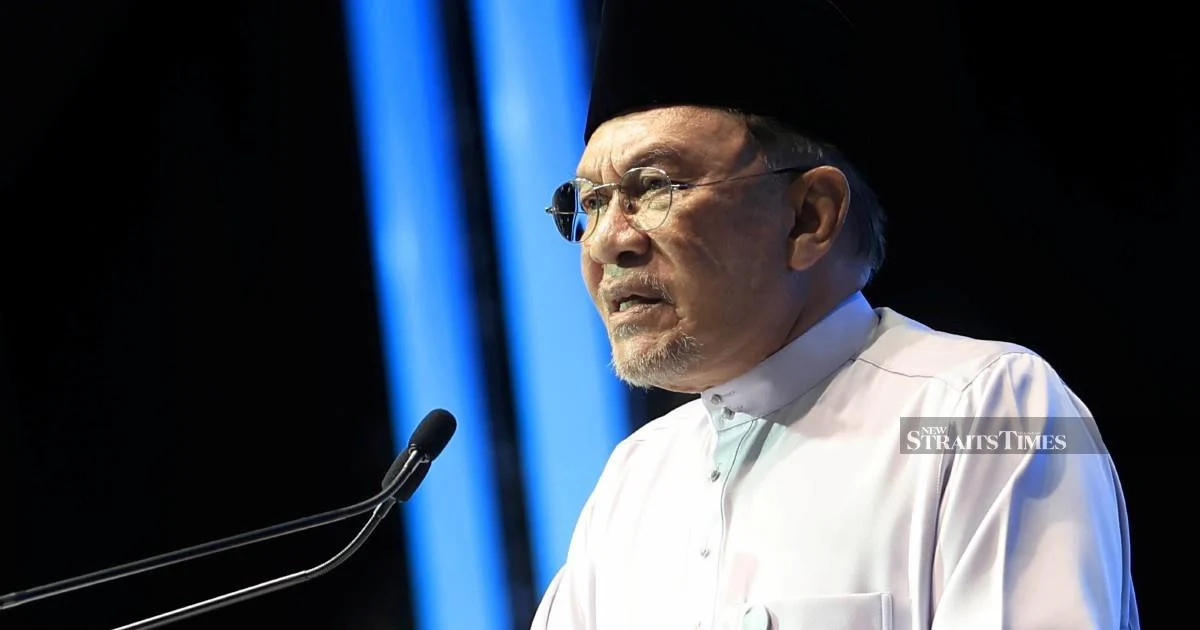
The Muar district office has formally rejected allegations that it prevented Prime Minister Datuk Seri Anwar Ibrahim from utilising the Penghulu Mukim Sungai Balang Complex to conduct a community engagement programme during the recent Johor state elections. The denial comes amid heightened scrutiny of administrative procedures and potential partisan interference during the state polling period, raising broader questions about the neutrality of government institutions during electoral campaigns.
Disputes over access to government facilities during election periods have become increasingly contentious across Malaysia, particularly when federal and state administrations operate under different political leadership. The Penghulu Mukim Sungai Balang Complex, as a government-owned infrastructure asset, technically serves the entire electorate regardless of party affiliation. However, the incident reflects underlying tensions that emerge when opposition figures or individuals from competing political camps seek to utilise such venues for campaign or community activities.
The alleged incident in Muar comes as Johor continues to navigate its complex political landscape, where coalition dynamics and administrative boundaries can create friction between different levels of government. Federal leadership and state-level operations occasionally find themselves at odds over resource allocation and facility usage during electoral periods, particularly when competing interests intersect at the district level. These tensions, whether real or perceived, can undermine public confidence in the impartiality of government machinery.
The timing of such disputes matters considerably in Malaysian politics. Elections invariably amplify sensitivities around access to government resources, as all parties seek equal opportunity to reach voters through official channels and community engagement initiatives. When allegations of obstruction emerge, they generate media attention and political commentary that extends beyond the immediate incident, potentially affecting broader perceptions of institutional fairness. The Muar district office's swift denial suggests awareness of these reputational implications.
Prime Minister Anwar's position as the nation's chief executive carries particular weight in such situations. His ability to access government facilities without hindrance carries symbolic importance beyond the practical mechanics of scheduling and venue booking. Any constraint on his movements or activities, even if unintentional, risks being interpreted as a challenge to federal authority or evidence of political obstruction. The district office's proactive denial appears designed to prevent such interpretations from gaining traction.
The Johor state elections themselves have been marked by intense competition and close political races in several constituencies, including Muar. The stakes inherent in such contests inevitably translate into heightened awareness about fairness in campaign conduct and equal access to venues. Community leaders, party operatives, and local administrators all operate under scrutiny during such periods, with minor administrative decisions potentially becoming flashpoints for broader political disputes.
Government facilities nationwide are technically accessible to all citizens and political parties, subject to standard booking procedures and administrative requirements. However, the reality of facility access sometimes diverges from formal policy, particularly when local-level officials exercise discretion or when conflicting calendar requests occur. The distinction between administrative convenience and deliberate obstruction can blur, especially in charged political environments where suspicions about administrative impartiality run high.
Malaysia's federal structure creates particular vulnerability to such disputes, as district and state authorities operate under different governance chains. The Muar district office answers to state-level administration, while the Prime Minister represents federal leadership. When institutional lines cross during electoral periods, confusion can arise about which authority holds precedence, which protocols apply, and whether decisions reflect genuine administrative constraints or political considerations.
The incident underscores ongoing challenges in maintaining institutional neutrality during elections. While statutory bodies and administrative agencies are legally bound to operate impartially, perceptions of bias can spread rapidly through political networks and social media, regardless of factual reality. The district office's statement represents an attempt to establish the official record, though public confidence in such denials depends partly on broader perceptions of institutional integrity.
For residents of Muar and Johor more broadly, such incidents highlight the tension between administrative technicality and political perception. Whether the allegation reflected genuine obstruction, administrative miscommunication, or political opportunism remains unclear from the available information. What remains evident is that facility access disputes during elections carry implications extending far beyond venue scheduling, touching on fundamental questions about institutional fairness and the conduct of democratic processes.
Moving forward, clearer protocols for facility access during election periods could help prevent similar allegations. Transparency in booking procedures, documented decision-making, and accessible appeals mechanisms might reduce both actual obstruction and perceptions thereof. As Malaysia continues refining its electoral administration and governance practices, attention to such procedural details could strengthen public confidence in institutional impartiality across all districts and administrative levels.

