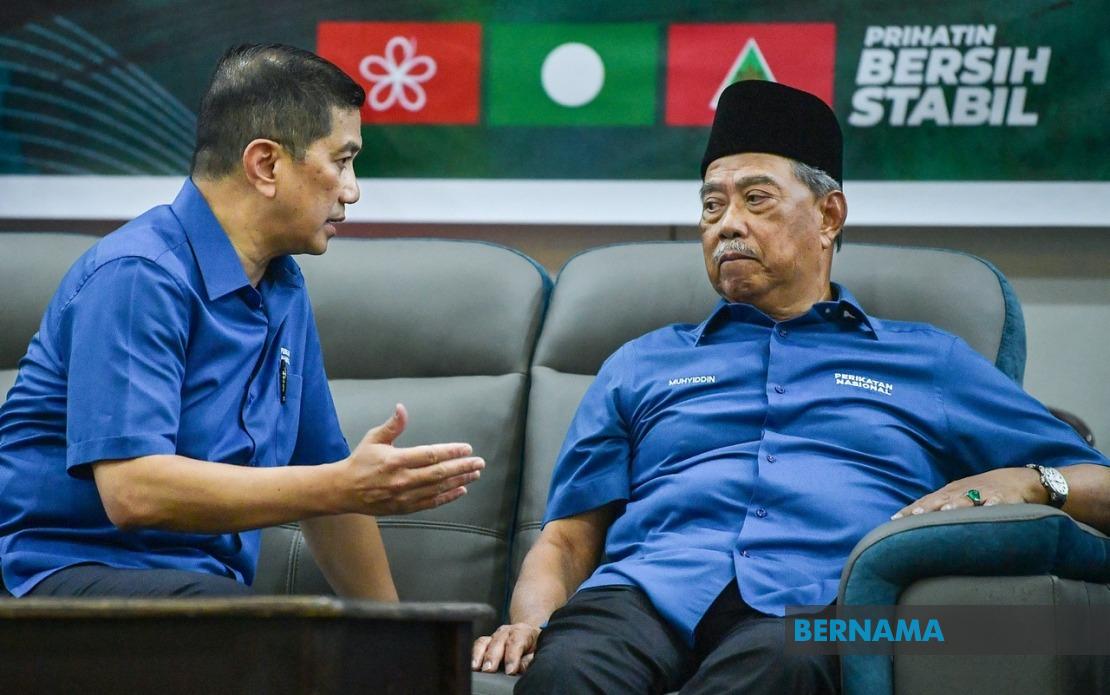
Former Prime Minister Tan Sri Muhyiddin Yassin has thrown his weight behind Prime Minister Datuk Seri Anwar Ibrahim's newly unveiled package of relief measures designed to alleviate the financial pressures facing ordinary Malaysians and the business community. The Bersatu party president expressed his support through a Facebook statement today, signalling cross-party acknowledgment of the government's attempts to tackle the persistent cost-of-living challenges that continue to weigh on household budgets across the nation.
The centrepiece of Muhyiddin's endorsement focuses on two specific initiatives that directly impact daily consumer expenditure. The restoration of the RON95 petrol subsidy eligibility cap from 200 litres to 300 litres per month represents a meaningful increase in fuel assistance for eligible Malaysian motorists, effectively broadening access to subsidised fuel for a larger portion of the driving population. Simultaneously, the government has raised the e-Invoicing exemption threshold for small businesses to those with annual sales reaching RM3 million, a move that reduces administrative and compliance burdens for the rapidly growing population of small traders navigating Malaysia's increasingly digital business environment.
Muhyiddin emphasised that the true measure of these initiatives' success will depend heavily on government agencies' capacity to execute them efficiently. He stressed the importance of relevant ministries and government bodies moving swiftly to disburse allocations and ensure assistance flows seamlessly to those who qualify. This caveat reflects a broader Malaysian concern about policy implementation gaps, where well-intentioned measures sometimes falter during the disbursement phase due to bureaucratic delays or administrative inefficiencies that leave intended beneficiaries waiting for promised relief.
Beyond the immediate cost-of-living interventions, Muhyiddin highlighted the government's investments in public service quality and infrastructure. An additional RM500 million allocation for school maintenance addresses longstanding infrastructure deficits in Malaysia's education system, while the digitalisation of healthcare services promises to modernise a sector struggling with accessibility issues across urban and rural areas alike. These investments reflect recognition that cost-of-living relief extends beyond direct cash assistance to encompassing improved quality and accessibility of essential public services that households depend upon.
The Bersatu leader also welcomed technological and entrepreneurial elements within the package. Providing artificial intelligence software subscriptions to Malaysian youth represents an unconventional approach to digital economy participation, potentially helping younger Malaysians develop competencies in AI tools that are increasingly shaping global labour markets. This forward-looking element contrasts with more traditional subsidy approaches, positioning the government's strategy across multiple temporal horizons—immediate relief combined with future skill development.
Much of Muhyiddin's statement concentrated on support mechanisms targeting Malaysia's crucial micro, small, and medium enterprise sector, which employs a significant portion of the workforce and drives much of the country's grassroots economic activity. An additional RM1 billion in micro-credit facilities makes capital more accessible to small traders, while RM200 million in direct grants specifically targets petty traders, night market vendors, and women operating home-based businesses. These demographic categories have historically struggled to access conventional bank financing due to lack of collateral or formal business registration, meaning targeted government support often proves transformative for their commercial operations.
The support package carries particular resonance for Malaysia's informal and semi-formal economic sectors, which represent both a significant employment pool and a vulnerable population frequently overlooked in macroeconomic policymaking. Women entrepreneurs running home-based businesses, for instance, face compounded challenges of limited capital access, family responsibilities, and reduced ability to demonstrate formal income documentation—barriers that government grants can directly overcome. Night market vendors and petty traders similarly occupy economic spaces where traditional bank products prove inaccessible, making government-administered support critical to their survival and growth.
However, Muhyiddin's statement included a carefully calibrated challenge to the government. He urged comprehensive review of taxation and subsidy rationalisation policies that he argues contribute directly to public financial strain. This framing suggests that while welcoming immediate relief measures, Muhyiddin views them as incomplete without deeper structural reforms addressing how government revenue is collected and subsidies are distributed across the economy. His call for further measures ahead of Budget 2027 indicates expectation for more ambitious interventions in subsequent fiscal planning cycles.
The former Prime Minister's measured support reflects his positioning within Malaysia's political landscape. As head of Bersatu and a significant figure in the broader Malay-Muslim political constellation, Muhyiddin's endorsement carries weight beyond simple commentary—it signals that cross-party consensus exists around the legitimacy of government cost-of-living interventions, even as opposition remains on specific policy details and implementation approaches. His emphasis on swift execution and comprehensive follow-up measures simultaneously praises the government while implicitly setting expectations for continued action.
Anwar's announcement, which took effect on September 1, represents the government's response to mounting public pressure regarding cost-of-living concerns that have dominated Malaysian political discourse throughout 2024. By introducing six concurrent initiatives spanning fuel subsidies, education infrastructure, healthcare technology, business tax compliance, and micro-financing, the government attempted to demonstrate responsiveness across multiple constituencies simultaneously. For salaried workers, the fuel subsidy expansion provides direct relief; for business owners, e-Invoicing exemptions reduce compliance costs; for youth, AI access signals digital opportunity; for informal traders, direct grants offer capital without loan burdens.
The implications of this relief package for Malaysian economic performance remain uncertain. Economists debate whether targeted subsidies stimulate genuine economic expansion or merely defer necessary structural adjustments. Expanding fuel subsidies, for instance, may reduce effective household costs short-term while potentially constraining long-term fiscal space for other productive investments. Conversely, direct grants to informal traders bypass distortionary market mechanisms that subsidies sometimes create, potentially delivering more efficient outcomes. The actual economic impact will depend significantly on implementation quality, targeting accuracy, and whether relief measures complement or substitute for broader competitiveness-enhancing reforms.
For Southeast Asian observers monitoring Malaysia's policy trajectory, this relief package illustrates how democratic governments navigate the tension between immediate social demands and longer-term fiscal sustainability. Malaysia's experience offers lessons for neighbouring countries facing similar cost-of-living pressures, particularly regarding the design of targeted versus universal assistance mechanisms and the political economy of subsidy management. The Muhyiddin endorsement, meanwhile, suggests that despite Malaysia's intense partisan rivalries, fundamental agreement exists on government responsibility to address citizen welfare during periods of economic stress.

