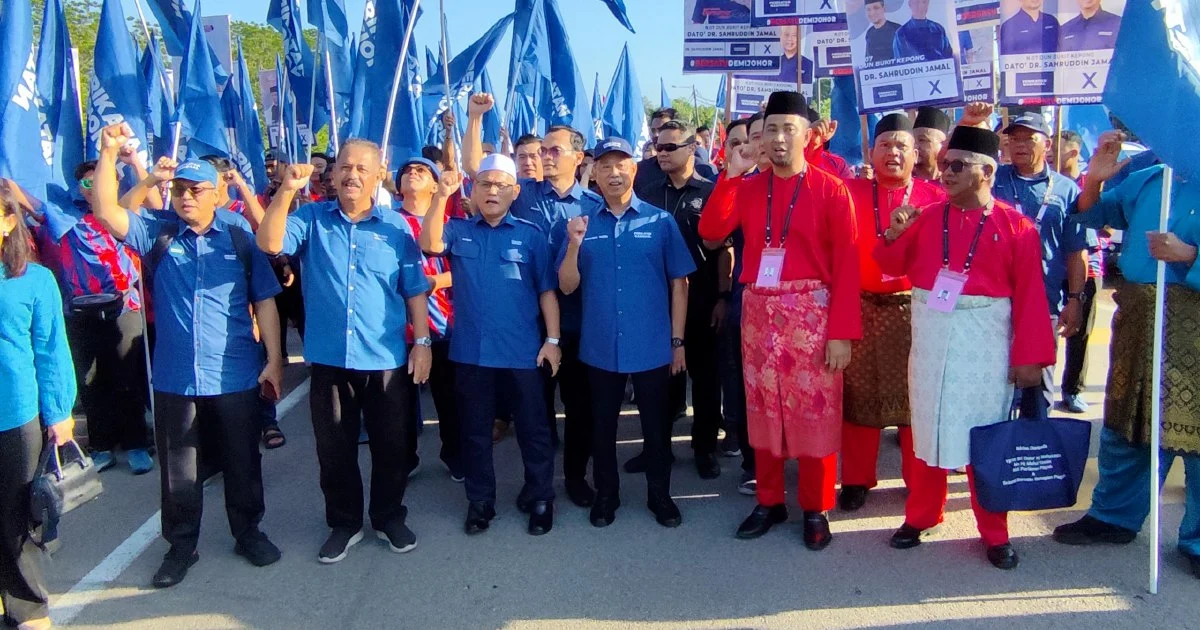
The presence of Bersatu president Tan Sri Muhyiddin Yassin alongside party nominee Sahruddin at the Pagoh Sports Complex Hall nomination centre underscores the political importance the party is placing on the Bukit Kepong contest in the Johor state election. Muhyiddin's arrival at 8.45 am marked a visible show of leadership backing for the candidacy, a symbolic gesture that carries weight in Malaysian electoral campaigns where party hierarchy and personal endorsement can influence voter sentiment and party morale alike.
The Bukit Kepong state constituency represents a strategically significant battleground within Johor's electoral landscape. As one of the state's contested seats, the constituency has historically demonstrated swinging voter patterns, making it precisely the type of seat where visible party leadership involvement can make tangible differences in campaign momentum. Bersatu's decision to position Muhyiddin prominently during the nomination process signals that the party is not taking any seat for granted, even in what might be considered traditional strongholds or historically favourable terrain.
Muhyiddin's direct engagement in the nomination proceedings reflects broader patterns in Malaysian politics where party presidents frequently perform ceremonial and motivational roles during critical campaign moments. The timing of his appearance, arriving in the early morning hours before official proceedings reached their peak, suggests coordination between party headquarters and ground-level campaign machinery. This operational synchronisation is characteristic of well-organised political campaigns that seek to maximise media coverage and demonstrate voter enthusiasm through visual displays of leadership commitment.
For Bersatu, maintaining visible unity becomes increasingly important given the complex political environment in Johor. The party operates within a coalition framework, and maintaining the appearance of internal cohesion whilst competing with other partners for electoral gains requires careful choreography. By accompanying Sahruddin through the nomination process, Muhyiddin sends signals both to party members about commitment to winning this seat and to coalition partners about Bersatu's determination to secure electoral gains in the state.
The Pagoh constituency, where the nomination centre was located, holds particular significance in Malaysian political memory. Pagoh has been associated with significant political moments throughout Malaysia's electoral history, adding additional symbolic weight to any campaign activities conducted there. The Sports Complex Hall's selection as the nomination venue placed the proceedings in a public, accessible location—another strategic choice that facilitates both local voter engagement and media access during what represents an important moment in the electoral calendar.
Sahruddin's candidacy in Bukit Kepong reflects Bersatu's broader strategic allocation of resources across Johor constituencies. The party's fielding of candidates across multiple seats requires decisions about where to deploy high-profile leadership backing. The decision to have Muhyiddin appear alongside Sahruddin indicates confidence in the candidate's viability and recognition of the seat's importance to achieving Bersatu's target vote share in the state. In competitive electoral environments, such allocation of presidential attention often correlates with assessment of seat-winning potential and likelihood of contributing meaningfully to overall state performance.
The nomination process itself marks a formal threshold in electoral campaigns, transitioning political activity from the preparatory phase into the official campaign period. Muhyiddin's presence at this juncture demonstrates recognition of the ceremony's importance as a moment when party supporters, opposing candidates, and media observers all converge. His attendance helps generate photographs and video footage that can circulate through both traditional media channels and social media platforms, extending the campaign reach beyond those physically present at the venue.
For Malaysian voters and observers tracking party dynamics within Johor politics, visible leadership involvement in candidate endorsement provides information about party priorities and internal confidence levels. When party presidents appear at nomination events, it generally signals that the party views the seat as defensible or winnable, in contrast to seats where such high-level attention might be conspicuously absent. This signalling function means that leadership appearances at nominations serve purposes beyond mere ceremonial fulfillment, communicating strategic intent to multiple audiences simultaneously.
Bersatu's campaign strategy in Johor operates against the backdrop of Southeast Asian political developments and Malaysia's ongoing constitutional governance. The party's performance in this state election will provide significant indicators about its broader electoral viability and coalition positioning. Individual constituency contests like Bukit Kepong contribute to aggregate state-level outcomes that determine not only legislative representation but also coalition arithmetic that affects national-level governance arrangements.
The involvement of party leadership in ground-level campaign activities, as exemplified by Muhyiddin's appearance in Pagoh, also reflects how Malaysian political campaigns increasingly blend institutional hierarchies with grassroots engagement strategies. Presidents and party leaders no longer remain purely at organisational apex but frequently descend into specific constituencies to demonstrate commitment and generate local enthusiasm. This approach recognises that modern electoral success requires both organisational coherence from above and energised participation from below.
As the Johor state election unfolds across multiple constituencies and campaign weeks, individual moments like Muhyiddin's nomination centre appearance accumulate into broader narrative patterns about party momentum, candidate strength, and competitive positioning. Observers monitoring Bersatu's electoral prospects will note which seats received high-level leadership attention and which received less prominent party focus, using such allocation patterns as indicators of strategic confidence and resource prioritisation.

