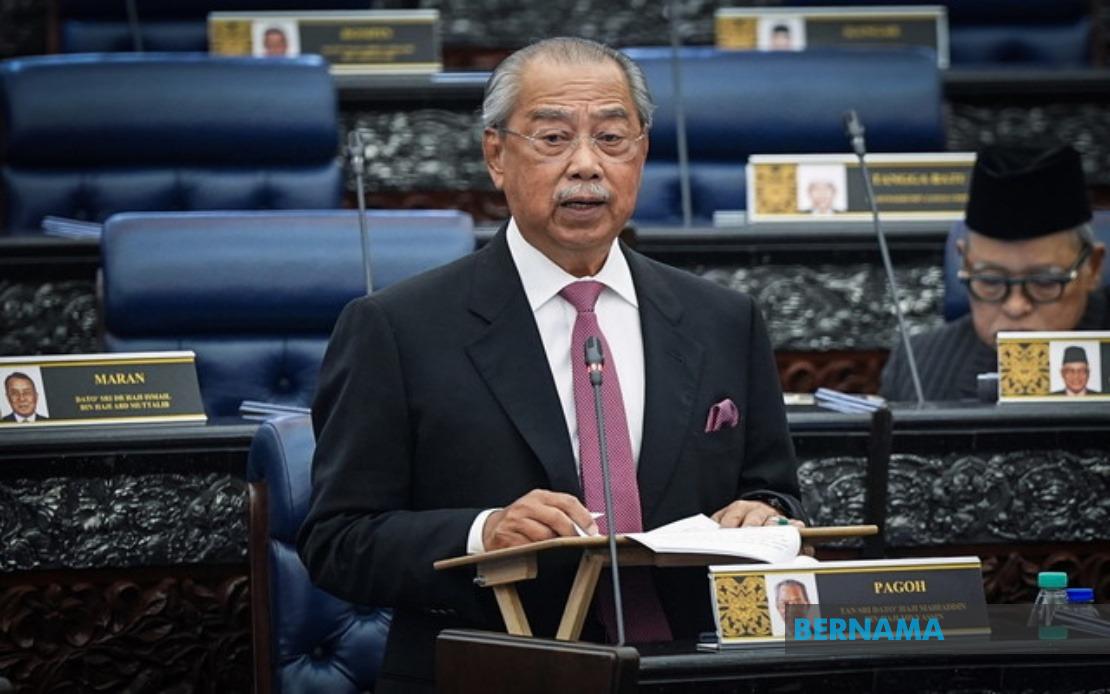
Tan Sri Muhyiddin Yassin, the former prime minister and Bersatu president representing Pagoh, has made a forceful case for urgent government action on Tabung Haji, demanding an exhaustive forensic examination of the Islamic pilgrimage savings board's financial management. Speaking during parliamentary debate on the Royal Commission of Inquiry report into the institution, Muhyiddin stressed that such an audit must be completed within twelve months and conducted with full transparency to reassure Malaysia's 8.7 million TH contributors that their savings are being properly scrutinised.
The RCI report, released to the public on July 29 after government approval, has painted a sobering picture of institutional dysfunction. Between 2014 and 2020, TH accumulated estimated losses totalling between RM10 billion and RM12.6 billion—a staggering sum that represents the savings and aspirations of millions of Malaysian Muslims preparing for the Hajj pilgrimage. These figures underscore the gravity of what Muhyiddin describes as weaknesses in governance and transparency that have festered within the organisation's management structures over nearly a decade.
Muhyiddin's emphasis on independent forensic investigation reflects broader concerns about accountability in Malaysia's government-linked institutions. An audit of this scope would need to trace the complete journey of funds through TH's investment portfolio, identifying not only where money was lost but precisely how those losses occurred. Such investigation must distinguish between simple negligence, abuse of administrative power, and deliberate fraudulent conduct—distinctions that carry vastly different legal and ethical consequences. The former premier has insisted that individuals responsible for losses, regardless of the mechanism through which those losses were incurred, must face justice through appropriate legal channels.
Parliament's special sitting on the matter has galvanised cross-party concern about implementation. Syed Saddiq Syed Abdul Rahman from MUDA representing Muar has proposed a more targeted approach: establishing a Multi-Agency Task Force specifically to investigate 14 problematic TH investments that the RCI identified as particularly troubling. His proposal recognises that effective investigation requires coordination between multiple enforcement bodies rather than allowing individual agencies to conduct parallel, potentially contradictory enquiries. The task force would integrate expertise from the Malaysian Anti-Corruption Commission, the police force, and the Inland Revenue Board, creating a unified investigative framework.
Syed Saddiq's suggestion extends further, proposing that forensic audits specifically target the 14 flagged investments while also examining related entities: Felda, FGV Holdings, and Eagle High Plantations. This broader scope acknowledges interconnections within Malaysia's government-linked investment ecosystem, where poor decisions in one entity can cascade through related organisations. By examining these investments in detail, investigators could establish not only financial losses but also the decision-making processes and governance failures that enabled problematic investments to proceed without adequate oversight or safeguards.
Simultaneously, BN's Datuk Seri Hasni Mohammad from Simpang Renggam has advocated for sustained parliamentary supervision of investigation outcomes. He has proposed that MACC, police, and other enforcement agencies provide regular progress reports to Parliament within clearly defined timeframes, ensuring that investigative momentum does not dissipate and that the public receives transparent updates on developments. This proposal reflects recognition that forensic audits and investigations can easily stall without external accountability mechanisms, particularly when they may implicate powerful figures or politically sensitive decisions.
Hasni has also recommended that today's parliamentary sitting mark the commencement of continuous, bipartisan institutional oversight ensuring that all 25 RCI recommendations receive proper implementation and monitoring. This institutional approach would move beyond one-time investigations toward sustained parliamentary vigilance over TH's operations and governance reforms. Such continuous oversight represents a significant shift in how Parliament engages with government-linked institutions, transforming reactive crisis management into proactive supervisory responsibility.
The RCI report itself has already identified substantial implementation progress, with TH confirming that 75 per cent of the 25 recommendations had been actioned by late July. However, the institutional challenges revealed extend beyond simple operational adjustments. The scale of losses and the governance weaknesses identified suggest systemic failures requiring fundamental restructuring of investment processes, risk management frameworks, and oversight mechanisms. A forensic audit would provide the empirical foundation necessary for such restructuring, identifying specific procedural breakdowns that enabled losses to accumulate unchecked.
For Malaysian Muslims who entrust their savings to TH in preparation for one of Islam's most significant obligations, the RCI findings and subsequent parliamentary response carry profound implications. The institution holds the accumulated aspirations of millions, yet has demonstrably failed to protect those funds from substantial losses. An independent forensic audit represents not merely an accounting exercise but a fundamental statement about whether Malaysian institutions will be held accountable for breaching public trust. The one-year timeframe that Muhyiddin proposes is aggressive but necessary, as prolonged uncertainty would further erode confidence in an institution that depends fundamentally on public faith and participation.
The multi-agency approach and cross-party parliamentary consensus emerging from this debate suggest genuine commitment to accountability, though implementation will test Malaysia's institutional capacity. Coordinating investigations across MACC, police, and revenue authorities requires transcending bureaucratic silos and political considerations. Similarly, sustaining parliamentary oversight across multiple political cycles demands institutional discipline and commitment to bipartisan principles. The coming months will reveal whether these parliamentary intentions translate into rigorous, independent investigation and whether accountability extends to all individuals culpable for the losses, regardless of their political affiliations or institutional positions.

