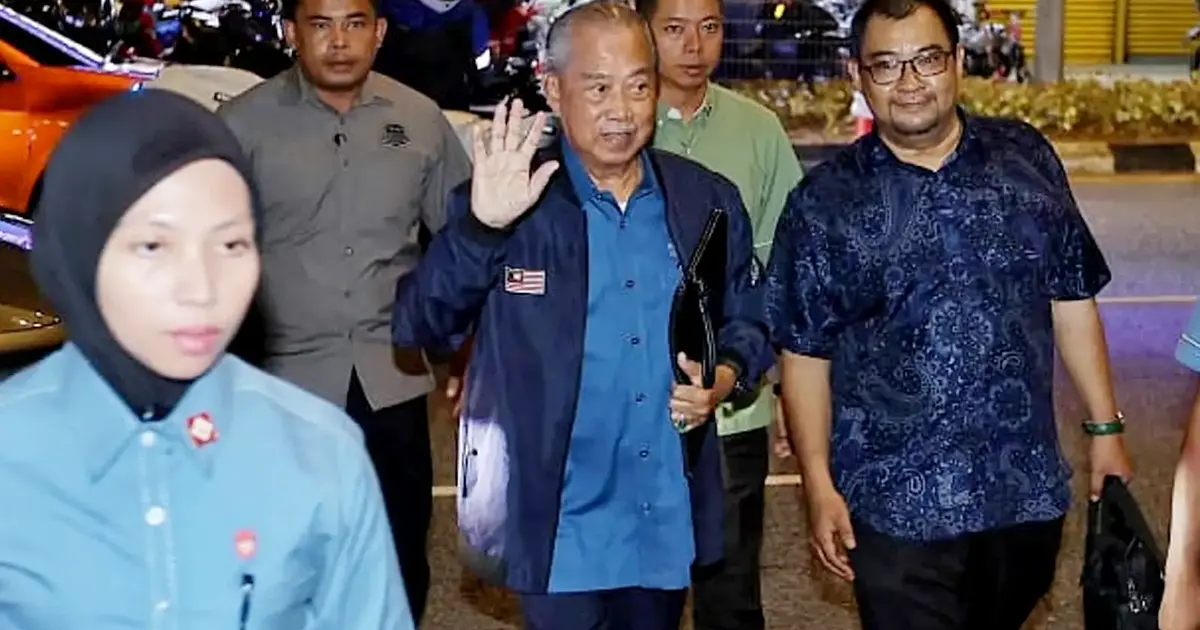
Tan Sri Muhyiddin Yassin and senior figures from Perikatan Nasional convened for an emergency conclave on Friday evening to address a deepening crisis within the opposition alliance. The gathering represents a pivotal moment for the coalition, which has struggled to maintain cohesion in recent months amid shifting political dynamics and conflicting strategic interests among its constituent parties.
At the heart of Friday's discussions lies the fallout from PAS's announcement severing formal ties with Bersatu. The decision marks a dramatic rupture within Perikatan Nasional's leadership structure and raises fundamental questions about the coalition's viability as a unified political force capable of challenging the current administration. For Malaysian observers, the breakdown underscores the fragility of opposition alliances in the country's polarized political landscape, where ideological differences and personal rivalries frequently supersede collective parliamentary strategy.
Bersatu's standing within the coalition has become increasingly precarious following PAS's withdrawal. The party, which Muhyiddin founded and leads, now faces isolation within a structure designed to pool resources and coordinate electoral efforts across diverse political movements. This vulnerability carries implications extending beyond parliamentary mathematics; it affects Bersatu's organizational credibility and its ability to attract political figures contemplating party transitions in the fluid Malaysian political environment.
The deterioration of Perikatan Nasional reflects deeper structural weaknesses that have plagued the alliance since its formation. Unlike the governing coalition, which benefits from ministerial patronage and state resources, the opposition grouping must rely on ideological alignment and leadership trust—commodities increasingly scarce within its ranks. Observers point to competing visions about the coalition's direction, ranging from questions of institutional leadership to disagreements over engagement with other opposition players, particularly Pakatan Harapan.
PAS's decision to withdraw carries particular strategic significance given its substantial parliamentary representation and entrenched grassroots organization, particularly in states like Terengganu, Kelantan, and Kedah. The party's departure potentially signals a calculation that its political interests are better served through autonomous action or selective alliance-building rather than commitment to a broader opposition umbrella. For Perikatan Nasional, losing PAS represents not merely numerical weakness but the loss of geographically concentrated electoral strength that previously bolstered coalition ambitions.
The timing of Friday's emergency session underscores the sense of urgency pervading Perikatan Nasional's upper echelons. Rather than allowing the coalition to drift or calcify around existing disputes, Muhyiddin has opted for confrontational engagement with the crisis, suggesting leadership unwilling to accept the alliance's gradual erosion. How participants address Bersatu's future within the coalition structure will effectively determine whether Friday's meeting represents a turning point toward reconstruction or the beginning of a longer unraveling.
For Bersatu specifically, the stakes involve both institutional survival and Muhyiddin's personal political standing. The party has invested considerable resources in positioning itself as a moderate alternative within the opposition space, distinct from both the Islamist positioning of PAS and the secular populism associated with sections of Pakatan Harapan. PAS's departure fundamentally alters that calculation, potentially forcing Bersatu toward uncomfortable choices about future coalition partnerships or strategic repositioning.
Regional observers monitor these developments with particular interest given implications for Southeast Asian opposition politics more broadly. Malaysia's two-coalition system, increasingly characterized by instability and realignment, offers cautionary lessons about maintaining opposition unity absent strong institutional frameworks or shared programmatic commitments. The Perikatan Nasional experience suggests that anti-government sentiment alone provides insufficient binding force for sustainable multi-party alliances, particularly when participating parties maintain distinct organizational cultures and electoral bases.
The meeting also carries implications for parliamentary dynamics under the current government. A weakened, destabilized opposition creates space for executive consolidation and reduces the likelihood of coordinated legislative scrutiny. Conversely, if Perikatan Nasional emerges from Friday's discussions with renewed commitment to collective action, the opposition could potentially enhance its capacity to mount more effective parliamentary challenges to government legislation and executive decisions.
Muhyiddin's handling of the emergency session will likely establish benchmarks for his continued leadership credibility within Bersatu and across Perikatan Nasional more broadly. Participants will scrutinize whether his approach emphasizes reconciliation with PAS, internal coalition reorganization, or pivoting toward alternative alliance architectures. The resolution toward any of these directions will reverberate through Malaysian opposition politics for months ahead, influencing calculations of other parties contemplating their institutional futures and strategic partnerships.
The broader significance of Friday's gathering extends beyond immediate coalition arithmetic to fundamental questions about opposition viability in contemporary Malaysian politics. As the meeting progressed, observers waited to discern whether Perikatan Nasional could transcend the centrifugal forces threatening its coherence, or whether the coalition represented merely a temporary alignment destined for eventual fragmentation as constituent parties prioritized narrow institutional interests over collective opposition objectives.