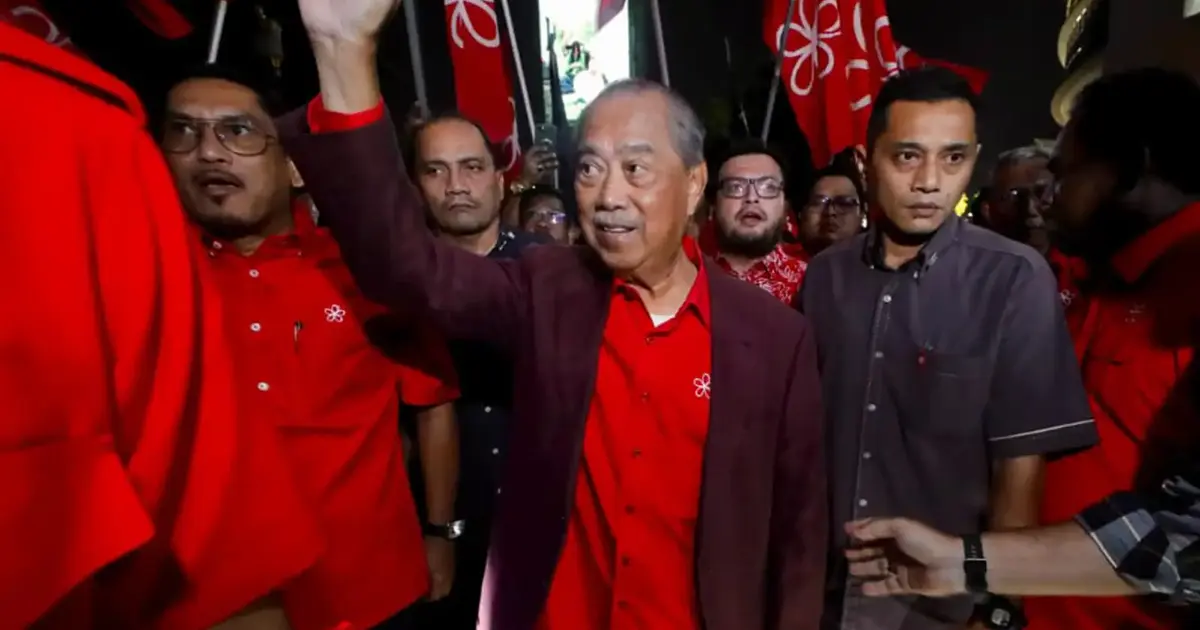
Bersatu party leader Muhyiddin Yassin secured backing from over 200 supporters in a show of force timed just before a pivotal party gathering, signalling consolidated internal support within the political outfit as it navigates significant organisational crossroads. The rally underscores Muhyiddin's continued command of party loyalists even as Bersatu confronts multiple strategic decisions that will shape its trajectory heading into crucial state contests and coalition negotiations.
The forthcoming Bersatu meeting carries substantial weight for Malaysia's political landscape, particularly given the party's middling position within the broader coalition ecosystem. At stake is the party's electoral posture for upcoming Johor state elections, where Bersatu must determine resource allocation, candidate selection, and campaign intensity against a backdrop of competitive multiparty contestation. The Negeri Sembilan polls similarly demand careful calculation, as the state represents both opportunity and risk depending on how Bersatu positions itself relative to larger coalition partners and opposition forces.
Equally consequential is Bersatu's relationship with PAS, the Islamist party that has proven a volatile coalition partner. This relationship encompasses everything from ministerial portfolios and parliamentary support arrangements to ideological positioning on religious matters and governance philosophy. For Malaysian observers, the PAS-Bersatu dynamic carries wider ramifications because it influences broader coalition stability at federal level and shapes the contours of future government formation scenarios. Any shift in their alliance could trigger cascading changes across the political system.
Muhyiddin's visible rally serves multiple tactical purposes. First, it demonstrates to party members and the broader political establishment that the Bersatu leadership enjoys grassroots solidarity, which strengthens Muhyiddin's negotiating hand during internal deliberations and external coalition discussions. Second, the gathering functions as a morale booster for party machinery ahead of intense electoral campaigns. Third, it sends an implicit signal to PAS and other coalition partners that Bersatu remains a cohesive, mobilisable force worthy of continued engagement and respect within power-sharing arrangements.
From a Malaysian perspective, Bersatu's positioning matters considerably because the party operates at the intersection of Bumiputera politics, religious concerns, and coalition arithmetic. Unlike DAP or PKR, which command larger parliamentary seats, Bersatu punches above its weight through strategic placement and willingness to shift coalition alignments. The party's decisions on state elections and PAS engagement will therefore ripple through federal politics, potentially affecting government stability, cabinet appointments, and legislative priorities on issues ranging from Islamic law harmonisation to economic policy.
The timing of this rally before the formal meeting reveals keen awareness of internal party dynamics. By securing a public show of support beforehand, Muhyiddin creates momentum that shapes subsequent closed-door discussions. Party delegates attending the meeting will feel the pulse of grassroots enthusiasm and recognise that dissenting from leadership positions risks appearing disconnected from membership sentiment. This is particularly important in Bersatu, which historically has experienced internal factionalism and leadership challenges.
For the Johor elections specifically, Bersatu must calculate whether to pursue aggressive seat acquisition or adopt a more modest stance that avoids splitting anti-opposition votes with Umno. The state has proven unpredictable, with voter sentiment shifting between elections. Negeri Sembilan presents different variables, with Bersatu needing to decide its independence level versus reliance on coalition partners' machinery and endorsement. These calculations directly influence whether Bersatu expands its legislative representation or consolidates existing positions.
The PAS question is perhaps most intricate. The two parties share Bumiputera-Islamist voter bases but compete for influence and resources. Recent years have witnessed periods of alliance and distance, reflecting broader coalition volatility. Bersatu's leadership must determine whether to deepen PAS cooperation through formal electoral pacts, maintain distance while preserving parliamentary support arrangements, or prepare contingency strategies if the partnership fractures. Each option carries distinct risks and rewards for party growth and coalition longevity.
Malaysian political observers note that Bersatu remains vulnerable to larger coalition partners' dominance. Umno, despite its reduced circumstances relative to the pre-2018 era, still commands significantly larger parliamentary numbers. Bersatu's strategic value lies in its bridging capacity, religious credentials, and willingness to shift positions. This volatility cuts both ways—it grants leverage in coalition negotiations but also invites pressure and marginalisation if larger partners grow confident they can govern without Bersatu support.
The broader context includes Bersatu's somewhat uncertain member base and identity. Originally founded as a breakaway from Umno with explicit mission to provide political alternative to both Umno and the opposition, the party has struggled to develop distinctive policy platforms or organisational depth beyond Muhyiddin's personal leadership. Rebuilding internal coherence and establishing party structures independent of the leader's personality remains an ongoing challenge that today's rally, while impressive, cannot entirely address.
Electoral performance in Johor and Negeri Sembilan will significantly influence Bersatu's positioning for the next general election. Strong results would validate Muhyiddin's leadership and coalition strategy, potentially attracting fence-sitting politicians and voters. Weak performance might trigger internal questioning about strategy, coalition alignment, or leadership itself. This reality undoubtedly concentrates minds as the meeting proceeds and underscores why pre-meeting demonstrations of support carry such political significance.
Looking forward, Bersatu's decisions over the coming weeks will reverberate beyond the party itself. Coalition stability, state election outcomes, and PAS engagement patterns will collectively influence Malaysia's political weather heading toward the general election cycle. For regional observers, Bersatu represents a case study in how smaller parties maintain relevance within competitive multiparty systems, particularly when they lack numerical dominance but possess strategic positioning and ideological appeal to specific voter segments.