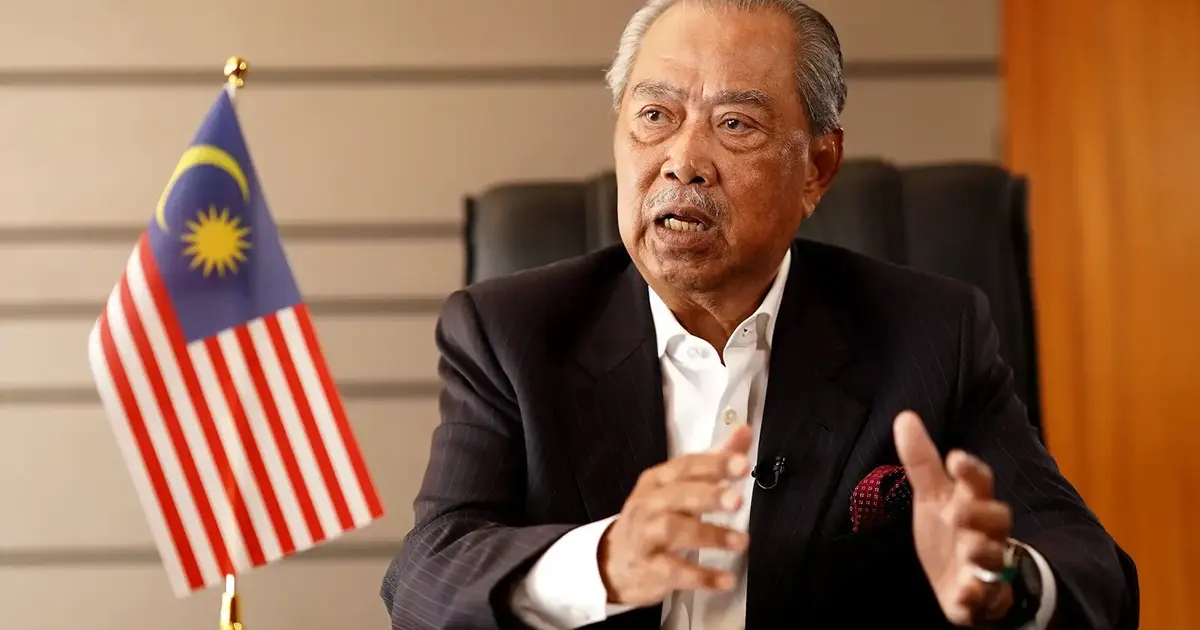
The political tensions within Malaysia's opposition bloc have reignited as Bersatu President Muhyiddin Yassin defended his party's controversial exit from the Perikatan Nasional coalition, rebutting allegations that the move was strategically misguided. The clash centred on differing narratives about Bersatu's role within the partnership and the circumstances that prompted the recent political realignment.
Muhyiddin's response came after criticism from within political circles questioning the logic behind Bersatu's departure from PN, a coalition that the party had helped establish from its inception. The Bersatu chief characterised the party's experience within the alliance as one of gradual isolation, arguing that despite its foundational status, Bersatu was progressively sidelined in key coalition decisions and strategic planning. This narrative reflects broader concerns within Bersatu's leadership about the party's diminishing influence within PN's internal power structures.
The political manoeuvre represents a significant shift in Malaysian politics, where coalition dynamics have proven increasingly volatile over recent years. Bersatu's decision to operate independently from PN carries substantial implications for the broader opposition landscape, potentially reshaping how various political factions position themselves ahead of future electoral cycles. The move also signals deepening fractures within what was conceived as a unified alternative to the ruling government bloc.
Contextualising this dispute requires understanding PN's composition and internal mechanics. As a founding member, Bersatu anticipated substantial input in coalition affairs, yet Muhyiddin's assertions suggest the party found itself marginalised as other members gained disproportionate influence. This pattern of sidelining, if substantiated, would represent a common pitfall in Malaysian coalition politics, where smaller or newer partners often struggle to maintain relevance against more established or numerically stronger factions.
For Malaysian observers, the implications extend beyond internal party politics. Coalition cohesion remains critical for any opposition force seeking to challenge incumbent administrations effectively. Bersatu's exit potentially weakens opposition coordination and complicates efforts to present unified alternative governance narratives to voters. The fragmentary nature of Malaysian politics means that every split or reorganisation reverberates across state and federal political calculations.
Muhyiddin's counter-offensive also highlights the communication challenge facing political parties when defending strategic decisions that appear externally incoherent. By emphasising Bersatu's foundational role and subsequent marginalisation, the party president attempted to frame the departure not as abandonment but as necessary self-preservation. This narrative contest reflects how Malaysian political disputes increasingly play out through media and public rhetoric rather than closed-door negotiations.
The broader Southeast Asian context suggests that such coalition volatility is not unique to Malaysia. Regional political alliances frequently experience similar pressures when constituent parties perceive unequal treatment or diminishing influence. However, Malaysia's specific constitutional arrangements and electoral system create particular incentives for coalition-building, making such ruptures especially consequential for the overall political balance.
For regional analysts, Bersatu's trajectory matters because the party has historically attracted Malay-Muslim voters concerned with communal representation and Islamic governance. The party's positioning within or outside coalition structures directly affects how such constituencies engage with the broader political landscape. A weakened opposition presence could have implications for political competition across multiple states with significant Malay-Muslim populations.
Looking forward, Muhyiddin's defence of Bersatu's decision will likely inform how the party navigates future political configurations. Whether Bersatu maintains its independent status or seeks fresh alliance arrangements remains uncertain, but the party's leadership has clearly signalled that mere coalition membership without substantive influence represents an unacceptable outcome. This stance may reshape expectations across Malaysian opposition circles about what coalition participation requires.
The dispute also underscores persistent challenges in Malaysian political party management, where personal leadership dynamics often overshadow institutional frameworks. Muhyiddin's ability to maintain Bersatu's cohesion while defending the PN exit decision will test his leadership and determine whether the party can establish a viable independent political trajectory. The coming months will reveal whether other coalition members might follow Bersatu's example or whether the incident becomes a cautionary tale about coalition dissolution.
For stakeholders across Malaysia's political spectrum, this episode reinforces how fragile coalition arrangements remain absent clearly defined power-sharing mechanisms and decision-making protocols. As political competition intensifies ahead of future electoral contests, the lessons from Bersatu's experience may prompt other alliance partners to reconsider their structural arrangements and ensure their respective interests receive meaningful protection within broader coalitions.

