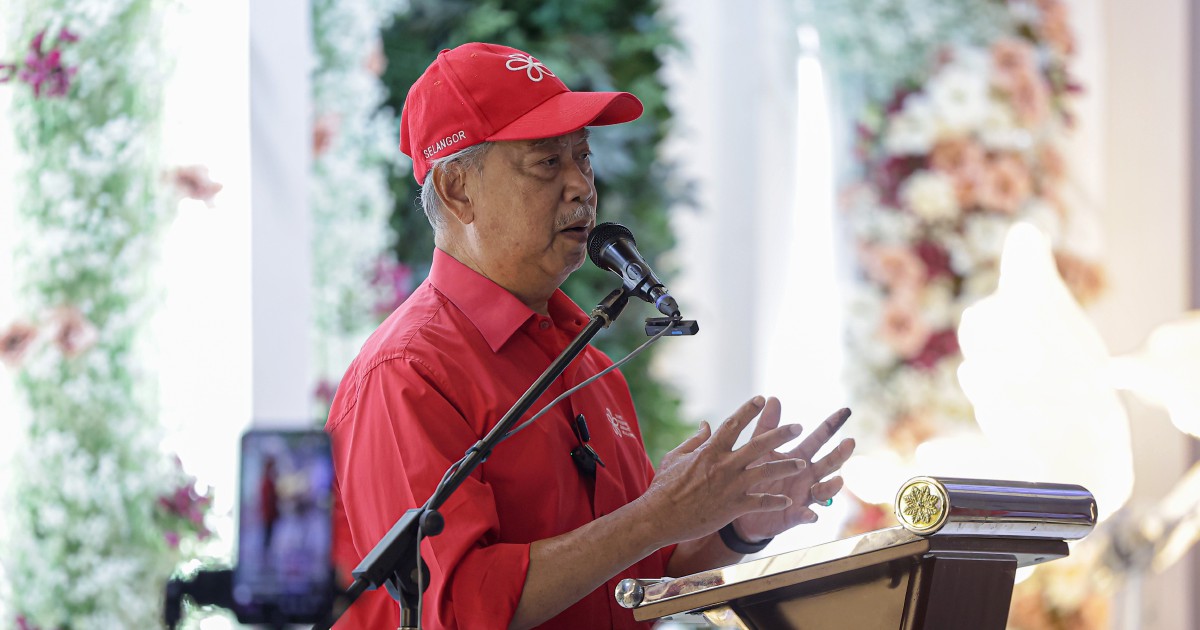
Bersatu president Tan Sri Muhyiddin Yassin has firmly rejected accusations from Umno's senior leadership that his party is functioning as a spoiler in the upcoming Negri Sembilan state election. The sharp rebuke came after Umno vice-president Datuk Seri Mohamed Khaled Nordin publicly characterised Bersatu's electoral participation in the state as disruptive to the broader coalition's interests, a comment that appears to have struck a nerve within the Bersatu camp ahead of polling day.
The exchange highlights underlying tensions within Malaysia's ruling coalition, where partner parties often struggle to reconcile their individual political ambitions with collective campaign strategies. Umno's implicit suggestion that Bersatu's candidacies would fragment opposition votes or dilute Barisan Nasional's competitive position reflects a long-standing grievance in Malaysian coalition politics: the challenge of managing multiple parties with distinct power bases and electoral aspirations. For Negri Sembilan voters, the row underscores how state-level contests routinely become proving grounds for factional disputes at the national level, complicating the messaging that should focus on local governance and development priorities.
Muhyiddin's response signals that Bersatu, despite its junior standing within the government coalition, intends to assert its independence and electoral legitimacy. The party's decision to field candidates in Negri Sembilan reflects a broader strategy to maintain visible representation across Malaysian states and prevent potential marginalisation within coalition discussions. For a party that has experienced significant political turbulence since 2020, establishing tangible electoral credibility remains essential to Muhyiddin's leadership tenure and the party's long-term viability as a political force.
Umno's criticism carries particular weight given that Umno remains the dominant political actor in most Malaysian states, including Negri Sembilan where it traditionally holds substantial influence. Mohamed Khaled Nordin's comments likely reflect frustration within Umno's hierarchy that coalition partners are competing directly in constituencies where Umno candidates are already fielded, potentially splitting the government vote. This concern is not merely theoretical; Malaysian electoral history demonstrates that vote fragmentation across multiple government-aligned candidates can indeed benefit opposition parties in tight contests, a dynamic that has shifted several seats in previous state elections.
The timing of the dispute is noteworthy, emerging as campaigns enter their decisive phase. Such public recriminations between coalition members risk denting unified messaging just when parties typically intensify voter outreach. For observers monitoring coalition stability, the Muhyiddin-Khaled exchange serves as a barometer of whether internal strains might undermine the government's capacity to present a coherent electoral platform. The controversy also indicates that behind-the-scenes negotiations to manage candidate placement and prevent direct competition may have broken down or proved insufficient.
Bersatu's participation in Negri Sembilan elections reflects the party's broader positioning strategy following its exit from the Perikatan Nasional bloc and its re-entry into Barisan Nasional-aligned governance. The party leadership has consistently argued that maintaining electoral presence across states is non-negotiable for preventing its political erosion. Muhyiddin's willingness to publicly defend his party's electoral strategy demonstrates his determination to resist any perception that Bersatu has become merely a subordinate faction within a larger coalition dominated by Umno and MCA.
From a Malaysian political economy perspective, coalition-related squabbles of this nature often mask deeper negotiations around ministerial portfolios, committee positions, and resource allocation. The Negri Sembilan election thus becomes a negotiating platform where parties signal their organisational strength and electoral indispensability. A strong Bersatu showing could strengthen Muhyiddin's hand in future coalition discussions, whereas poor performance might invite further marginalisation and internal questioning of his leadership.
For Negri Sembilan voters and the broader Southeast Asian region observing Malaysian politics, these coalition tensions underscore the challenges that multi-party governmental systems face in balancing unity with internal competition. While such disputes are relatively routine in Malaysian politics, they occasionally escalate into broader governmental instability if unresolved resentments compound over time. The current exchange remains manageable rhetoric, but it signals that the fragility of Malaysia's coalition architecture remains a persistent feature of the nation's political landscape.
Khaled Nordin's specific language—portraying Bersatu as a "spoiler"—carries strategic implication beyond the immediate electoral contest. The accusation frames Bersatu participation as self-interested rather than nationally beneficial, a rhetorical move designed to delegitimise competing coalition candidates in voter perception. Muhyiddin's forceful rejection indicates he will not permit such framing to pass unchallenged, establishing a pattern where Bersatu leadership actively contests narratives that subordinate the party's interests to Umno's preferred outcomes.
Looking forward, the Negri Sembilan results will provide empirical evidence about whether coalition partnerships can productively accommodate multiple parties, or whether such arrangements inevitably generate counterproductive internal competition. Should Bersatu candidates perform unexpectedly well, it might vindicate Muhyiddin's independence strategy and accelerate his reassertion within coalition hierarchy. Conversely, disappointing returns could strengthen Khaled Nordin's argument that coalition discipline requires subordinating junior partners' electoral ambitions to senior partners' strategic interests, establishing a precedent for future state elections.

