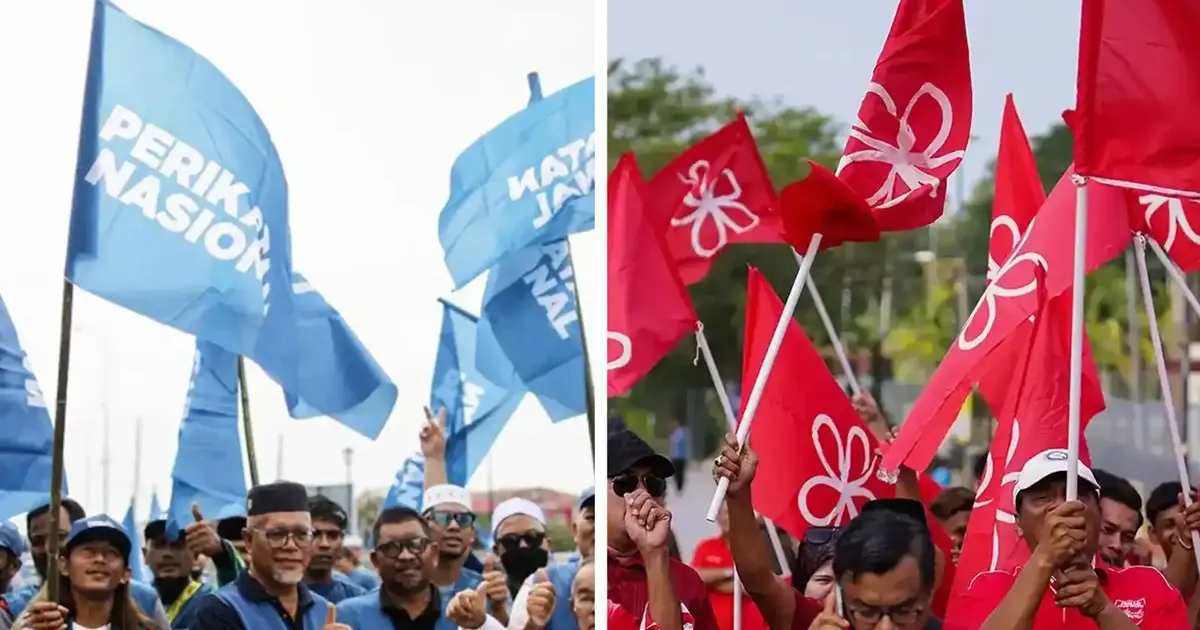
Bersatu president Tan Sri Muhyiddin Yassin has moved to settle internal coalition tensions by firmly stating that the removal of any party from Perikatan Nasional cannot be decided by a single political figure, regardless of their standing within the alliance. His remarks come as speculation swirls around the stability of the three-party coalition and the mechanisms through which member parties can be disciplined or expelled.
Muhyiddin's assertion underscores a fundamental principle of coalition governance: that binding decisions affecting member parties must emerge from collective deliberation rather than centralised authority. The insistence on consensus reflects the delicate balance that holds together the PN alliance, which comprises ideologically diverse partners united primarily through electoral calculation and opposition to other political blocs. Any perception that one leader could unilaterally cast out a fellow coalition member would undermine the very premise of equal partnership that keeps the arrangement functional.
The timing of Muhyiddin's statement suggests underlying friction within the coalition structure. Coalition politics in Malaysia has historically proven fragile when power dynamics become unclear or when senior figures appear to exercise disproportionate influence over collective decisions. The Perikatan Nasional came together in 2020 as an alternative to the Pakatan Harapan government, but its members—while aligned on certain tactical objectives—maintain distinct organisational interests and constituency bases that can pull them in different directions.
Bersatu itself occupies a peculiar position within PN. The party was founded by Muhyiddin following his departure from UMNO and has served as a bridge between different political factions at various moments. This intermediary role gives Bersatu importance in coalition dynamics, but it also means the party remains vulnerable to pressure from larger coalition members. Muhyiddin's clarification about expulsion procedures may therefore be read as both a procedural statement and a defence of Bersatu's position within the alliance.
The reference to "Chegubard" in coalition discourse points to competing power centres within the PN structure. Understanding who holds authority over expulsion decisions carries practical implications for party leaders assessing the security of their positions. If an individual figure could unilaterally remove coalition members, it would create serious instability, as any leader facing internal criticism might fear arbitrary removal. Conversely, a system requiring full consensus gives smaller partners veto power over expulsions, though it may paralyse decision-making on serious breaches of coalition discipline.
For Malaysian political observers, Muhyiddin's intervention highlights the mechanics of how coalitions operate in practice versus theory. While federal government formation requires coalition support, the internal governance of coalitions remains underspecified in formal constitutional arrangements. Coalitions typically rely on informal understandings, leadership consensus, and negotiated protocols rather than written constitutional provisions. This flexibility permits rapid coalition-building but creates ambiguity when disputes arise about who can do what within the arrangement.
The broader context involves questions about PN's coherence as a governing alliance. The coalition supports the Anwar Ibrahim administration at federal level while competing fiercely in state politics, a contradiction that generates continuous internal strain. Individual PN members might contemplate defection under pressure from their own grassroots members who resent supporting a government led by rival parties. Clear rules about how coalition membership can be revoked thus become strategically important for coalition leadership.
Muhyiddin's stance also carries implications for how Malaysian coalitions might evolve toward clearer institutional structures. Over time, political scientists have observed that coalitions often develop written protocols, regular coordination meetings, and dispute resolution mechanisms. If PN parties formalise their understanding that expulsions require unanimous consent, this would represent maturation of coalition governance in Malaysia. It would distinguish the coalition from ad-hoc arrangements prone to sudden collapse.
For regional observers, Malaysian coalition politics offer a case study in multi-party governance. Unlike two-party systems where power distribution is simpler, coalitions in Southeast Asian democracies must continuously negotiate balance between partners of unequal size and resources. How PN manages internal disputes over member discipline will shape whether the alliance emerges as a durable political force or fragments when electoral pressures intensify.
Muhyiddin's insistence on consensus may constrain the coalition's ability to impose discipline on members who breach coalition agreements, but it protects Bersatu and other smaller partners from being eliminated through top-down decisions. This reflects the fundamental trade-off in coalition governance: stronger coordination mechanisms often require sacrificing the veto power that smaller partners use to protect themselves. The Bersatu president's public clarification serves notice that the coalition's smaller members will not accept rules that concentrate power among larger figures, even as the coalition faces pressures that might tempt such centralisation.

