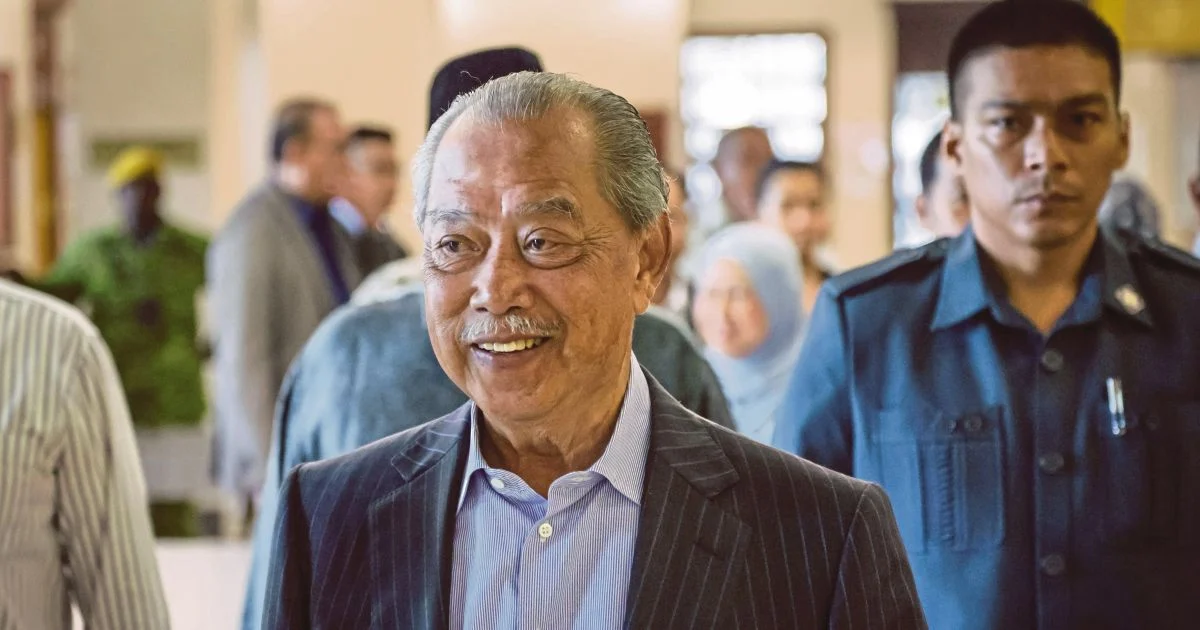
Perikatan Nasional's leadership has struck an unusually optimistic tone regarding the upcoming Johor state election, with Bersatu president Tan Sri Muhyiddin Yassin asserting that his coalition remains a credible contender for forming the next state administration despite the strategic constraints of fielding candidates in only 33 seats. Speaking in Pagoh, the former Prime Minister emphasised that PN's reduced footprint in the contest need not diminish its ambitions, signalling that the coalition has calculated a viable route to securing the simple majority required to govern the state.
The decision to contest a limited number of seats represents a significant recalibration of opposition strategy in Johor, Malaysia's second-largest state by population and a critical battleground in national politics. Historically, full-strength candidature has been the default posture for major coalitions vying for state power, making PN's targeted approach a notable departure from conventional electoral playbooks. This selective positioning suggests internal deliberation within the coalition about resource allocation, candidate quality, and the realistic assessment of where momentum can be most effectively concentrated to maximise seat gains.
Muhyiddin's assertion carries implications for the broader electoral mathematics in Johor, where the state assembly comprises 56 seats. To form government, a coalition needs 29 seats. PN's contesting in 33 seats means the coalition is effectively betting that its performance in these chosen constituencies will yield sufficient victories to cross the threshold, whilst perhaps relying on post-election negotiations or independent candidates to secure additional support if needed. This gambit reflects either confidence in PN's competitive strength in specific pockets of Johor or a pragmatic acknowledgement of organisational and financial constraints.
The Bersatu-led coalition's confidence merits scrutiny against Johor's recent political trajectory. The state has been a Barisan Nasional stronghold for decades, and in the 2022 general election, PN's share of the vote was modest compared to other states where it demonstrated stronger performance. Muhyiddin's optimism therefore suggests either a significant shift in local political sentiment since the last election, or a calculated assessment that PN's brand and messaging have gained traction among crucial voter segments in the 33 constituencies it has selected.
The composition of PN in Johor also bears examination. Bersatu, as the nominal coalition leader at the national level, is the main component, but the actual distribution of candidate nominations among PN parties—including any allocations to PAS or other affiliated groups—will be instrumental in determining the coalition's appeal across Johor's diverse electoral landscape. The ethnic, religious, and socioeconomic demographics of the 33 chosen seats will shape which parties within PN are best positioned to deliver victories in specific areas.
Muhyiddin's statement from Pagoh, a constituency with historical significance to Bersatu and Mahathir's political legacy, was likely chosen as a platform to reinforce the coalition's determination and coherence. Pagoh itself has been a bulwark of Bersatu's political identity, and using it as a backdrop for projecting confidence about state-level prospects serves a dual purpose of energising the party base whilst signalling to voters that PN has mobilised strategically rather than haphazardly.
The timing of such declarations is also politically charged. Electoral contests in Malaysia's states are increasingly influenced by the narrative surrounding them—whether a coalition projects momentum, fracture, or organised purposefulness. By articulating confidence despite a reduced candidate slate, PN's leadership attempts to frame the contest as one of strategic discipline rather than weakness, potentially inoculating supporters against demoralisation if early results appear mixed.
For Malaysian voters, particularly those in Johor, this election represents an opportunity to assess whether the opposition coalition has matured into a serious alternative government at the state level. PN's performance in Johor will send ripples across the country, affecting perceptions of the coalition's viability in other states and potentially influencing calculations for the next general election. A strong showing despite the seat constraint would substantially enhance PN's standing; conversely, a poor return would raise questions about whether the coalition has overestimated its appeal or misjudged the selection of constituencies.
The approach also reflects broader shifts in Malaysian electoral strategy, where coalitions increasingly adopt granular, data-driven approaches to candidate deployment rather than contesting uniformly across all available seats. This professionalisation of campaign methodology has become evident across the political spectrum, with parties investing in voter analytics and micro-targeting to concentrate resources where returns are highest. PN's limited contest in Johor fits this pattern, suggesting the coalition believes it has identified sectors of the state where its message resonates most powerfully.
Muhyiddin's confidence ultimately rests on an implicit assertion that quality of representation in fewer seats can compensate for breadth of candidature. If PN performs decisively in its chosen 33 seats, harvesting a disproportionate share of victories, the coalition's strategy will be vindicated and Muhyiddin's optimism will appear prescient. Conversely, should PN's performance fall short, the decision to contest sparingly will likely face criticism as a strategic miscalculation. The election outcome will therefore serve as a referendum not merely on PN's policies and appeal, but on the coalition's political judgment and strategic acumen.
For Southeast Asia observers, Johor's election underscores how Malaysian state contests continue to be laboratories for testing coalition strategies and gauging shifting voter preferences, ultimately contributing to the broader ebb and flow of Malaysian politics at national and regional levels.

