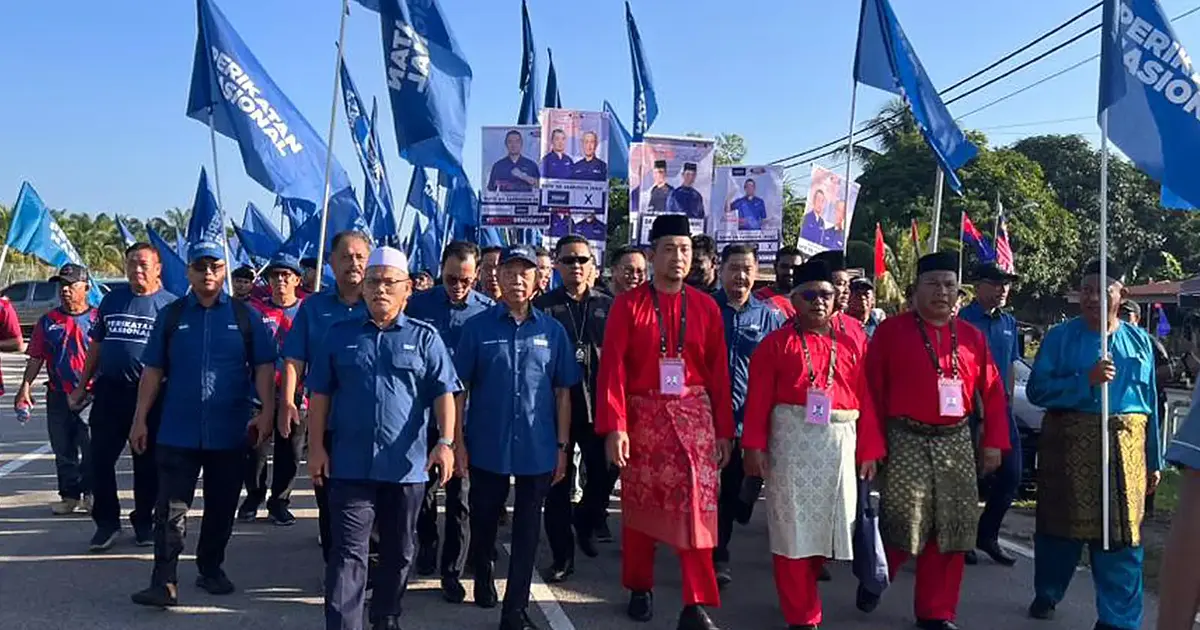
Perikatan Nasional chairman Muhyiddin Yassin marshalled a substantial turnout of party loyalists at Bukit Kepong this week, underscoring the coalition's determination to hold onto the constituency as electoral competition intensifies across Johor. The show of strength, which drew hundreds of supporters, represents a significant investment of party resources and leadership bandwidth in securing what has become a contested battleground in the state's political landscape.
Dr Sahruddin Jamal, who has served two consecutive terms representing Bukit Kepong in the state assembly, carries Bersatu's hopes of retaining the seat. His candidacy reflects the party's confidence in his track record and local standing, though the competitive environment in Johor politics means that incumbency alone provides no guarantee of victory. The constituency has increasingly attracted attention from rival political forces seeking to narrow Perikatan's dominance in the state.
Muhyiddin's personal intervention in the campaign sends a clear signal about how seriously Perikatan views defending its existing territorial base. As the coalition's chair, his presence amplifies the candidate's profile and demonstrates institutional backing at the highest levels. This kind of leadership visibility is typically deployed in constituencies deemed either particularly vulnerable or strategically important for maintaining coalition strength during election cycles.
The turnout of several hundred Perikatan supporters reflects genuine enthusiasm within the party's grassroots network, though it also underscores the resource-intensive nature of contemporary electoral competition in Malaysia. Maintaining large, organised rallies requires substantial logistical coordination and volunteer mobilisation, indicating that local party structures in Bukit Kepong remain functional and energised. This grassroots machinery represents a tangible asset in translating electoral positioning into actual votes on polling day.
Bukit Kepong's political trajectory mirrors broader shifts within Johor, where Perikatan has consolidated significant power but faces persistent challenges from Pakatan Harapan and, in some constituencies, revitalised MCA and MIC components. The demographic composition of the seat, its socioeconomic profile, and shifting urban-rural dynamics all influence the electoral calculus. Dr Sahruddin's two-term tenure suggests he has successfully navigated these variables previously, though electoral dynamics are notoriously fluid and previous performance offers imperfect guidance for future outcomes.
For Bersatu specifically, Bukit Kepong represents part of its broader Johor strategy. The party has emerged as Perikatan's dominant component in the state, a position that comes with both advantages in terms of organisational reach and disadvantages in terms of vulnerability to anti-incumbency sentiment. Defending existing seats becomes as important as capturing new ones, particularly when coalition arithmetic means that losses in friendly territory could shift the overall balance of power in the state assembly.
The campaign appearance also reflects the personal stakes involved in electoral politics at the state assembly level. While Johor state politics operates somewhat in the shadow of federal developments, state assemblyman positions carry genuine legislative power, cabinet opportunities, and the prestige associated with representing local constituencies. For both Dr Sahruddin and Muhyiddin, successful defence of the seat strengthens their individual positions within party hierarchies and the broader Perikatan structure.
Peakinan Nasional's coalition structure itself adds complexity to electoral dynamics in constituencies like Bukit Kepong. The coalition comprises multiple parties with distinct constituencies, historical narratives, and organisational bases. Bersatu's capacity to mobilise supporters while maintaining unity with coalition partners involves constant internal negotiation and strategic positioning. Large public rallies serve both external campaign purposes and internal coalition-maintenance functions, demonstrating to partners that Bersatu remains a capable organisational force.
The Johor context more broadly suggests that all major political coalitions recognise the state as crucial for their broader national strategies. Perikatan's strength in Johor provides federal-level leverage, while Pakatan Harapan's performance in the state influences its national credibility and resource allocation calculations. State-level contests therefore carry significance far beyond local governance questions, embedding Bukit Kepong and similar constituencies within much larger political narratives.
Regionally, the campaign mobilisation reflects broader Southeast Asian patterns where opposition coalitions regularly deploy leadership figures in strategic constituencies to signal commitment and energise supporters. Such appearances carry symbolic weight beyond their immediate electoral impact, communicating party messaging to broader audiences through media coverage and social media amplification. For Malaysian political observers, tracking where senior leadership focuses its campaign attention provides insight into genuine coalition priorities and internal assessments of electoral vulnerability or opportunity.
The weeks and months ahead will clarify whether Perikatan's investment in defending Bukit Kepong proves sufficient to retain the seat. Dr Sahruddin's two-term record and local connections provide one foundation, while Muhyiddin's backing represents institutional endorsement at the coalition level. Whether these factors prove decisive will depend on how effectively rival candidates mobilise their own networks, how local issues resonate with constituents, and whether broader state or national political currents favour or hinder Perikatan's electoral prospects.

