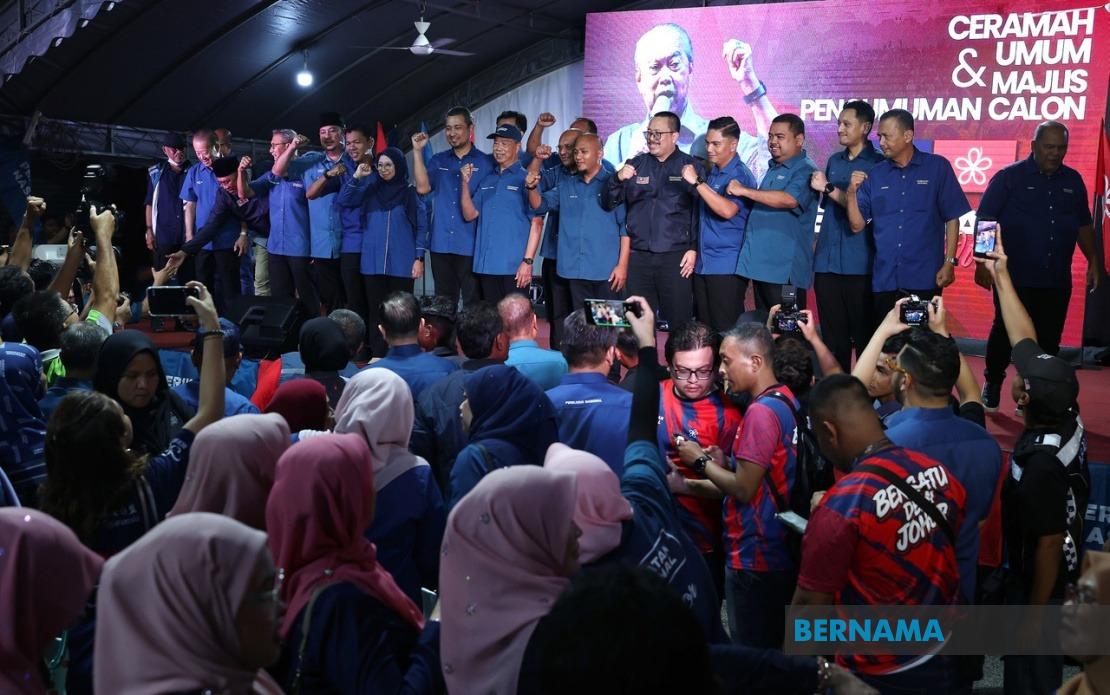
Parti Pribumi Bersatu Malaysia has formally entered the contest for Johor's state legislature, with party president Tan Sri Muhyiddin Yassin presenting the complete roster of 16 candidates who will carry the party's banner in the 16th Johor State Election. The announcement came at a party event held at the Pagoh Parliamentary Service Centre in Taman Pagoh Jaya, combining the candidate launch with public engagement activities that underscored Bersatu's effort to connect directly with voters across the southern state.
The timing of Bersatu's candidate announcement reflects the accelerating pace of the election cycle. Following the dissolution of the Johor State Assembly on June 1, the Election Commission has compressed the preparation period considerably, setting June 27 as the official nomination day—a window that leaves candidates and parties just two days to submit their documents and formally register their participation. The actual voting will take place on July 11, giving the broader electorate less than three weeks to assess competing platforms and make their electoral choices. This condensed timeline presents both logistical challenges and strategic advantages for established parties like Bersatu that maintain robust grassroots networks.
Bersatu's decision to field a full complement of candidates across all 16 state seats signals the party's determination to establish itself as a significant player in Johor politics, a state long dominated by the Umno-led Barisan Nasional coalition. By contesting every seat rather than adopting a selective strategy, Bersatu maximises its visibility and demonstrates organisational capacity, though it also exposes itself to potential embarrassment if it performs poorly across the board. The party's push in Johor is particularly noteworthy given that Bersatu has traditionally drawn support from constituencies with specific demographic and socioeconomic profiles, and the Johor contest will test whether these bases translate into actual electoral strength.
Among the candidates announced, Mohd Idzharruddin Mohd Nasirruddin carries the party's hopes in the N8 Bukit Pasir seat, one of the state constituencies where Bersatu believes it can make headway. The selection of specific individuals for each seat typically reflects careful internal calculations regarding local connections, business credentials, and community standing—factors that often matter more in state-level races than national platform differences. Bersatu's candidate slate for Johor will likely include a mix of political veterans seeking to revive their careers, younger activists looking to establish themselves, and individuals with deep roots in their respective constituencies.
The broader context of Johor politics adds complexity to Bersatu's entry into this particular race. Johor has historically been a Barisan Nasional stronghold, with Umno maintaining powerful control through patronage networks and traditional power structures. However, recent years have witnessed shifts in the state's political composition, with opposition coalitions making inroads and smaller parties like Bersatu testing their appeal. The 16-seat parliament provides numerous micro-competitions where local factors, personality-driven politics, and community grievances can override broader national narratives, creating opportunities for parties willing to invest organisational resources and candidate development effort.
For Malaysian voters tracking national political trends, Bersatu's Johor candidacy represents part of a larger recalibration of Malaysia's political landscape following the 2022 general election. The party, which was founded in 2016 and briefly held the prime ministership under Muhyiddin Yassin before losing power in 2021, has been working to rebuild its position and prove its viability as either a coalition partner or independent force. State elections like Johor's provide crucial testing grounds where parties can gauge voter sentiment without the stakes of national power, allowing them to refine messaging and assess their electoral machinery.
The public ceramah component of Bersatu's event—combining candidate announcements with community forums—reflects contemporary Malaysian campaign practices where parties attempt to build momentum through direct engagement rather than relying solely on media coverage and advertising. These events serve multiple purposes: they generate local news coverage, allow candidates to articulate their positions on state-level issues, and create opportunities for grassroots supporters to feel invested in the campaign narrative. For a party like Bersatu seeking to reinvigorate its presence, such engagement proves particularly valuable.
Regional observers watching Johor's election will note that the outcome carries implications extending beyond the state itself. As Malaysia's second-most populous state and a major economic engine, Johor's political composition influences national coalition calculations and demonstrates market share for various political brands. A strong performance could bolster Bersatu's bargaining position in future coalition negotiations, while a weak showing would reinforce questions about the party's electoral sustainability and relevance beyond its core support base.
The nomination period commencing June 27 will reveal the full competitive picture once all parties submit their final candidate lists. At that point, voters and analysts will be able to assess not only Bersatu's selections but also whether the party faces three-way or four-way contests in specific constituencies, which candidates from Barisan and opposition blocs are defending their seats, and how redistricting changes may have altered electoral dynamics. These details will substantially shape campaign dynamics and viability assessments for each party's Johor ambitions, making the nomination deadline a critical juncture for understanding what voters will actually decide on polling day.

