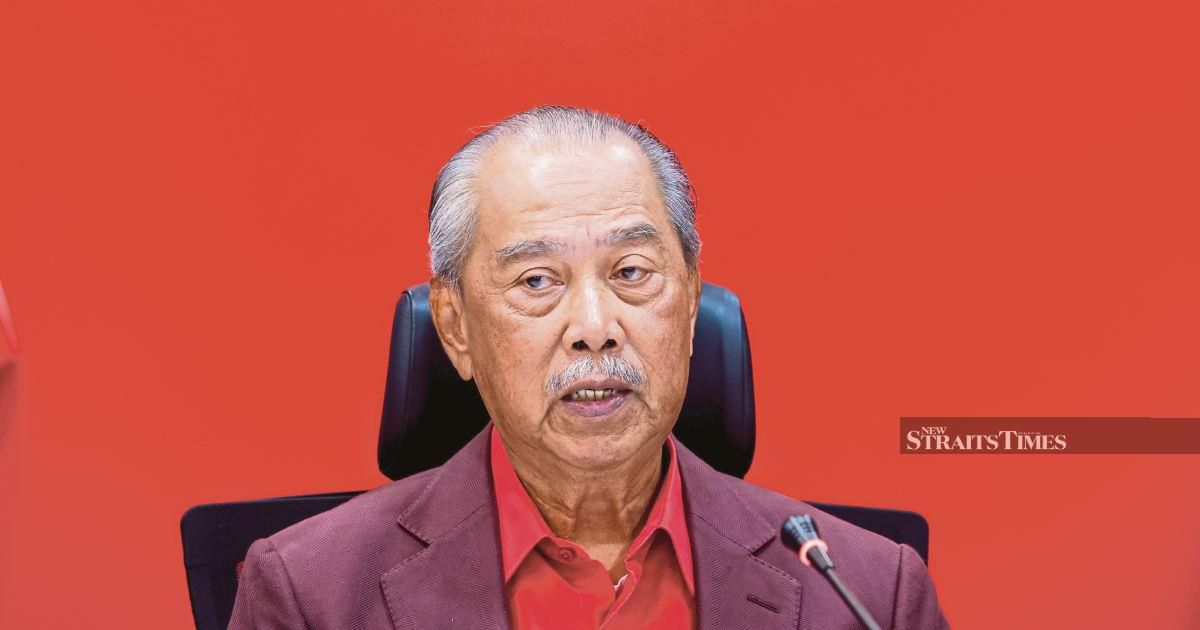
Bersatu president Tan Sri Muhyiddin Yassin has levelled serious accusations against Umno, claiming the party is pursuing a deliberate strategy to dismantle the unity government that Bersatu helped construct alongside Pakatan Harapan. The allegation, made in Kuala Lumpur, suggests a pattern of behaviour that Muhyiddin characterises as mirroring the political manoeuvres that ultimately brought down his previous Perikatan Nasional administration.
Muhyiddin's assertion reflects mounting tensions within Malaysia's governing coalition as competing factions jostle for political dominance and influence. The Bersatu leader's comments underscore the fragility that continues to define the current political arrangement, despite the unity government's initial promise of stability and reform following the 2022 elections. His invocation of historical parallels draws attention to the volatile dynamics that persist within Malaysian politics, where coalition partnerships remain vulnerable to internal fracture.
The allegation carries particular significance given Bersatu's pivotal position within the current administration. As a key component of the unity government, Bersatu maintains substantial bargaining power, yet the party faces persistent questions about its long-term commitment to the coalition. Muhyiddin's public warnings suggest growing anxiety within Bersatu's leadership regarding the party's political future and its ability to retain influence within the broader alignment.
Umno's position as Malaysia's oldest and traditionally most dominant political party complicates the coalition dynamics considerably. The party's historical weight in Malaysian politics means that tensions between Umno and other coalition members inevitably reverberate across the entire governing structure. Muhyiddin's claims, whether substantiated or not, tap into deeper concerns about whether Umno remains genuinely committed to power-sharing arrangements or whether the party continues to harbour aspirations for singular dominance.
The assertion of conspiratorial activity recalls the turbulent period leading to Muhyiddin's removal as prime minister in August 2021. At that time, the Perikatan Nasional government faced relentless defections and withdrawals of support that eventually rendered the administration untenable. Muhyiddin's decision to compare current developments to those events suggests he perceives similar warning signs within the present coalition structure, indicating potential vulnerabilities that could be exploited.
Malaysian political observers have long documented the pattern whereby coalition governments face considerable pressure as component parties prioritise internal interests over collective stability. The unity government's establishment represented an attempt to break this cycle through institutional commitment and reform, yet Muhyiddin's recent comments suggest that old habits of political manoeuvring persist despite such aspirations. The depth of distrust between coalition partners remains evident in public accusations and private negotiations.
For Malaysian readers and Southeast Asian observers, the significance of this development extends beyond factional disputes within a single party. Coalition instability at the national level influences policy implementation, investor confidence, and the government's capacity to address pressing economic and social challenges. When energy becomes consumed by internal political battles, broader governance objectives necessarily suffer diminished attention and resources.
Muhyiddin's willingness to air these accusations publicly rather than manage tensions behind closed doors reflects the breakdown of informal mechanisms for resolving coalition disputes. Previously, such matters would typically remain confined to private negotiations and backroom discussions. Public airing of allegations suggests that trust-building mechanisms have weakened, and that conventional channels for dispute resolution may no longer function effectively within the current arrangement.
The timing of these comments also warrants consideration. Positioning Umno as the culprit allows Bersatu to maintain a posture of victimhood while simultaneously strengthening its negotiating position within coalition discussions. By framing Umno's actions as threatening the entire governmental structure, Muhyiddin implicitly argues that other coalition members should rally around Bersatu to preserve the arrangement. This rhetorical strategy serves multiple purposes simultaneously, both defensive and offensive in character.
Looking forward, these accusations will likely intensify existing pressure on the coalition's stability. Umno's response to Muhyiddin's claims will prove crucial in determining whether this dispute escalates into a genuine threat to the government's continuity or whether both parties manage to contain the damage through dialogue. Given Malaysia's political history, however, such public exchanges frequently signal deeper fractures that prove difficult to repair once exposed to scrutiny.
For stakeholders invested in Malaysian political stability—whether domestic constituencies, international investors, or regional partners—the situation presents a cautionary reminder regarding the inherent challenges of coalition governance. Muhyiddin's allegations crystallise ongoing questions about whether competing political parties can genuinely collaborate on shared governance objectives or whether zero-sum competition remains the dominant logic shaping Malaysian politics.

