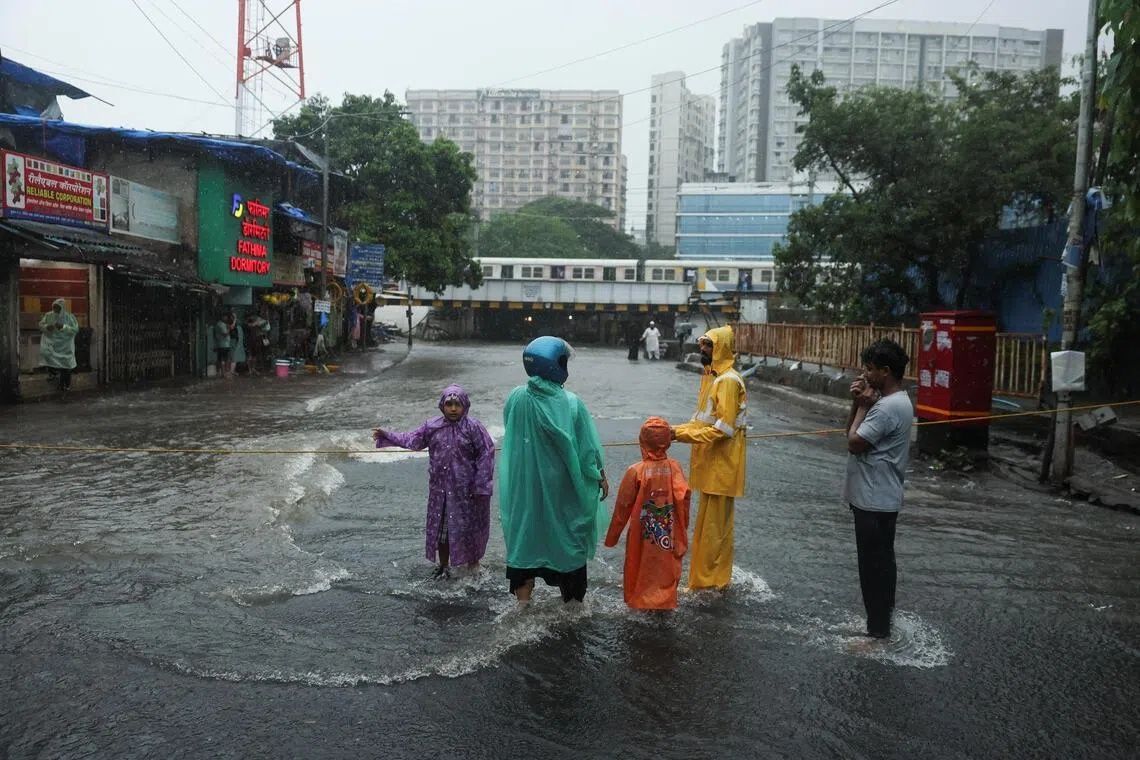
Mumbai's monsoon season has turned deadly, with two fatalities in as many days exposing significant gaps in the city's infrastructure readiness and emergency response protocols. The India Meteorological Department's orange alert for July 3 signals continued danger, even as the initial disaster management efforts reveal how unprepared civic authorities remain despite decades of recurring monsoon catastrophes. These deaths underscore a pattern of preventable tragedies that continues to plague India's financial capital, raising uncomfortable questions about whether existing oversight mechanisms are sufficiently rigorous.
The first tragedy unfolded on June 30 in the Chembur locality when severe winds uprooted a substantial tree that crashed directly onto a school bus transporting students from Universal High School and Tilak Nagar School. The impact trapped multiple children inside the vehicle, necessitating emergency responders to deploy specialized cutting apparatus to extract the young passengers. Among those injured was Vihan Shrivastav, an 11-year-old who sustained critical injuries during the incident. Despite efforts at nearby medical facilities including Zen Hospital and Jain Hospital, the young student succumbed to his wounds, becoming the first documented casualty of this monsoon cycle.
The second fatality occurred in Sakinaka on July 2 when 60-year-old Aslam Isak Shaikh fell into an unmaintained manhole during torrential downpours. According to accounts of the incident, drainage maintenance personnel had removed the manhole cover without implementing proper safety barriers or warning systems. Shaikh, who was using his mobile phone at the time, was swept away by the powerful rush of rainwater that had accumulated during the heavy precipitation. Recovery teams required approximately three hours to locate and retrieve his body from the drainage system, highlighting both the danger of the situation and the logistical challenges emergency personnel face during such weather events.
The political establishment has responded swiftly, though responses have centered largely on expressions of sympathy and symbolic compensation rather than systematic reform. Maharashtra Minister Ashish Shelar characterized the school bus incident as regrettable and affirmed that both state government and the Brihanmumbai Municipal Corporation bear responsibility for supporting the grieving family. He indicated that disciplinary measures would be implemented against officers deemed negligent, signalling at least a superficial commitment to accountability. However, such statements often precede minimal actual consequences for mid-level or senior officials whose systemic failures enable these disasters.
MLA member Rohit Pawar, who visited the Shrivastav family following Vihan's death, articulated frustration with the typical response pattern of holding junior officers solely responsible. He argued that genuine accountability demands that senior management face consequences for institutional failures that permit such preventable incidents. Pawar specifically questioned the efficacy of mandatory pre-monsoon inspections of roads, drainage systems, and underground infrastructure, suggesting that the recurrence of similar incidents indicates either grossly negligent oversight or deliberate indifference to safety protocols.
The manhole death provoked similar demands for criminal accountability. MLA Vijay Wadettiwar called for formal criminal charges against officials responsible for leaving drainage maintenance work unbarricaded during active rainfall. His criticism zeroed in on the fundamental failure of basic safety procedures—a manhole undergoing maintenance should either remain covered or be surrounded by barriers and warning signage. That such elementary precautions were omitted represents a severe lapse in institutional discipline. Wadettiwar explicitly demanded that an FIR be registered, implying that administrative censure alone would be insufficient.
Mumbai Mayor Ritu Tawde acknowledged the manhole incident as an administrative error and announced a compensation package of 10 lakh rupees for Shaikh's family. While financial redress provides some measure of support to grieving relatives, critics note that compensation without structural reform merely converts human tragedies into budgeted expenses. The announcement effectively monetizes loss without addressing the organizational failures that permitted the incident to occur in the first place—a pattern that has become routine in Mumbai's civic governance.
The broader context of the monsoon crisis extends beyond these two deaths to encompass widespread civic paralysis. Heavy downpours have submerged critical thoroughfares across multiple neighbourhoods, severely disrupting transportation networks and trapping commuters in extended traffic jams. A truck overturned near the Kharghar Toll Plaza on the Sion-Panvel Highway, blocking multiple lanes and compounding congestion. Waterlogging persisted in areas including Dadra East and Sion Gandhi Market, creating hazardous conditions for pedestrians and severely limiting vehicular movement during peak hours.
Authorities have issued advisories recommending that residents minimize non-essential travel, acknowledging that civic infrastructure remains unable to manage monsoon conditions despite warnings issued annually. The continued expectation of heavy rainfall over the subsequent 24 hours meant that civic teams scrambled to clear flooded roads and remove fallen vegetation and debris—reactive measures that address symptoms rather than underlying deficiencies. This perpetual crisis management cycle, repeated each year with minimal improvement, reflects deeply entrenched systemic dysfunction.
For Malaysia and other Southeast Asian regional observers, Mumbai's monsoon management failures offer cautionary lessons about infrastructure vulnerability as climate patterns intensify. Urban centres across the region face similar challenges as rainfall intensity increases and aging drainage systems struggle with unprecedented water volumes. Malaysia's own experiences with severe flooding in Selangor, Kelantan, and other states demonstrate that inadequate civic infrastructure and maintenance protocols compound natural weather events into humanitarian disasters. The pattern of deaths that could have been prevented through basic safety measures—tree trimming before monsoon season, properly barricaded maintenance work, functional drainage systems—represents a failure of preventive governance that resonates across developing Asian economies.
The political responses in Mumbai, while rhetorically demanding accountability, have historically resulted in minimal systematic change. Compensation packages and promises of investigation typically conclude with junior officials receiving suspension or demotion while senior architects of neglectful policies retain their positions. For sustained improvement, Mumbai's municipal authorities would require not merely individual discipline but institutional restructuring of maintenance protocols, budget allocation prioritization, and enforcement mechanisms. Until such comprehensive reform occurs, monsoon season will continue to present itself as an annual opportunity for preventable tragedies to recur, punctuated by expressions of regret and modest financial settlements.

