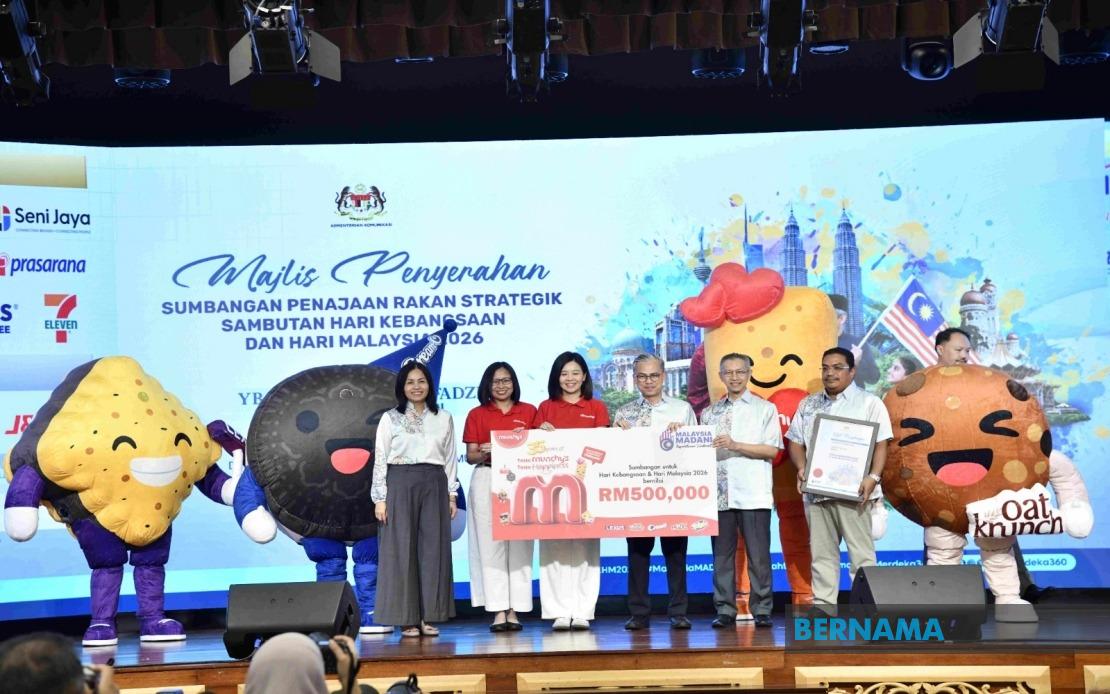
Munchy's Malaysia is stepping up its patriotic contributions by pledging RM500,000 worth of snack products ahead of the 2026 National Day and Malaysia Day (HKHM) celebrations, the company announced on August 18. The commitment represents the largest financial contribution the manufacturer has made to date towards these festivities, underscoring its deepening engagement with Malaysia's most important national observances as the company marks its own 35th anniversary milestone in the Malaysian market.
The donation initiative demonstrates Munchy's sustained dedication to the HKHM celebrations, having now supported the event for three consecutive years. This pattern of consistent involvement signals corporate alignment with broader national narratives of unity and shared identity during Malaysia's peak celebration calendar. For Munchy's, the connection between corporate longevity and patriotic expression appears strategic, allowing the company to reinforce its domestic market positioning while contributing meaningfully to nationwide festivities.
Rodney Wong, chief executive officer of Munchy's Malaysia, articulated the company's motivation in a statement, emphasizing that the celebration provides a platform for reflecting on the mutual relationship between the corporation and the nation. Wong noted that the HKHM observances carry particular significance for Malaysians, making them an ideal occasion for the company to demonstrate gratitude toward the domestic market that has sustained its operations for more than three decades. The escalating donation amounts across successive years also suggest management confidence in the company's financial trajectory and market performance.
The formal handover of the contribution occurred at Menara Komunikasi in Putrajaya, where Communications Minister Datuk Seri Fahmi Fadzil received the donation. This ministerial involvement underscores the official government recognition of corporate participation in national celebrations, positioning such partnerships as important components of contemporary Malaysian civic infrastructure. The choice of venue and the presence of a cabinet minister reflected the formal institutional significance accorded to the transaction.
Distribution of the donated products will occur through selected programmes and activities organized as part of the broader HKHM 2026 framework. Rather than a simple cash contribution, Munchy's strategic decision to donate manufactured snack products ensures direct consumer engagement during celebration events. This approach creates multiple marketing touchpoints while simultaneously providing tangible items for distribution across diverse community-based activities, potentially extending the company's brand visibility beyond conventional advertising channels.
The timing of this announcement, occurring several years in advance of the actual 2026 celebrations, suggests deliberate forward planning by both Munchy's and government bodies coordinating the festivities. Early commitments from corporate entities can facilitate comprehensive event planning while demonstrating private sector confidence in the sustainability and scale of national celebrations. For Munchy's specifically, the advance pledge establishes the company as a dependable institutional partner in Malaysia's civic calendar.
The snack manufacturing sector occupies a distinctive position within Malaysian consumer industries, producing affordable products accessible across socioeconomic strata. By positioning itself as a sponsor of national celebrations that touch all segments of Malaysian society, Munchy's leverages its market penetration to align corporate identity with inclusive national narratives. The company's three-decade operational history within Malaysia provides substantial foundation for such positioning, differentiating it from newer market entrants.
For Communications Ministry officials, partnerships with established domestic manufacturers support government objectives around fostering national unity during key celebration periods. Corporate involvement in HKHM festivities distributes organizational and financial burdens that might otherwise fall entirely on state resources, while creating channels for private sector participation in national institution-building. The ministerial acceptance of the donation reflects governmental openness to corporate-public collaboration in civic contexts.
From a broader Malaysian corporate perspective, Munchy's contribution exemplifies the increasing tendency for established domestic manufacturers to integrate patriotic expression with commercial strategy. This integration occurs across multiple national celebration cycles, from Independence Day observances to National Day festivities, establishing corporate participation as normative business practice. Such patterns suggest evolution in how Malaysian companies conceptualize their relationship with national identity and state institutions.
The donation also arrives within a context where Malaysian manufacturers face intensifying regional competition and consumer preferences potentially shifting toward international brands. By visibly anchoring itself to national celebrations and positioning itself as a patriotic corporate citizen, Munchy's potentially strengthens emotional consumer connections and domestic market loyalty. This psychological dimension of corporate nationality claims merits consideration alongside the literal product donation.
Looking toward 2026, the scale of Munchy's contribution raises questions about expectations for comparable commitments from peer corporations in the snack and consumer products sectors. Escalating donation levels may establish implicit benchmarks that influence industry-wide spending on national celebration sponsorships, potentially increasing overall private sector investment in HKHM-related activities. The visibility of major contributions can thus shape competitive dynamics within established manufacturing sectors.

