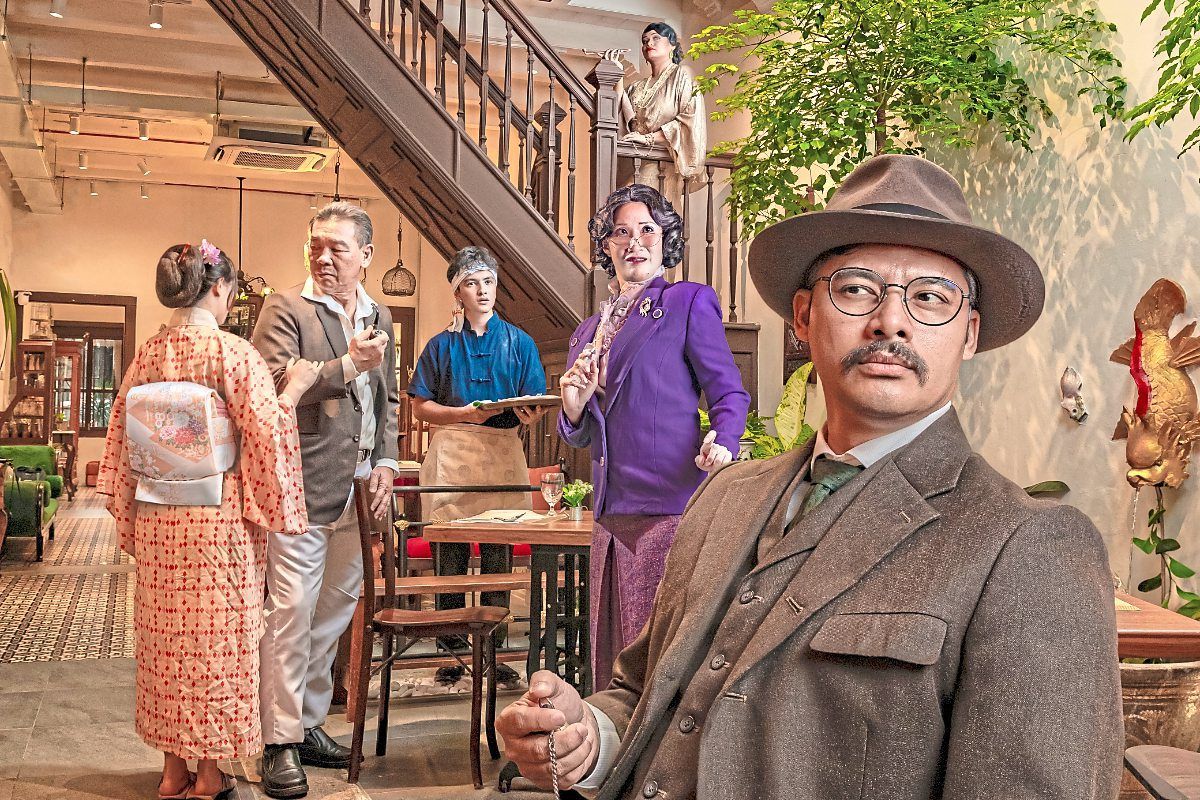
Melaka is preparing to offer theatre enthusiasts and amateur detectives an unusual cultural experience this summer: interactive murder mystery evenings that blend immersive theatre with authentic Peranakan dining in a carefully preserved heritage mansion. The production, mounted by independent creative collective Krate Creative Space in partnership with The Garden@Heeren on Jalan Tun Tan Cheng Lock, represents an ambitious attempt to position theatrical storytelling as a genuine draw for cultural tourism in Malaysia's historic southern state.
The four-weekend run across July and August invites participants to become active investigators rather than passive observers of a carefully constructed mystery. The evening unfolds across two and a half hours, beginning with a multi-course Peranakan dinner featuring signature dishes including pie tee, pongteh chicken, and cincalok omelette. As courses are served, an elaborate narrative gradually introduces guests to a web of characters and secrets, drawing them progressively deeper into an investigation that requires them to examine crime scenes, interrogate suspects, and ultimately determine who among the cast is responsible for a shocking death at the grand reopening of a fictional restaurant belonging to the celebrated Chef Fa.
What distinguishes this production from conventional dinner theatre is the degree of participant agency embedded in its design. Audience members can opt to remain peripheral observers or assume more prominent investigative roles, with their choices and questions directly influencing how the mystery unfolds. The experience culminates in individual verdicts, where each guest presents their conclusion about the killer's identity. This flexibility in participation reflects a deliberate creative choice to generate unique experiences across multiple nights, ensuring that no two performances follow identical narrative trajectories.
The venue itself—The Garden@Heeren, a beautifully restored Peranakan heritage house—functions as far more than mere backdrop. According to Wee, the writer and developer behind Krate's interactive productions, discovering this particular space proved instrumental in the project's realisation. "A classic heritage house naturally lends itself to mystery, suspense and storytelling," she explains. The 1930s setting that participants experience through costume, music, furnishings, and food was deliberately chosen to transport audiences through multiple sensory channels simultaneously, creating immersion that extends beyond the theatrical narrative alone.
The production features a professional cast including Francis Augustine as Detective Raymond, Sonia Lee as Miss Irene, Lee You Meng as Baba Pang, Elijah Skye as Peter Pang, and Neena Shu as Mama Maria—several drawing from actors who have appeared in previous Krate productions. Designed for audiences aged 15 and above, the experience encourages guests to arrive in vintage or Peranakan-inspired finery, further collapsing the boundary between theatrical performance and social occasion. This sartorial dimension transforms what might otherwise feel like conventional dinner theatre into something approaching a themed social event with genuine investigative purpose.
A particularly clever structural element involves the alternation of endings across the four weekends. The first two weekends present one resolution to the mystery, while the final two weekends offer an entirely different conclusion. This design explicitly acknowledges and rewards returning audiences, creating incentive for theatre-goers to attend multiple iterations and experience fundamentally altered narratives. Such architectural choices reflect sophistication in audience development strategy, particularly valuable for an independent theatre company operating in a regional market.
Krate Creative Space itself represents a distinct ecosystem within Malaysia's theatre landscape. Established in 2016, the Melaka-based company has positioned itself as the state's first independent creative community specialising in customised, interactive, and multi-disciplinary live performance. Over approximately eight years, it has mounted more than ten original productions, cultivating what Wee describes as a loyal, geographically dispersed audience base. While roughly half the company's patrons hail from Melaka itself, significant numbers travel from the Klang Valley, Penang, Johor, and Singapore, with some international visitors seeking cultural experiences that transcend conventional heritage tourism.
This geographic reach reflects genuine appetite for the type of immersive theatrical experience Krate specialises in creating, yet the company has faced considerable operational challenges sustaining itself as an independent entity. Rather than viewing diversification as compromise, Wee frames it as necessary evolution. Krate's headquarters in Bukit Beruang functions simultaneously as creative hub—incorporating rehearsal spaces, studio facilities, and discussion areas—and commercial cafe, generating multiple revenue streams beyond ticket sales alone. This hybrid operational model echoes strategies employed by independent cultural organisations across Southeast Asia navigating the economics of live performance without substantial institutional subsidy.
Wee's vision extends well beyond individual productions toward establishing immersive theatre as a recognised component of Malaysia's cultural tourism infrastructure. She identifies heritage cities like Melaka as particularly promising environments for such expansion, given their existing tourist infrastructure and cultural significance. Her stated ambition involves securing permanent dedicated space within Melaka that could host heritage-inspired immersive experiences year-round, making original Malaysian theatrical storytelling available to both domestic audiences and international visitors seeking alternatives to conventional sightseeing. This strategic positioning suggests that companies like Krate view immersive theatre not as niche cultural offering but as economically viable tourism product.
The murder mystery production draws intellectual and emotional resonance from its deliberate intersection of Peranakan cultural heritage, culinary tradition, and theatrical narrative. By anchoring the mystery within a restored Peranakan house and framing it through the lens of traditional cuisine, Krate avoids the pitfall of treating heritage as mere aesthetic backdrop. Instead, the production embeds cultural specificity throughout, using food, language, visual design, and character backgrounds to create authenticity that casual visitors and heritage enthusiasts alike can appreciate. This approach aligns with emerging trends in Southeast Asian cultural tourism whereby experiences become valued precisely when they offer genuine engagement with local narratives and practices rather than superficial exoticism.
The timing of this launch also carries significance within Malaysian cultural contexts. As post-pandemic recovery continues and domestic tourism gradually rebounds, regional artists and producers are experimenting with experience-based offerings that provide value beyond conventional entertainment. Murder mystery dinners represent established formats internationally, yet their adaptation to Malaysian heritage settings and integration with local culinary traditions represents a distinctly regional creative response. Krate's success or challenges with this production may inform subsequent decisions by other independent theatre companies seeking to develop sustainable models in mid-tier Malaysian cities.
For audiences, the murder mystery weekends offer rare opportunity to inhabit narrative space actively rather than observe it passively, while simultaneously experiencing curated Peranakan gastronomy within its original architectural context. Such experiences carry particular appeal for younger Malaysian audiences increasingly seeking cultural engagement that feels participatory and immersive rather than didactic or museological. The success of Krate's venture may ultimately depend less on the quality of the mystery itself than on whether audiences embrace the psychological and social discomfort inherent in active participation, choosing to become investigators rather than spectators in their own evening's entertainment.

