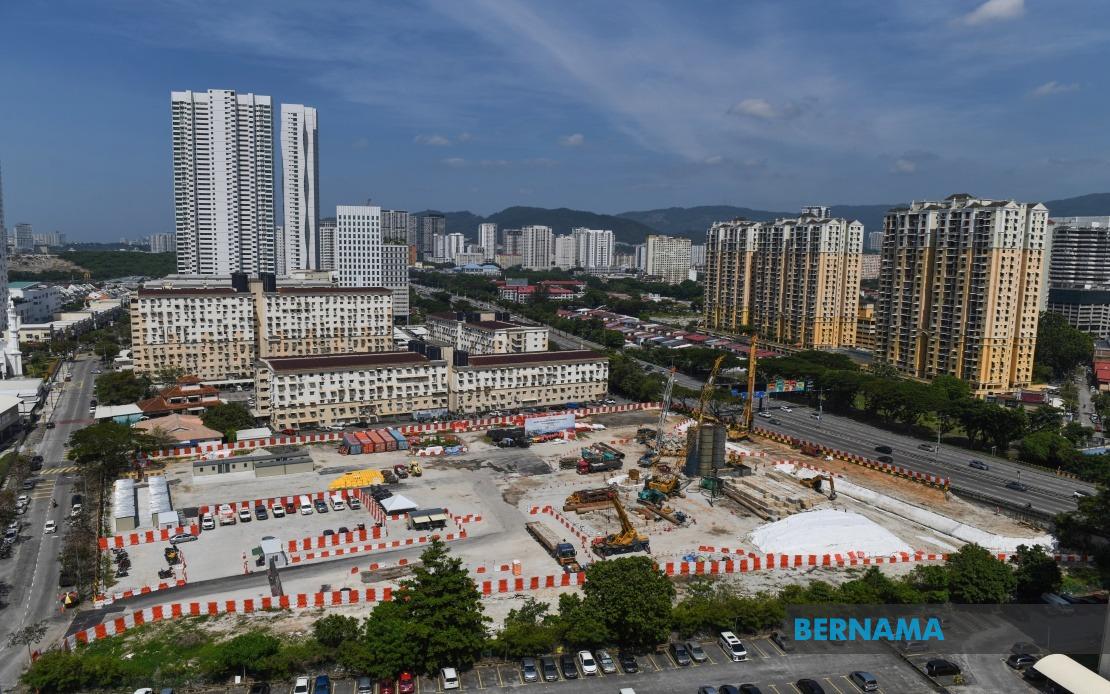
The Mutiara Line Light Rail Transit project in Penang has reached a crucial juncture with Malaysia Rapid Transit Corporation Sdn Bhd (MRT Corp) awarding the RM3.028 billion System Turnkey Contract (STC) to the joint venture of Malaysian Resources Corporation Berhad (MRCB) and Theta Edge Berhad, signalling accelerated momentum in one of the country's most anticipated regional infrastructure developments.
This appointment represents a watershed moment for the project's execution strategy. By bringing the systems contractor on board at this stage, MRT Corp can now pursue a parallel approach where detailed railway systems design proceeds simultaneously with ongoing civil construction activities. This synchronisation is critical for infrastructure megaprojects where misalignment between civil works and systems installation can create costly delays and design conflicts. For a transit system serving the George Town conurbation, maintaining schedule discipline is essential to deliver commuter benefits within a reasonable timeframe and protect the project's financial viability.
The STC encompasses an expansive scope covering seven major railway systems components that form the backbone of modern LRT operations. These include procurement and commissioning of electric trains alongside depot equipment necessary for fleet maintenance and storage. The contract also covers the signalling and train control infrastructure, complemented by automatic platform gates that enhance both safety and passenger experience. Additionally, trackwork installation, conductor rail systems, and maintenance vehicles fall under this purview, along with the comprehensive power supply and distribution network required to energise the entire line.
Beyond the physical infrastructure, the systems package includes sophisticated digital components essential to modern rail operations. The railway SCADA (Supervisory Control and Data Acquisition) system and computerised maintenance management system will enable real-time monitoring and predictive maintenance capabilities, reducing operational downtime. Telecommunications and information technology systems will support staff communications and passenger information services, while the automatic fare collection system will streamline revenue operations and passenger throughput. This technological integration distinguishes modern LRT systems from earlier generations and positions the Mutiara Line to operate with contemporary efficiency standards.
Meanwhile, the parallel civil construction workstream continues gaining traction. The Civil Main Contract 1 (CMC1), which encompasses the alignment stretching from Silicon Island to Komtar, progresses through a design-and-build methodology that permits construction advancement while engineering refinements continue. Current progress demonstrates tangible momentum, with 45 pile caps and 32 pier columns already completed. More impressively, active construction now spans 14 of the planned 19 sections designated under CMC1, reflecting a broad mobilisation of resources and subcontractors across the project corridor.
The tender process for Civil Main Contract 2 (CMC2), covering the critical extension from Komtar eastward to Penang Sentral, remains on trajectory toward November 2026 award timing. This phased contracting approach allows earlier sections to progress while downstream design work refines the extension alignment. For Malaysian infrastructure development, such sequencing demonstrates maturation in project management practices, enabling risk mitigation through staged implementation rather than attempting monolithic deployment.
Bumiputera participation metrics underscore the project's commitment to inclusive economic development. Bumiputera involvement under CMC1 has now surpassed 20 per cent of total contract value, reflecting deliberate structuring that creates opportunities for domestic enterprises and develops local capabilities in railway construction and systems integration. This commitment resonates across Malaysia's development priorities, particularly in peninsular Malaysia's neighbouring region where wealth distribution and skills development support broader economic resilience.
Land acquisition, a perennial challenge in urban transit projects across Southeast Asia, has achieved substantial progress without the acrimonious delays that plague comparable schemes regionally. With 93 per cent of required land for CMC1 now secured, the coordination between federal authorities, Penang State Government, and implementing agencies demonstrates institutional alignment often absent in cross-jurisdictional infrastructure initiatives. This coordination achievement merits recognition as it frequently determines whether projects maintain schedule or encounter extended delays common throughout the region.
The depot construction phase has advanced significantly following important site preparations. Silicon Island, designated as the project's future depot location, has commenced soil investigation works—essential geotechnical studies that inform foundation design for maintenance facilities. The Penang State Government's April 2026 handover of the Tapak Pesta site enabled MRT Corp to execute demolition of existing structures and site preparation, positioning the depot for imminent construction commencement. This facility, while unglamorous compared to passenger stations, represents critical project infrastructure that determines operational efficiency and long-term maintenance cost profiles.
For Malaysian stakeholders, the Mutiara Line embodies contemporary regional aspirations for sustainable urban mobility. Penang's geographic constraints and traffic congestion create compelling rationale for grade-separated transit, potentially reducing automotive dependency and supporting economic productivity through faster commuting. The project's progress validates the medium-term feasibility of major transport infrastructure in Malaysia, countering scepticism that major developments remain perpetually stalled. Beyond local benefits, the Mutiara Line's execution methods, contractor selections, and Bumiputera integration approaches will inform future Malaysian transit megaprojects contemplated across Kuala Lumpur, Johor, and other expanding urban centres.
The RM3.028 billion systems contract award confirms financial commitment and contractor confidence in project viability, important psychological signals for stakeholder communities anticipating benefits. As both civil and systems workstreams advance in parallel, the Mutiara Line transitions from conceptual planning into tangible delivery phase, with hardware and infrastructure now materialising across Penang's landscape. Success in meeting subsequent milestones will reinforce Malaysia's capability to execute complex infrastructure whilst establishing the Mutiara Line as a model for subsequent regional transit development, particularly across Southeast Asia's rapidly urbanising metropolitan regions seeking sustainable mobility solutions.

