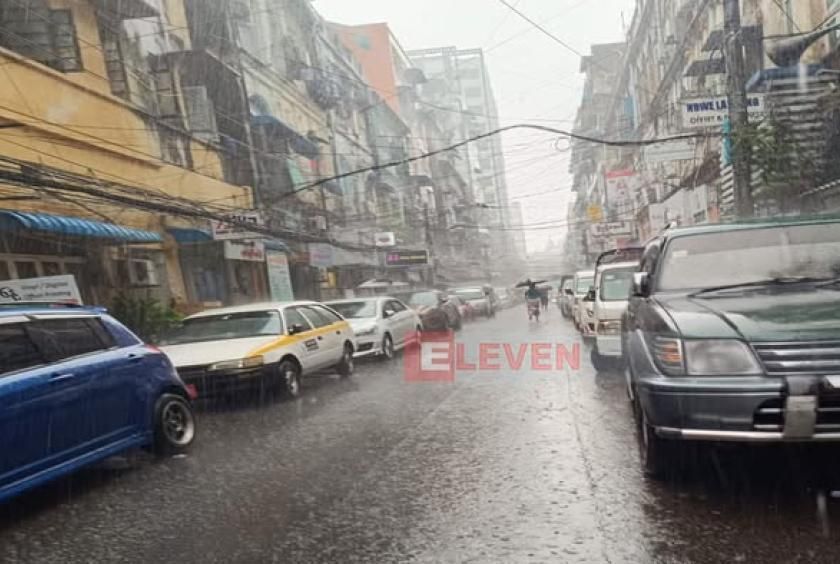
Myanmar's Department of Meteorology and Hydrology has issued a formal warning that El Niño conditions will intensify substantially from August 2026, escalating from current moderate levels into a strong phase before potentially reaching very strong intensity as the year concludes. The alert carries particular significance for Southeast Asian nations already familiar with the phenomenon's destabilising effects on regional weather systems.
The department attributes the anticipated escalation to rising sea surface temperatures and shifting atmospheric dynamics across the tropical Pacific Ocean near the equatorial belt. Current readings indicate that oceanic and atmospheric conditions are tracking above seasonal norms, creating an environment conducive to the development of more pronounced El Niño characteristics. International meteorological agencies whose forecast models Myanmar's department consulted have converged on predictions of sustained intensification through the latter half of 2026.
While El Niño originates as a Pacific phenomenon centred thousands of kilometres from Southeast Asia, its teleconnections influence weather patterns and climate behaviour globally through complex atmospheric circulation mechanisms. The mechanism operates through altered jet stream positioning, modified tropical convection, and changes to ocean currents that propagate climatic anomalies across continental distances. For a maritime region like Myanmar and its neighbours, the repercussions manifest quickly and visibly.
Historically, El Niño episodes correlate strongly with anomalous rainfall distribution across Myanmar and broader Southeast Asia. Rather than the familiar monsoon patterns that agricultural systems depend upon, El Niño episodes typically introduce erratic precipitation—prolonged dry spells interrupted by occasional intense downpours. This unpredictability complicates water resource management, disrupts planting calendars for rice farmers who represent a significant portion of Myanmar's rural population, and strains hydroelectric generation capacity during dry phases when water levels fall below turbine thresholds.
Beyond rainfall irregularities, El Niño conditions frequently trigger secondary climatic disturbances including unusual storm formation dynamics and heightened daytime temperatures particularly during peak summer months. These elevated temperatures intensify evaporation from soil and water bodies, exacerbating drought conditions in already vulnerable regions. For Myanmar, where significant portions of the population remain dependent on rain-fed agriculture and small-scale irrigation systems, such compound effects threaten food security and rural livelihoods.
The prospect of a strong to very strong El Niño event by December 2026 demands urgent preparatory action across multiple sectors. Water resource authorities must develop contingency protocols for managing reduced rainfall and lower reservoir levels. Agricultural extension services should communicate adjusted planting strategies to farming communities. Urban water authorities in major cities including Yangon must implement demand management policies and assess supply security. Power utilities must evaluate generation resilience if hydroelectric output contracts during extended dry periods.
Myanmar's geographical position amplifies El Niño sensitivity relative to some other tropical nations. The country's northeast monsoon season, crucial for the winter agricultural cycle, becomes compressed and less reliable during El Niño episodes. Southern Myanmar regions dependent on the southwest monsoon for moisture face similar risks. The Irrawaddy River system, the nation's primary water artery, responds to El Niño-induced precipitation changes with significant flow reductions that cascade through irrigation networks and delta communities.
Regional cooperation assumes heightened importance when transnational river systems like the Mekong are affected. Strong El Niño conditions simultaneously reduce rainfall across Cambodia, Laos, Thailand, and Vietnam, intensifying competition for shared water resources. Myanmar's water security therefore intertwines with broader Southeast Asian hydrological stress during such episodes. Coordinated forecasting and resource-sharing arrangements, where they exist, become critically valuable for preventing conflicts over diminished supplies.
The Department of Meteorology and Hydrology's commitment to issue regular updates represents appropriate institutional response, yet implementation capacity requires adequate resource allocation. Early warning systems prove effective only when information reaches vulnerable populations—farmers in remote regions, smallholder irrigation operators, and urban utility managers—with sufficient lead time for adaptation. Myanmar's ability to translate meteorological warnings into concrete preparedness measures will largely determine whether the anticipated El Niño episode becomes a manageable challenge or a catalyst for humanitarian strain.
For Malaysia and other neighbouring countries with distinct but interconnected climate systems, Myanmar's El Niño intensification serves as an advance signal to activate their own preparedness mechanisms. While Malaysian rainfall patterns and monsoon dynamics differ from Myanmar's, strong Pacific El Niño episodes historically alter Malaysian weather reliability, reducing rainfall intensity in key agricultural regions and occasionally extending drought episodes. Regional meteorological coordination and information-sharing can enhance collective adaptive capacity.
The August 2026 timeline provides approximately eight months for preparatory action, sufficient window for institutional planning but inadequate for infrastructure development or major policy overhauls. Myanmar's relevant agencies must prioritise rapid assessment of sectoral vulnerabilities, resource audits, and communication strategies. Farmers require time to adjust crop varieties and irrigation approaches. Water managers need advance procurement of emergency supplies and equipment. Power authorities must arrange fuel supplies and maintenance protocols to maintain minimum generation capacity.
International experience from previous strong El Niño events—particularly the severe 2015-2016 episode—demonstrates that forewarned nations implementing early preparation strategies experience measurably reduced humanitarian impacts compared to those caught unprepared. Myanmar's proactive stance through formal warnings positions the country favourably, yet sustained follow-through across government agencies and private sector stakeholders determines whether warnings translate into tangible resilience.

