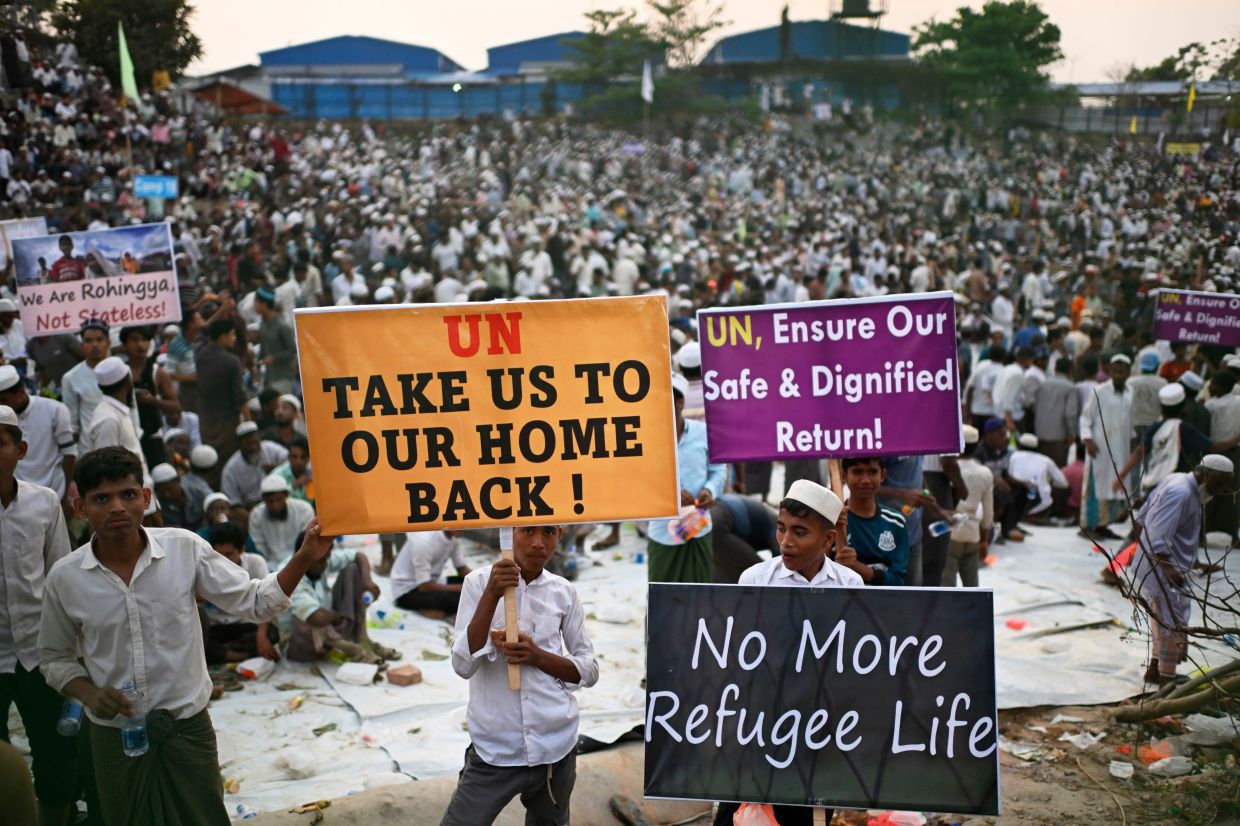
Myanmar's military-led administration declared on Saturday that it has verified more than 300,000 Rohingya refugees sheltering in Bangladesh camps as legitimate former residents of Rakhine state, signalling willingness to facilitate their return once security conditions stabilise in the western region. The announcement marks a significant milestone in a humanitarian crisis that has now stretched across nine years, with hundreds of thousands of displaced people remaining in sprawling camps across the border while their homeland remains embroiled in armed conflict.
The verification exercise represents one of the most tangible steps taken since the Rohingya exodus began in August 2017, when Myanmar's military launched a large-scale offensive in Rakhine following insurgent attacks. That crackdown, which the international community has characterised as ethnic cleansing and genocide, displaced more than 700,000 individuals in a matter of months. These arrivals joined existing refugee populations that had accumulated over decades from earlier episodes of violence and state persecution, creating one of the world's most distressed humanitarian situations.
According to data released by Myanmar's Ministry of Foreign Affairs, the government completed verification of 426,545 individuals from an initial roster of 828,824 refugees provided by Bangladesh authorities. Of those verified, 308,797 were confirmed as former Rakhine residents eligible for return. However, the same process identified 113,507 people whose backgrounds could not be authenticated and flagged 4,241 individuals allegedly involved in what Myanmar characterised as terrorist activities. The discrepancies highlight ongoing tensions over identity documentation and citizenship claims that have plagued this crisis since its inception.
Myanmar's position on the Rohingya has long been contested internationally. The junta refuses to acknowledge the Rohingya as one of the country's 135 recognised ethnic minorities, instead referring to them as Bengalis—a terminology designed to delegitimise their claim to Myanmar nationality and suggest they are illegal migrants from Bangladesh. This linguistic and legal battle remains central to the repatriation impasse. The government ministry rejected international estimates of displacement, contending that only 540,000 people crossed into Bangladesh in 2017, while maintaining that over 200,000 remained in northern Rakhine. These figures remain disputed by humanitarian organisations and the United Nations.
Previous attempts to resolve the crisis have repeatedly faltered. A bilateral arrangement negotiated between Myanmar and Bangladesh in 2018 envisioned a two-year repatriation timeline, but that schedule collapsed as the political and security environment deteriorated catastrophically. The military coup in February 2021 that removed Aung San Suu Kyi's elected government transformed Myanmar into an active conflict zone, with armed resistance movements fighting across multiple regions. These developments made repatriation impossible, as conditions for refugee returns grew increasingly precarious rather than more secure.
The situation worsened substantially in 2023 when the Arakan Army, an ethnic armed organisation based in Rakhine, dramatically escalated its territorial battle against the military. The Arakan Army has captured significant portions of Rakhine state through a sustained military campaign, leaving the region fractured between government and non-state armed forces. This renewed instability paradoxically triggered fresh refugee flows, with additional Rohingya families fleeing toward Bangladesh and other neighbouring countries in search of safety. The Arakan Army's territorial gains mean that large swathes of Rakhine remain outside government control, complicating any potential repatriation logistics.
Desperate conditions in the sprawling refugee camps have intensified pressure on displaced communities to seek alternative routes out of Bangladesh. Inadequate living conditions, declining international humanitarian funding, and the absence of tangible prospects for safe return have prompted thousands of Rohingya to risk perilous maritime journeys toward Malaysia and Indonesia aboard unseaworthy vessels. These boat departures have become increasingly common as hope for repatriation dims and camp circumstances deteriorate, creating a secondary migration crisis across the Bay of Bengal and Andaman Sea.
Malaysia has found itself at the centre of these regional migration dynamics. Prime Minister Anwar Ibrahim declared in late July that Myanmar had consented to accept 5,000 Rohingya refugees currently residing in Malaysia through a structured repatriation arrangement. This announcement suggested a potential breakthrough in addressing the growing Rohingya population within Malaysian territory. However, Myanmar's Foreign Ministry quickly issued a contradictory statement, with official Han Win Aung telling international media that repatriation efforts focused narrowly on verified Myanmar nationals held in Malaysian detention facilities and categorically rejected any broader acceptance of Rohingya populations.
This discrepancy between Malaysian and Myanmar government statements reflects the fundamental disagreements that continue to obstruct resolution. The confusion also underscores how various actors—including Malaysia, Bangladesh, Myanmar's military authorities, and international organisations—maintain conflicting narratives about the scale and nature of the crisis. For Malaysian policymakers, the issue represents a complex diplomatic and humanitarian balancing act, particularly given Malaysia's own economic pressures and domestic considerations regarding refugee absorption.
The verification announcement, while potentially significant, remains substantially constrained by Myanmar's unstable internal situation. Even if Myanmar's stated willingness to receive returning refugees proves genuine, the Arakan Army's control of much of Rakhine state creates fundamental logistical and security obstacles to any meaningful repatriation process. The region lacks basic governance structures, functioning administrative systems, or adequate infrastructure to absorb hundreds of thousands of returnees simultaneously. These practical constraints mean that even the most optimistic timelines for return remain years away.
For Southeast Asia more broadly, the enduring Rohingya crisis represents a defining humanitarian and political challenge. Malaysia and Indonesia, as primary receiving countries, face mounting pressure to accommodate populations whose circumstances show no sign of improving. Regional burden-sharing arrangements remain inadequate, with wealthier nations outside Southeast Asia contributing minimally to the enormous costs of maintaining refugee populations. The international community's failure to facilitate a sustainable resolution continues to place extraordinary strain on the region's resources and social fabric.
Myanmar's verification announcement may constitute an initial step toward eventual repatriation, yet the credibility of any such process remains fundamentally undermined by the military government's track record of broken commitments and by the anarchic security conditions across Rakhine state. Until substantive political and military changes occur within Myanmar, enabling genuine governance stability and accountability for past crimes, large-scale refugee returns appear unlikely. The ninth year of this crisis will likely yield to a tenth, with hundreds of thousands remaining suspended in camps whilst political solutions remain elusive.

