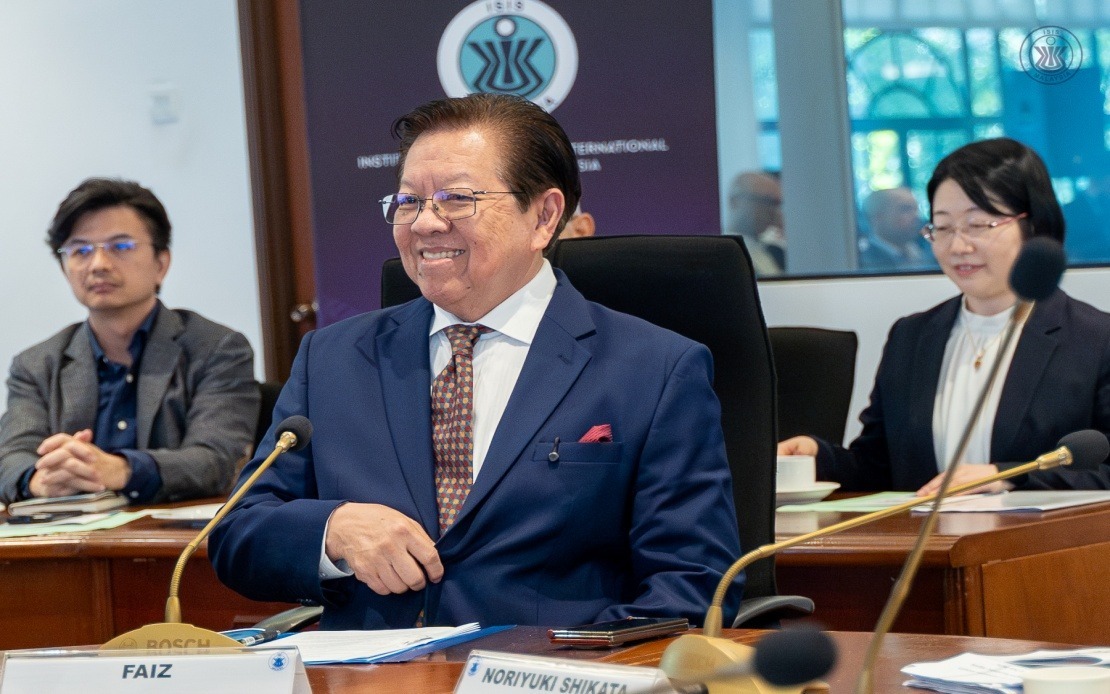
The 39th Asia-Pacific Roundtable, set to commence on June 30 in Kuala Lumpur, will dedicate substantial analytical resources to examining Myanmar's ongoing political and humanitarian crisis, according to the think tank orchestrating the event. ISIS Malaysia executive chairman Datuk Prof Dr Mohd Faiz Abdullah disclosed that the three-day gathering will host a specialised caucus focused entirely on Myanmar, complementing broader discussions at the main conference sessions. This dedicated forum represents a significant shift in how the region's policy community intends to address the country's deepening challenges, moving beyond the measured official statements typically offered through ASEAN channels.
The decision to establish a dedicated Myanmar caucus reflects growing frustration among Southeast Asian analysts with the limitations of formal regional diplomacy. During the recent ASEAN Summit held in Cebu, the Philippines, discussions concerning Myanmar remained constrained by the carefully calibrated positions that member states maintain publicly. Mohd Faiz observed that official ASEAN forums often mute the deeper complexities surrounding Myanmar, with governments adhering to diplomatic scripts rather than engaging in candid strategic assessment. The 39th APR intends to rectify this constraint by creating space for frank, off-the-record exchanges that the Track 2 dialogue mechanism facilitates, allowing practitioners and specialists to explore dimensions that formal diplomacy cannot address.
The roundtable will convene Myanmar experts, policy practitioners, and think tank researchers who can examine the crisis with intellectual rigour unconstrained by the diplomatic sensitivities that bind ASEAN governments. Such conversations prove particularly valuable for Southeast Asia given that Myanmar's instability radiates across the region, affecting refugee flows, cross-border security, economic connectivity, and the fundamental cohesion of ASEAN itself. The dedicated caucus structure ensures that Myanmar receives the analytical depth it demands, rather than competing for attention alongside other pressing regional concerns. This approach recognises that Myanmar's situation has evolved beyond a temporary political aberration into a structural challenge requiring sustained, sophisticated engagement from regional stakeholders.
Beyond Myanmar, the 39th APR agenda encompasses an expansive canvas of strategic issues confronting the Asia-Pacific. Participants will deliberate on developments in the South China Sea, where ongoing maritime tensions between major powers and coastal states continue to test regional stability frameworks. The conference will also examine the precarious situation in West Asia, where conflicts originating beyond the Asia-Pacific nonetheless generate ripple effects through energy markets, shipping lanes, and geopolitical alignments affecting Southeast Asian countries. Trade policy, particularly the escalating question of tariffs and protectionist measures, will feature prominently, given the region's deep integration into global supply chains and vulnerability to external economic shocks.
Energy security emerges as another critical theme, reflecting Southeast Asia's complex position as both an energy consumer region and a transit hub for global hydrocarbon flows. The roundtable will assess how regional economies can navigate energy shortages, decarbonisation pressures, and the geopolitical competition surrounding renewable energy supply chains. Additionally, artificial intelligence represents a cutting-edge policy frontier, with participants examining how the region can harness AI's potential while mitigating risks ranging from job displacement to security threats. These multifaceted discussions position the APR as a comprehensive forum where regional thinkers collectively map the strategic landscape.
The 39th edition represents a remarkable expansion of what began as an intimate gathering nearly four decades ago. When inaugural in 1985, the APR attracted merely 30 to 40 participants, primarily from Southeast Asian policy circles. This year's conference will convene approximately 400 delegates representing 30 countries, transforming the roundtable into a globally significant strategic forum. This growth trajectory underscores the APR's sustained relevance as geopolitical complexity has deepened and as policymakers increasingly recognise the value of rigorous Track 2 dialogue for exploring sensitive issues without governmental constraints. The conference's evolution mirrors the Asia-Pacific region's rise in global significance and the heightened attention major powers devote to Southeast Asian stability.
Building upon previous editions that emphasised interregnum—periods of transition and recalibration—the 39th APR adopts the thematic framework of "Accelerating agency and action." This orientation reflects a conviction that Southeast Asian states and regional institutions must not passively absorb external pressures but rather proactively shape outcomes within their sphere. The conference seeks to identify potential regional catalysts and emerging leadership configurations capable of navigating the complex geopolitical turbulence characterising contemporary Asia-Pacific relations. Rather than viewing the region as buffeted by great power competition, the APR framework insists on exploring mechanisms through which Southeast Asian countries can exercise strategic autonomy and influence outcomes.
The Asia-Pacific Roundtable occupies a distinctive position within the global architecture of strategic dialogue. As a Track 2 forum, it deliberately operates outside formal governmental channels, enabling frank conversations that official diplomacy cannot accommodate. Simultaneously, the participants—senior government officials, military strategists, academic experts, and business leaders—ensure that insights generated at the APR influence actual policymaking. Among the world's top 20 strategic-security-focused conferences, the roundtable competes with venues like the Munich Security Conference and Shangri-La Dialogue in shaping how Asia-Pacific states conceptualise their strategic challenges.
ISIS Malaysia convenes the 39th APR on behalf of ASEAN-ISIS, a network of Southeast Asia's premier policy research institutions. This institutional architecture ensures that discussions remain grounded in rigorous analysis while maintaining ASEAN's informal consensus-based ethos. The ASEAN-ISIS network comprises leading think tanks from member states, collectively representing the region's deepest wells of strategic expertise. By channelling the 39th APR through this network, the conference maintains organic connections to ASEAN institutions while preserving the intellectual independence necessary for candid assessment.
The roundtable's core mission involves facilitating lively, constructive conversations on issues determining the region's security, stability, sustainability, and economic prosperity. More than merely discussing regional concerns, the APR equips business leaders and government officials with conceptual frameworks for navigating an increasingly complex strategic landscape. Participants return to their respective countries with enhanced understanding of how peers across the region conceptualise shared challenges, often generating informal networks and relationships that facilitate cooperation on subsequent initiatives. In this sense, the APR functions as both analytical conference and relationship-building mechanism, combining intellectual substance with pragmatic diplomacy.
For Malaysia specifically, hosting the 39th APR reinforces the country's role as a convening power and intellectual hub within ASEAN. Kuala Lumpur's prominence in regional strategic discourse depends partly on venues like the roundtable, where Malaysian experts contribute to defining how the region understands its own challenges. The dedicated Myanmar caucus, in particular, offers Malaysian policymakers and analysts opportunities to deepen understanding of a neighbouring country's crisis and to engage with regional and international experts who bring diverse perspectives to the challenge. As Myanmar's situation intersects with Malaysian interests spanning humanitarian concerns, refugee management, and broader regional stability, such forums prove invaluable for developing sophisticated policy responses.

