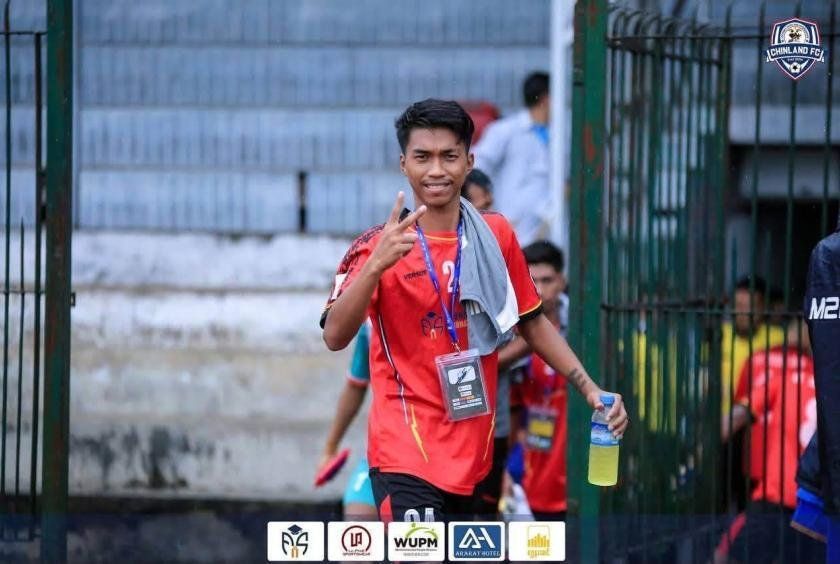
A week-long search for Chinland FC's missing player Pa Lung has ended successfully, with the club announcing on August 29 that the footballer had been safely located and reunited with the team. The discovery concludes an anxious period for the Myanmar sporting community, which had mobilised extensively to trace the player's whereabouts after he vanished without explanation.
Pa Lung's absence stemmed from a personal crisis rather than any sinister circumstances. The player made an emergency return to his hometown after learning of his mother's serious health condition, a situation so urgent that he departed without being able to properly inform Chinland FC of his sudden departure. This oversight set off a chain of events that would ultimately trigger a coordinated search effort across Myanmar's football and law enforcement institutions.
The communication breakdown that deepened concerns about his welfare occurred during the journey itself. As Pa Lung travelled back to his hometown, his mobile phone battery became depleted, severing his ability to maintain contact with the club. Combined with other communication obstacles he encountered on the road, the player found himself effectively unreachable, unaware of the alarm his disappearance was generating back in Yangon.
In response to the loss of contact, Chinland FC took immediate and methodical steps to locate their missing player. Club officials filed a formal missing-person report with the relevant police station and embarked on an intensive five-day search operation, drawing on the club's resources and networks. However, when days passed without any breakthrough in locating Pa Lung or establishing communication, the club's concern deepened considerably.
Facing a widening gap between Pa Lung's disappearance and their inability to make contact, Chinland FC made the decision to escalate the matter to the public domain. The club issued an official public appeal requesting assistance from the broader Myanmar community, hoping that wider visibility might generate leads or information regarding the footballer's location or circumstances.
The successful resolution of Pa Lung's disappearance came through coordinated efforts involving multiple layers of Myanmar's institutional framework. The Myanmar Football Federation (MFF) and Myanmar National League (MNL) actively participated in the search efforts, lending their organisational reach and credibility to the operation. Simultaneously, relevant government authorities and the Myanmar Police Force contributed investigative resources and logistical support to the search operation.
Chinland FC's public statement, released through their Facebook page, conveyed the club's relief at having re-established contact with Pa Lung and confirmed his safe return to the team. The announcement sought to reassure not only his immediate family members and relatives but also his friends, the club's supporters, and the broader public who had engaged with the search effort. The club's emphasis on Pa Lung's safe return and restored communication underscored the seriousness with which the situation had been treated.
The resolution highlights the interconnected nature of Myanmar's football ecosystem and its capacity to mobilise rapidly when player welfare is at stake. The involvement of the MFF, MNL, police authorities, media organisations, and numerous individual volunteers demonstrated how a missing person case within professional sport can activate broader community response mechanisms. For a nation where football commands significant popular attention, such coordinated action reflects the sport's cultural significance and the networks that sustain it.
Pa Lung's case also illustrates the precarious position athletes sometimes occupy when personal crises intersect with professional obligations. His urgency in responding to his mother's health emergency was entirely understandable, yet the absence of prior notification created a vacuum of information that generated justified concern. The incident underscores the importance of communication protocols that allow players flexibility to handle genuine emergencies while maintaining institutional awareness.
Chilandland FC's public expression of gratitude extended to media organisations that had amplified the appeal for information, reflecting the critical role press coverage plays in missing person cases. The club's specific acknowledgment of prayer and good wishes offered by well-wishers demonstrated the emotional investment many Burmese people had in Pa Lung's safe recovery, transcending the purely sporting dimension of the incident.
The safe conclusion of this episode restores focus to the football season and team operations, though it carries broader implications for how clubs and sporting bodies manage player welfare in contexts where communication infrastructure remains variable and personal crises can quickly escalate into institutional concerns. For Malaysian and Southeast Asian observers, the case offers insights into how emerging football nations navigate player safety and institutional responsibility in rapidly professionalising sports environments.

