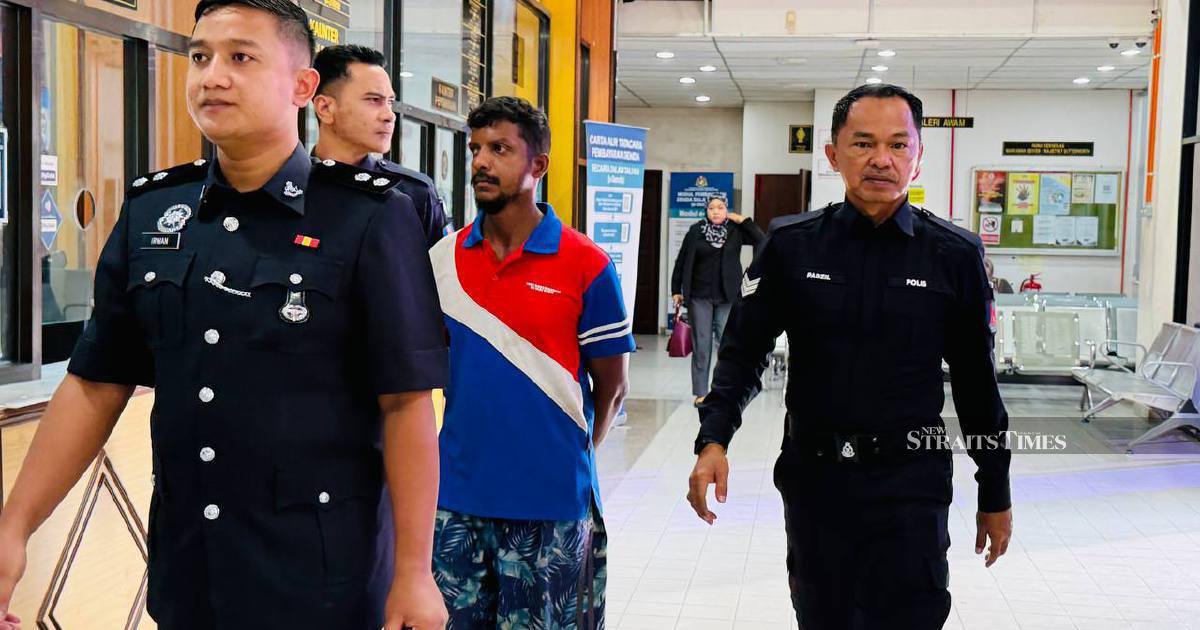
A Myanmar national appeared before the Sessions Court in Butterworth today to face charges related to causing grievous hurt to a compatriot during an incident last week. The accused pleaded not guilty to the allegation, maintaining his innocence despite the formal charge presented before the court. However, the judicial officer presiding over the case declined to grant bail, citing the need for proper identification documentation before the defendant could be released pending trial.
The decision to withhold bail reflects a cautious approach by the Malaysian judiciary when handling cases involving foreign nationals, particularly where identity verification remains incomplete. Immigration and criminal authorities have implemented strict protocols in recent years to ensure that individuals facing serious charges are properly documented before being allowed conditional release. The absence of verifiable identification documents creates uncertainty about the accused's background, flight risk, and ability to appear for subsequent court hearings.
Cases involving Myanmar nationals have become increasingly common in Malaysian courts, reflecting the substantial population of migrant workers and displaced persons from Myanmar currently residing across the country. Penang, as a major economic centre with significant manufacturing and service sectors, naturally attracts workers from neighbouring countries seeking employment opportunities. However, the lack of comprehensive documentation and regulation of this population has created challenges for law enforcement and judicial authorities attempting to process cases fairly and efficiently.
The circumstances surrounding the grievous hurt incident remain largely undisclosed at this preliminary stage of proceedings. Grievous hurt charges in Malaysian law carry potentially significant penalties, ranging from imprisonment to substantial fines depending on the severity of injuries inflicted and the circumstances of the assault. The legal distinction between simple hurt and grievous hurt hinges on whether the injuries caused are serious enough to endanger life or render the victim unable to engage in ordinary pursuits for a specified period.
The court's decision to remand the accused pending identification documentation underscores the practical difficulties Malaysian authorities face when processing cases involving individuals from countries with weak administrative infrastructure. Myanmar's civil registration systems have been severely disrupted by ongoing political instability and armed conflict, making it genuinely difficult for citizens to obtain or present official identification documents while abroad. This creates a genuine bottleneck in Malaysia's justice system, where proper procedure requires verification before bail can be responsibly granted.
Forensic and investigation teams working on this case will need to gather medical evidence documenting the injuries sustained by the alleged victim, along with witness statements from the incident. In assault cases, the prosecution must establish both the identity of the perpetrator and the severity of injuries inflicted to meet the threshold for grievous hurt rather than simpler charges. The time remanded in custody will allow investigators to compile a comprehensive case file and attempt to obtain valid travel documents or identity confirmation from Myanmar authorities.
The remand decision also reflects concerns about ensuring the victim's safety and the integrity of ongoing investigations. In cases involving assault between nationals of the same country, there are sometimes cultural or community factors that authorities must carefully manage to prevent intimidation of witnesses or victims. The court's cautious approach provides investigation teams with breathing room to pursue leads and gather corroborating evidence without pressure from bail conditions that might complicate their work.
For Malaysian legal practitioners, this case exemplifies the complexity of managing criminal proceedings when immigration status and identity documentation are uncertain. Defence counsel will need to work toward obtaining acceptable identification documents while the accused remains in custody, a process that may require coordination between Malaysian authorities, Myanmar consular services, and potentially international organisations assisting displaced persons. The timeline for this bureaucratic process is often unpredictable, potentially extending the remand period considerably.
The incident touches on broader issues facing Malaysia's management of its migrant worker population and undocumented residents. While many Myanmar nationals contribute positively to Malaysian society through their labour, the absence of systematic documentation creates enforcement challenges that disadvantage both law-abiding workers and the justice system's capacity to process criminal cases efficiently. Policymakers continue to grapple with balancing humanitarian concerns regarding Myanmar's political situation against the practical necessity of maintaining order and protecting public safety.
Subsequent court dates will determine whether bail can be granted once identification issues are resolved, or whether the accused will remain in custody throughout trial proceedings. The case demonstrates how security documentation—often taken for granted in stable societies—becomes a critical factor in criminal justice administration when dealing with populations displaced by political upheaval. Malaysian courts will continue managing such cases as long as Myanmar's internal situation remains unstable and its citizens continue seeking refuge and economic opportunity in the region.