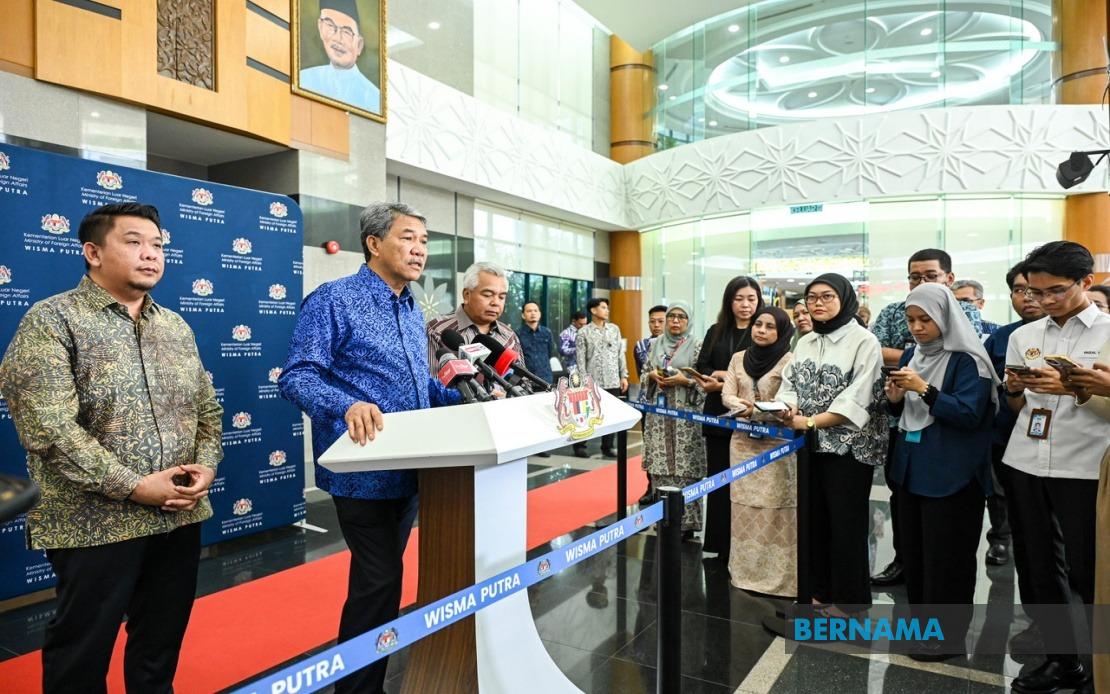
Myanmar has expressed willingness to facilitate the maritime repatriation of 5,000 of its displaced citizens, a move confirmed by Malaysian Foreign Minister Datuk Seri Mohamad Hasan during a press conference in Putrajaya on Monday following the 59th ASEAN Day celebration. The announcement follows discussions between Mohamad and Myanmar's newly appointed Foreign Minister Tin Maung Swe, marking a potential step forward in addressing one of Southeast Asia's most pressing humanitarian challenges.
While Myanmar's stated readiness to organise the seafaring transport represents a concrete commitment, Mohamad underscored that the initiative cannot proceed without robust safeguards. The fundamental prerequisite is ensuring that the repatriation process itself does not expose the refugees to additional hardship or peril. Questions about the voyage's conditions, the destination arrangements upon arrival, and the broader welfare of those making the journey remain under scrutiny. Mohamad's emphasis on these concerns signals that Malaysia intends to maintain rigorous oversight before endorsing any repatriation scheme.
Malaysia has already completed the identification of the 5,000 individuals earmarked for return, a logistical accomplishment that underscores the administrative groundwork already in place. Although officials have not yet stipulated a concrete timeline for when the repatriation might commence, Mohamad indicated that accelerating the process is a priority. The absence of a firm deadline suggests that negotiations over the modalities and safety protocols will take precedence over hasty implementation, reflecting Malaysia's determination to balance urgency with responsibility.
Beyond the specific repatriation proposal, Mohamad sought to broaden the international conversation around Myanmar's displacement crisis. He cautioned against the tendency to characterise the refugee challenge exclusively through the lens of the Rohingya, a narrative that has dominated global discourse. The reality encompasses numerous ethnic communities displaced from Myanmar, prominently the Chin and Karen peoples, whose plight receives comparatively less international attention and advocacy. This reframing is significant for Malaysian policy, as it reflects a more comprehensive understanding of the region's instability and the diverse populations seeking refuge across borders.
The multilateral dimension of the crisis loomed large in Mohamad's remarks. He stressed that ASEAN, as a regional bloc, recognises the refugee question as a collective concern rather than an issue for individual member states to manage in isolation. This collective framing carries implications for burden-sharing and coordinated responses, particularly given Malaysia's disproportionate hosting of Myanmar refugees relative to its capacity. A regional approach would theoretically distribute responsibilities more equitably among neighbouring nations.
Central to ASEAN's strategic positioning on Myanmar remains the Five-Point Consensus, a framework endorsed by all member states and Myanmar's leadership at the time of its adoption. Mohamad stressed emphatically that this mechanism should continue as the cornerstone of ASEAN diplomacy toward Myanmar. The Five-Point Consensus, which addresses cessation of violence, humanitarian assistance, mediation, dialogue, and its implementation, has become the bloc's primary diplomatic tool despite broader international criticism regarding its effectiveness.
In Mohamad's assessment, any modification to the Five-Point Consensus cannot be executed unilaterally or in backroom discussions. Should ASEAN leaders determine that adjustments are necessary, those alterations must return to the negotiating table for deliberation by all member states collectively. This insistence on procedural rigor reflects Malaysia's commitment to preserving ASEAN's consensus-based decision-making structure, even as the Myanmar situation has tested that model's practical utility.
The repatriation proposal must be understood within this broader diplomatic context. Myanmar's willingness to transport refugees by ship is not merely a logistical arrangement but a political signal regarding its openness to addressing the displacement crisis. However, the persistence of safety concerns raises questions about the conditions refugees would encounter upon return. Malaysia's cautious approach reflects experience with repatriation failures elsewhere in the region and the irreversible consequences of unsafe transfers.
For Malaysian policymakers, the announcement represents both progress and continued complexity. Malaysia hosts one of the world's largest refugee populations, with substantial numbers from Myanmar comprising a significant portion. Any successful repatriation would ease the burden on domestic resources and address a chronic challenge for the government. Simultaneously, Malaysia cannot risk the reputational damage or humanitarian catastrophe that would result from facilitating an unsafe return process. The emphasis on safety thus reflects pragmatism as much as principle.
The involvement of ASEAN in championing the repatriation process adds diplomatic weight to any eventual arrangements. Should the initiative succeed, it would provide a model for addressing displacement elsewhere in the region while demonstrating ASEAN's capacity for concrete humanitarian action. Conversely, any failure would further underscore the bloc's limitations in resolving intractable conflicts and addressing their human consequences. For Malaysia and its neighbours, the stakes in this repatriation effort extend well beyond the immediate fate of 5,000 individuals.

