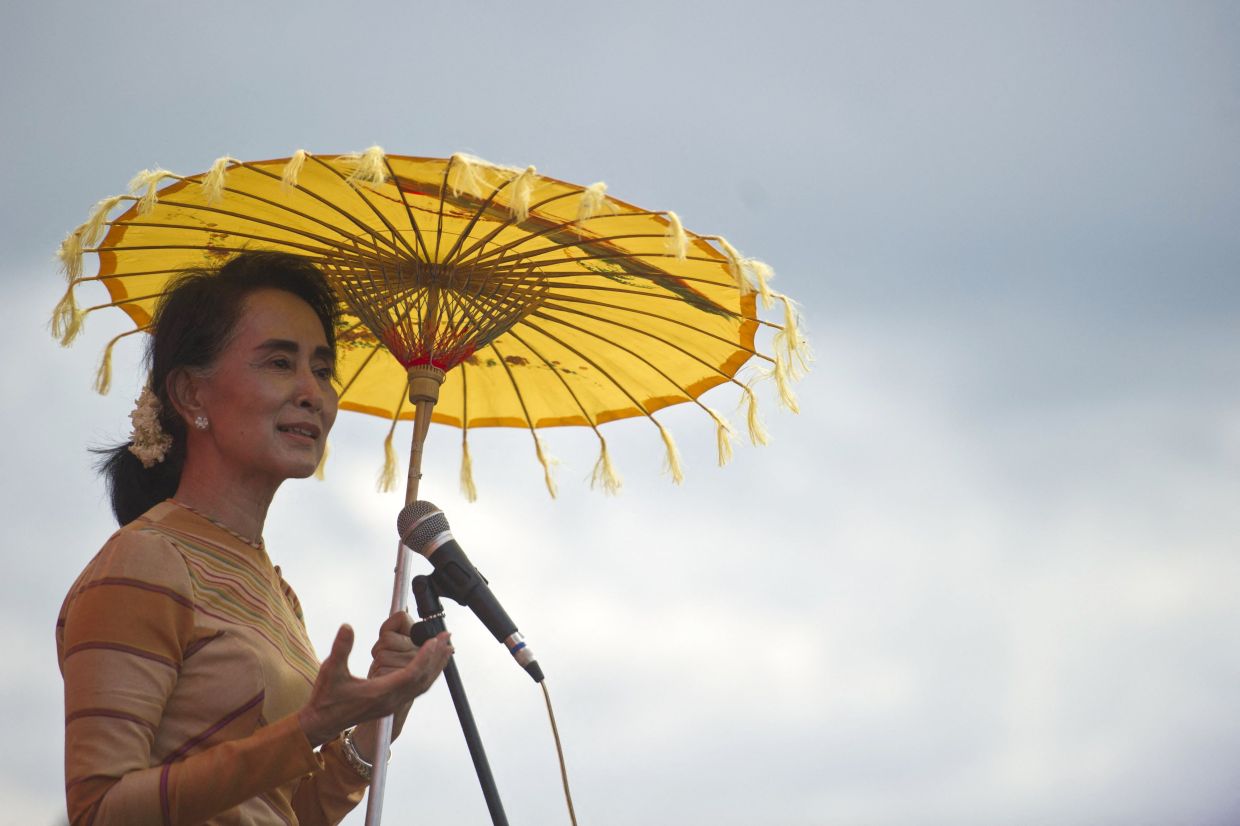
Myanmar's military regime has again slammed the door on Asean's attempts to access Aung San Suu Kyi, the deposed leader who turned 81 recently. The latest rejection came at the end of June when regime spokesperson Khaing Khaing Soe flatly declared that Suu Kyi, as a convicted prisoner, cannot meet international representatives. This rebuff marks the second failed attempt by Philippine Foreign Secretary Maria Theresa Lazaro, who chairs Asean this year, to secure a meeting with the ousted civilian leader during visits to Myanmar's capital Naypyitaw.
The pattern of denials reflects a strategic calculation by military leader Min Aung Hlaing and his government: Asean lacks the teeth to enforce compliance. Analysts suggest the junta believes it has little to gain from accommodating the bloc's demands. As Hunter Marston of the Lowy Institute observed, Min Aung Hlaing operates from the conviction that Myanmar needs Asean far less than the grouping needs Myanmar's cooperation. This asymmetry of leverage has emboldened the regime to ignore regional pressure with apparent impunity.
What makes the access restrictions particularly significant is whom the junta actually permits to see Suu Kyi. Only former Thai foreign minister Don Pramudwinai, during a July 2023 visit, and Chinese Foreign Minister Wang Yi, in April of this year, have successfully met the imprisoned former leader. This selective access sends a clear diplomatic signal about whose friendship matters most to the regime. Thailand and China, both with deep historical ties to Myanmar and strategic interests in the region, enjoy privileged standing that Asean as a collective does not.
The regime's intransigence directly undermines Asean's Five-Point Consensus, the peace framework established after the 2021 coup. That agreement calls for an end to violence, provision of humanitarian aid, and crucially, allowance for the Asean special envoy to meet all relevant parties—a stipulation that inherently includes Suu Kyi. By denying such access, the junta signals that it will not grant Asean what it views as a supervisory role over Myanmar's internal affairs. As independent historian Phyo Win Latt argued, the regime wants recognition from Asean but decisively rejects scrutiny of its political settlement.
Since the putsch in February 2021, the human cost of the junta's intransigence has been staggering. According to Armed Conflict Location & Event Data, an independent global monitor, at least 100,000 people have died in the conflict that followed. Myanmar's military has waged relentless campaigns against armed opposition groups, with civilians caught in the crossfire. The violence and instability have created one of Southeast Asia's most serious humanitarian crises, yet the regime shows no willingness to implement the conditions that might bring the conflict toward resolution.
Suu Kyi herself has been largely incommunicado since her arrest over three years ago. Originally sentenced to 33 years on charges widely denounced as politically motivated—including violations of Myanmar's Official Secrets Act and corruption allegations—she has seen her sentence reduced through several amnesties to approximately 18 years remaining. Following reports that authorities placed her under house arrest in April of this year, she has not been seen or heard from by independent sources. Her family remains cut off: her 48-year-old son Kim Aris has not been permitted to visit or communicate with his mother for five years.
The regime justifies its restrictions on Suu Kyi's visitors by citing her prisoner status and Myanmar's domestic laws. But this reasoning masks a deeper political calculation. By controlling access to the ousted leader, the junta retains a valuable diplomatic card. Allowing international visitors, particularly from Asean, might inadvertently legitimise claims that the bloc has some oversight authority in Myanmar's governance. The restriction also shields the regime from potential scrutiny regarding Suu Kyi's condition and treatment, which family members and human rights advocates view with deep concern. Kim Aris has expressed disappointment at Asean's powerlessness, while noting that the isolation itself raises troubling questions about what authorities are attempting to conceal.
Min Aung Hlaing's consolidation of power has proceeded largely undeterred by Asean's remonstrations. After staging what many observers dismissed as a sham election earlier this year, the 69-year-old military strongman relinquished his chief military post in April to assume the presidency instead. The manoeuvre maintained his grip on power while offering the superficial appearance of institutional normalcy. Despite this, Asean has maintained its ban on his attendance at regional summits until he demonstrates commitment to the Five-Point Consensus. The regime, however, views this penalty as unjust.
From the junta's perspective, Asean's demands constitute unfair targeting. Myanmar's military argues that Asean ignores comparable disputes between other member states—notably the long-running territorial disagreement between Thailand and Cambodia—without imposing similar restrictions. Why, the regime asks, should Myanmar alone be singled out for enforced compliance with a regional agreement? As Amara Thiha of the Stimson Centre noted, the junta sees no logical reason to comply when Asean applies inconsistent standards across the bloc. This grievance, whether valid or merely convenient, has hardened the regime's resistance to pressure.
The broader implication for Asean is sobering. Myanmar's defiant posture demonstrates that the bloc's consensus-based approach and soft diplomacy have limited purchase with a government that views regional norms as optional. The junta has calculated that it can absorb the cost of isolation—exclusion from summits, diplomatic criticism, international sanctions—while remaining confident that geopolitical realities, particularly China's strategic support, will ensure its survival. For Asean members, this poses a fundamental challenge: either the grouping must find ways to make compliance with its agreements consequential, or it must accept that its role in Myanmar's future remains marginal.
The tragedy extends beyond Asean's institutional limitations. Suu Kyi, once celebrated as a symbol of democratic resistance and the Nobel Peace Prize laureate who inspired Myanmar's hopes for pluralism, now sits as a symbolic prisoner of the regime that vanquished her movement. Her isolation represents not merely the imprisonment of one individual but the erasure of Myanmar's democratic aspirations from public view. Asean's inability or unwillingness to secure even a brief visit with her underscores the region's vulnerability to determined authoritarian actors who understand that regional consensus is easily circumvented by those prepared to bear the diplomatic costs.

