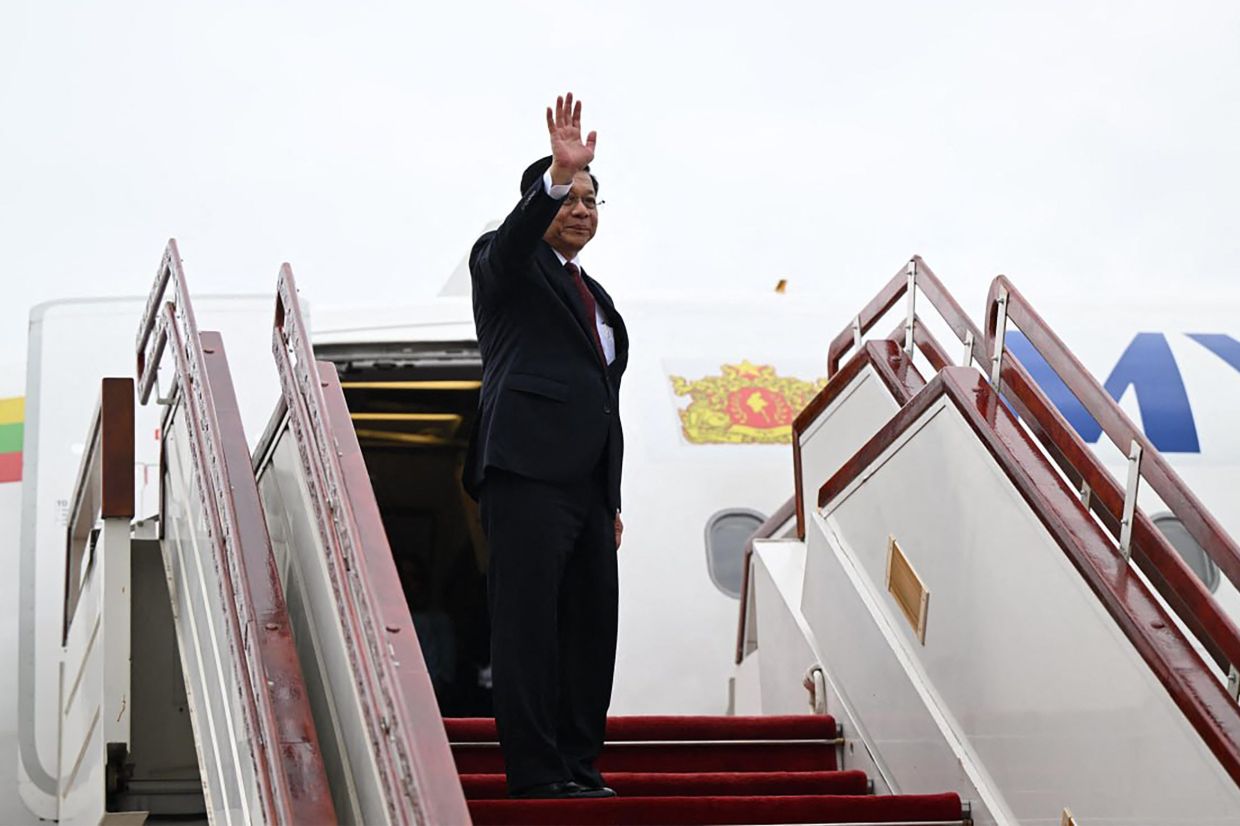
Myanmar's military-backed leader Min Aung Hlaing touched down in Russia on Monday for high-level discussions with President Vladimir Putin, signalling the junta's continued strategic pivot towards Moscow as it seeks international legitimacy and security partnerships. The visit marks the first time the former general has travelled to the Russian capital since assuming the presidency in April, and comes amid Myanmar's growing isolation in the West following the February 2021 coup that toppled the democratically elected government of Aung San Suu Kyi.
Russia's role as one of the few major powers willing to engage with Myanmar's military leadership has become increasingly significant over the past three years. When the coup triggered international condemnation and sanctions from Western nations, Moscow abstained from United Nations Security Council votes rather than condemning the takeover, effectively providing diplomatic cover for the junta. This positioning has made Russia a crucial ally as Myanmar navigates deepening internal conflict and efforts to rebuild fractured international relationships.
The consequences of the 2021 coup have been devastating for Myanmar's population. The toppling of Suu Kyi's government unleashed a civil war that has claimed more than 100,000 lives according to estimates from conflict monitors and rights groups. The ensuing humanitarian crisis has displaced hundreds of thousands of civilians and created one of Southeast Asia's most severe ongoing conflicts. Despite these humanitarian costs, Min Aung Hlaing's government has shown no signs of reversing the coup, instead seeking to consolidate military control through a managed political process.
Min Aung Hlaing's April installation as president through stage-managed elections represented an attempt to add veneer of civilian legitimacy to military rule. However, the elections were widely dismissed as a sham by Western governments, international democracy watchdogs, and civil society organisations across Southeast Asia. The move allowed the junta to technically transition from direct military rule to what it terms a civilian administration, though real power remains firmly in military hands.
The timing of the Moscow visit reflects Myanmar's strategic recalibration as it attempts to break through international isolation. According to the Myanmar presidency, the trip aims to "further consolidate the longstanding friendly and close relations between Myanmar and Russia and to enhance strategic cooperation" across security, economic, and other domains. This framing suggests Myanmar views Russia not merely as a temporary diplomatic ally, but as a long-term strategic partner in resisting Western pressure and building alternative international relationships.
Military cooperation forms a central pillar of the Myanmar-Russia relationship. The junta's air force operates Russian-made jets that have been deployed extensively against rebel forces, though human rights organisations have repeatedly documented civilian casualties from these airstrikes. Some conflict monitors have characterised these attacks as potential war crimes, raising questions about international accountability even as Myanmar's military-backed government consolidates control. The February signing of a five-year military cooperation pact between Naypyidaw and Moscow, while sparse on public details, signals deeper defence integration in the years ahead.
Min Aung Hlaing's Moscow itinerary underscores the diplomatic significance of the visit. Beyond meeting Putin, he is scheduled to hold discussions with Russia's prime minister and the speaker of the State Duma, Russia's lower house of parliament. The visit also includes participation in a Myanmar-Russia economic forum, suggesting efforts to explore economic collaboration and investment opportunities. These engagements go well beyond symbolic gestures, indicating substantive negotiations on multiple fronts.
This Russian visit fits into a broader pattern of international outreach by Min Aung Hlaing since becoming president. The military leader has visited China, India, and neighbouring Thailand, attempting to rebuild Myanmar's standing in the region and beyond. Each of these trips carries distinct strategic weight: China remains a long-standing patron and investor, India represents a balancing counterweight to Chinese influence, while Thailand, as a fellow Southeast Asian nation, offers opportunities for normalisation within the region despite Thailand's own chequered history of military interventions.
For Southeast Asia and Malaysia specifically, Myanmar's deepening pivot towards Russia carries regional implications. As Myanmar increasingly relies on Moscow for military support, diplomatic backing, and economic engagement, the dynamics of Southeast Asian geopolitics shift accordingly. Vietnam, another regional player with historical ties to Russia, may view this development through a complex lens, while smaller Southeast Asian states navigating between major powers watch how Myanmar's strategy unfolds. The Association of Southeast Asian Nations faces continued challenges in addressing Myanmar's political crisis, with Myanmar's Russian alliance potentially complicating regional diplomatic efforts.
The visit also reflects broader patterns in international relations where countries facing Western isolation seek partnerships with non-aligned powers. Myanmar's strategy mirrors approaches taken by other nations under sanctions, leveraging alternative centres of power to sustain regimes and pursue national objectives. However, this path carries risks, including potential economic dependency and reduced capacity to chart independent foreign policy.
The humanitarian dimension remains troubling throughout these diplomatic developments. As Min Aung Hlaing cultivates international relationships and pursues strategic partnerships, fighting continues across Myanmar with displaced persons living in dire conditions. International human rights organisations continue documenting atrocities and advocating for accountability, even as Myanmar's government consolidates control and secures external support.

