Myanmar's tourism sector is experiencing a tentative awakening as the country's military-backed administration pursues an ambitious strategy to resurrect an industry crippled by four years of internal conflict and international isolation. The government has set its sights on welcoming 1.8 million foreign visitors in the current year, representing an almost doubling of arrivals in a deliberate attempt to signal economic normalisation following recent elections. This push represents the first tangible test of whether Myanmar can convince both tourists and investors that meaningful portions of the nation have stabilised sufficiently to resume international commerce and leisure travel.
The foundation for this recovery strategy rests heavily on geographic proximity and existing travel patterns. Officials at Myanmar's Ministry of Hotels, Tourism and Culture have explicitly identified Chinese and Thai visitors as the cornerstone of their growth projections, viewing these two neighbouring markets as the most likely sources for rapid visitor increases. This focus makes strategic sense given that Chinese travellers already constitute Myanmar's largest air-arriving demographic, followed by Thais and South Koreans. Early indicators suggest the approach has some validity: Chinese arrivals increased twelve per cent during the first five months of the year, while Thai numbers rose seven per cent over the same comparative period.
Yet the challenge of reaching the stated target looms substantially. Official data reveals Myanmar received 973,263 international visitors throughout 2025, with only 448,205 arrivals recorded through May of the current year. This represents merely a five per cent increase from the equivalent period the previous year, demanding an improbably steep acceleration during the latter half to achieve the 1.8 million goal. The mathematics underscore the aspirational nature of government projections and the considerable ground the tourism sector must recover to approach pre-pandemic normalcy.
The scale of the recovery task becomes even starker when contextualised against historical performance. In 2015, following Myanmar's political opening, the nation welcomed approximately 4.7 million international visitors annually. Thailand, by comparison, attracted roughly 33 million tourists last year whilst pursuing similar targets for the current period. These figures highlight the profound damage inflicted by the 2021 coup and ensuing civil unrest, revealing the gap Myanmar must eventually bridge to reclaim meaningful market share in regional tourism.
The government has implemented practical measures designed to reduce friction for potential visitors, particularly from priority markets. Expanded visa-on-arrival programmes now extend to Chinese, Indian, Japanese and South Korean nationals, streamlining what previously constituted a bureaucratic impediment. Citizens from Russia and most Southeast Asian countries already enjoy visa-free entry arrangements. Officials have indicated that additional liberalisation will proceed contingent upon demand signals from individual markets, suggesting a calibrated rather than wholesale approach to opening borders.
These administrative measures carry particular significance given Myanmar's recent international reputation challenges. The country has struggled with international scrutiny concerning human trafficking into illegal online gambling and cryptocurrency scam compounds, leading to regional crackdowns and mass repatriations of Chinese nationals. Official visitor statistics deliberately exclude people trafficked into these operations, meaning published arrival figures represent genuinely voluntary tourism rather than comprehensive population movement. The distinction matters considerably for understanding genuine recovery versus merely increased cross-border transit.
President Min Aung Hlaing's administration, installed in April, has demonstrated parallel commitment to broader diplomatic rehabilitation alongside tourism promotion. State visits to China and India, coupled with efforts to normalise relations with Southeast Asian neighbours, create diplomatic conditions theoretically favourable to increased leisure travel. Thailand's Foreign Minister visited Myanmar in April, signalling willingness from a crucial regional partner to re-engage commercially and diplomatically. Notably, prominent Thai travel influencers including Farose and Bas from Go Went Go have recently filmed content in Yangon, reintroducing the city to regional audiences after years of virtual absence from mainstream travel itineraries.
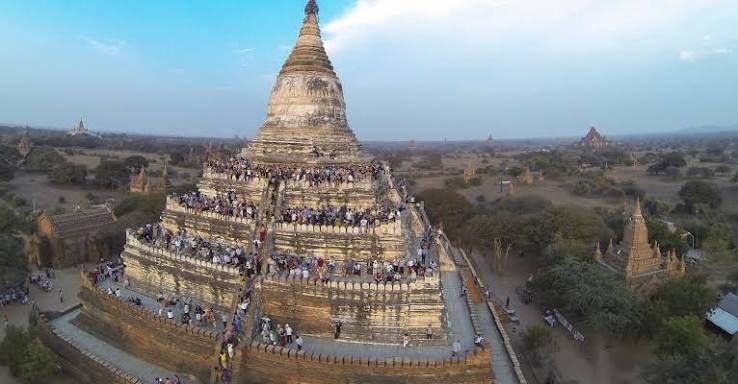
The principal attractions anchoring Myanmar's tourism strategy remain largely unchanged from the pre-coup period that positioned the nation as an emerging frontier destination. Yangon, Mandalay, Bagan, Inle Lake and the iconic Golden Rock Pagoda constitute the major draws, their appeal deriving from colonial architecture, ancient Buddhist temples and comparatively undeveloped landscapes. These sites retain substantial appeal particularly for visitors seeking experiences distinct from Thailand's more commercialised offerings, provided security and access concerns can be adequately addressed.
Direct evidence of recovery momentum appears in the hospitality sector. Luxury hotel occupancy in Yangon has risen approximately ten per cent since the election, according to industry representatives including May Myat Mon Win, general manager of Chatrium Hotel Royal Lake and adviser to the Myanmar Tourism Federation. However, the composition of this renewed occupancy differs markedly from traditional leisure tourism patterns. Business travellers, religious pilgrimage groups and individuals exploring investment opportunities currently dominate hotel clientele, suggesting tourism recovery remains intertwined with broader economic and religious motivations rather than purely recreational travel.
Interest extends beyond immediate neighbouring markets despite limited international flight connectivity. Tour operators report increased inquiries from Europe, the United States and India, indicating that Myanmar retains appeal to distant markets capable of sustaining longer-haul journeys. Thet Lwin Toh, managing director of Myanmar Voyages International Tourism Company, suggests this geographically diverse interest reflects the distinctive character of Myanmar's offerings, which remain difficult to replicate through alternative Southeast Asian destinations. Hospitality professionals similarly anticipate resurgence from Japan, anticipating that business and investment motivations will drive visitation rather than conventional tourism patterns.
Western government travel warnings constitute a persistent headwind against recovery aspirations. The United States State Department maintains a formal "Do Not Travel" advisory due to ongoing armed conflict and civil unrest, and comparable cautions emanate from other Western capitals. These official warnings carry weight among certain demographic segments and institutional decision-makers. Yet contradictory evidence suggests their impact may be attenuating: official figures show United States arrivals increased seventeen per cent through May despite the persistent advisory. Individual travellers, including a 34-year-old Texas resident encountered by journalists, explicitly disregard government warnings in favour of information derived from social media sources and personal assessment of safety conditions on the ground.
This tourism recovery initiative ultimately functions as both economic policy and diplomatic signalling. By demonstrating capacity to welcome international visitors, Myanmar's administration seeks to project stability and normalisation whilst generating revenue from a sector that requires minimal upstream investment compared to manufacturing or resource development. The success or failure of this ambitious target carries implications extending well beyond tourism statistics, potentially signalling whether the broader international community judges Myanmar's trajectory as sufficiently stabilised to warrant renewed engagement. For Malaysian and Southeast Asian observers, Myanmar's tourism experiment represents a consequential test case for whether post-conflict reconciliation can occur through incremental economic reopening rather than comprehensive political transformation.

